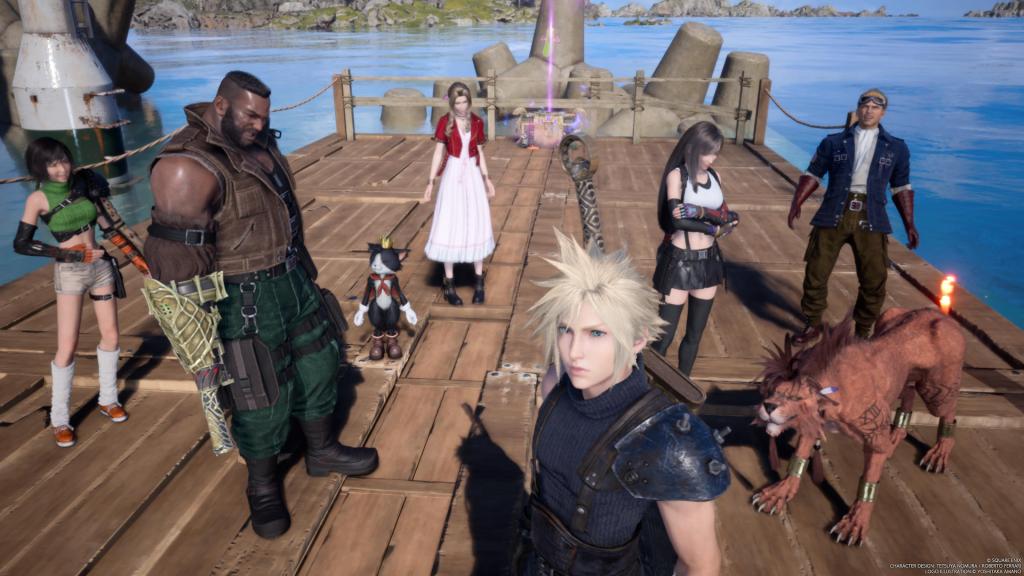
Between 1997 and 1998, two games were released that would forever change this industry.
They embodied the full definition of influential: from art and craft that inspired subsequent game development, to the experiential of millions of gamers that still have them as some of the best journeys in their lives.
If not the first, certainly the most successful pioneers for cinematic storytelling in video games: Final Fantasy VII and Metal Gear Solid.
It is therefore no surprise that rumours of a remake of Final Fantasy VII started to emerge every time a new technological leap happened in the video games’ industry. The cinematic artistry was there in the original, but both creators and audiences seemed to always be waiting for technology to catch up to the vision in FF7.
So, when in 2015 it was announced that the Remake had entered full production, it made sense. That being said, fans were as excited as they were nervous. Square, at that time, was going through a rough patch regarding the quality of their games, and they were no longer the industry-defining studio that they were in the 90’s.
Could these developers live up to the legacy of FF7?
A first good sign was that the original trio of Director, Lead Artist, and Writer were back. In subsequent interviews, they have said that the timing felt right because all of them were at “that age” when it was their last chance to head a remake of their most beloved work.
Still, even if technology had caught up to their original vision, game development was also very different now. That became immediately apparent when it was announced that the Remake was going to be divided into Parts, with no sharing on the number of instalments or of when they would release.
And really, there’s no better example to understand how making big games has changed since 1997 than to look at the roadmap of what has been this Remake project. In the same amount of time between the development of Part 1 and Part 2 (and a Part 3 yet to come), Square, in the 90’s, created 3 original mainline Final Fantasy games.
As such, having a trio of industry-defining directors of the 90’s didn’t automatically guarantee that a) the remake would be able to nostalgically live up to the sensations people remember having; and 2) meet up the standards of modern gaming and mechanics.
I, being one of those fans, was mixed on Part 1 of the Remake back in 2020.
The reasons for that were never related to the quality of that game, or the capacity of this team of old-time developers to modernize a beloved classic. They made a very good game. The most immediate recognition comes from how amazingly they transposed the trappings of turn-based systems of the 90’s into real-time action that not only felt modern, but also felt state-of-the-art. Genuinely, this is now one of the best combat systems in gaming. Period. It retains the strategic element that I loved from turn-based back in the day, while feeling amazing on the stick when in real-time action. It never leaves us with the sensation that we are losing the depth of both worlds by having this hybrid ethos. Nope. It is gratifyingly deep, customizable, and expressive precisely because it’s a confluence of approaches. They potentiate each other’s qualities.
This dev team nailed another aspect of Final Fantasy VII right off the bat in Part 1. And this was crucial, because, like I said above, FF7 is one of the most influential games ever to successfully express cinematic storytelling in this other audiovisual industry. And Remake Part 1 does complete justice to that legacy. The cinematography is top-notch and the way they went beyond cutscenes and implemented that expressiveness in real-time action is also a new industry-standard.
All that being said, Part 1 was still a small letdown in other facets of its proposition.
Chief among them, a facet of those 90’s Final Fantasies that contributed largely to them being so beloved and influential: all of them always felt like sprawling and epic adventures.
Yes, Part 1 of the Remake had epic cinematography, but, precisely because they decided to split the whole game into parts, the first instalment, where it had in thrills of eco-activism against a corporate city, lacked in a sense of adventure and understanding of what is this world like we’re trying to save.
Could Part 2, Rebirth, finally express the initial vision of what a remake of Final Fantasy VII should be like?
Yes, wholeheartedly!
Final Fantasy VII Rebirth is probably the most cinematically epic adventure I have ever experienced in a video game.
If games like Devil May Cry, Bayonetta, or even Final Fantasy XVI are epic like Mission Impossible or Kill Bill movies. Or Metal Gear Solid and Nier Automata are epic like a Chris Nolan time-bending opera. Final Fantasy VII Rebirth is a worldbuilding epic and a going-on-an-adventure journey like the realization of the vision that was The Fellowship of the Ring, by Peter Jackson.
From a very early chapter of Rebirth we are presented with a ‘step out of the vault’ moment that finally puts our feet as players in touch with green grasslands. And, if you had felt that crucially lacking from Part 1, you could be tempted into thinking: nice, this was the game I wanted – an open world to care for. Honestly, that’s the least amazing element of Rebirth. Yes, no longer being stuck in the corridors and elevators of Midgar is a breath of fresh air, but it is the gameplay scenarios these developers created for each biome and town in the open world that really put you in communion with it all.
For example, Chocobos, a staple of Final Fantasy, have never felt so fun and distinctive to ride like in Rebirth. Other open world developers should also take inspiration from this. Each biome has its own subspecies of Chocobo, and each one has a mechanically unique way of traversing its territory. And, even though I know that the developers designed each biome to accommodate for these different ways the local Chocobos moved about, if you don’t go all technical, it’s neat to imagine that the Chocobos evolved in those ways to adapt to their different habitats.
Then, you have side missions and mini games. Another staple of Japanese RPGs. And, let me tell you, they never felt so non-side and non-mini as these. Not only because of the production values clearly dedicated to them here. But because they are essential in gameplay variety, character development, and relationship-building between the party. Even amidst cookie-cutter side-missions of going from point A to point B, fight some monsters in point B, go back to point A to tell an NPC about it, more often than not there are nuggets of either imaginative writing and/or idiosyncratic gameplay.
And a nice thing about Rebirth, and its story being a middle entry, is that the suspension of disbelief usually activated by detours in games where you are trying to save the world is not as elicited here. The narrative conceit in this phase is that the characters are on a journey to explore the different regions of the world in search of clues to where Sephiroth might be, and what might he be planning to do next.
Let me reiterate: these activities parallel to the main story are musts. You might start engaging with them because they are cool and exotic. However, the reason you keep going back to them is because they are full of character, narrative value, and allow you to learn more about this world and its people. And, of course, they feel great on the sticks. We could think that, because of their mini structure, not as much effort was put into that game feel, but no. They are deviations, but they never take you out of the game – quite the contrary!
As a matter of fact, the developers spread them throughout the chapters in very smart ways: never overwhelming, nor missing them for too long. And that always stimulated curiosity every time we arrive at a new biome or town: what kind of over-the-top main story beat will happen here; AND what kind of hobbies/culture do the people of this place have (and how I, the player, will actively participate in that).
That’s some great worldbuilding.
Even checking points-of-interest off the map is somewhat better done here (still, it could use with fewer POIs, to make them stand out more). The premise is that you are building a database in case the world ends, and there are several components of each region that are of interest to document. The typical tower un-fogs other components. Natural sites give you lore on the history of the region. Scanning the creatures of each biome gives you knowledge on how to most efficiently battle them. Digging sites give special materials that allow the craft of even more enhanced armour. And ancient crystal shrines have interactive inputs to unlock more knowledge on the big Summons of the Final Fantasy Universe before you confront them, and more power after you have them on your side (you don’t have to do this, but they are really tough to beat if you don’t, and it’s fun to know how each region feeds from the Summon, and vice versa).
Every time you do one of these checklists you earn points to acquire exclusive magic spells that are some of the most powerful/useful in the game. And, for the more completionists ones, there is a quest amidst all of these that, if taken until its culmination, will reward you with not only some of the most comic gameplay scenarios (pervasive across the different regions) but also some of the strongest battles and Summon coming from the open world.
Speaking of comic… This is one of the best sense of humour games I have ever experienced. We all know comedy and comedic timing are really difficult to pull off in this industry, as video games are always striving to give more control to the audience. Even so, Rebirth manages to be very liberated with its jokes. Without resorting to cheap tricks like breaking the fourth wall or false-frontal self-awareness to address the player in the room, the writers found the fun within the laws of this universe. And that makes each punch line even more laugh out loud, because they happen timely to the action, the context, and the narrative, and not out of it.
And then… the main story.
What more can I say that hasn’t already been said about these chapters of Final Fantasy VII in the last 25 years?
Eco-activism continues to be mightily timely for a story written in the late 90’s. Still, even if that topic continues to be present in Remake Part 2 as it was centre stage in Part 1, I would say that, at this point in the overall narrative, fatalism about the inevitability of eco-destruction is much more the thread that the characters have to contend with. How the different regions live off natural resources, how the depletion is changing them, and what the people there are going to do about it.
This drama, of course, also affects our main cast of characters. And if, like me, you had already found that another quality contribution of Remake Part 1 was how technology, cinematography and improved writing helped in fleshing out even more a group of already endearing individuals… Rebirth is all about their personalities, their insecurities, and how the bonds of fellowship create a safe space for catharsis, for each of them to find shared energy and be lifted up, and for going from a very personal way of trying to solve a problem to that actually being a solution in a team context.
I really love that we get to explore every single one of them in much more detail in this Part 2. After all, this is one of the most iconic teams in gaming history. And we get to dig deeper not only through narrative, but also through gameplay in many different scenarios dedicated to their abilities but also their plights.
And finally, the theme of death and the nihilism that comes from it.
Final Fantasy VII was one of the very first video games to bring the confrontation between death and nihilism to big cinematic storytelling in the industry.
Rebirth could’ve been content in resting on the laurels of that watershed moment, and that would’ve still been acceptable as a remake, just because of its historical significance.
However, these developers decided that Rebirth should be additive to the deliberation around those themes, instead of simply retreading old phrases.
Yes, this game still works with the core concept of Nature being attacked, and relates the cyclical of ecology with the cyclical of fate. But then… It introduces a new idea to the narrative of the original game.
Interestingly, that is not done via what could’ve easily been some kind of fanservice gimmick, or a repentant retcon of the storytelling threads of the original. No. It’s a mature rethinking of those story beats, and how they can be expressed in a way as complex as the message the game will eventually try to land.
Nature also fights back, and death is part of it, but it doesn’t have to be a self-fulfilling prophecy or even darwinistic, because we can do something about it by fighting along.
The staging of these scenes is not as easy to interpret as in the 1997 game, and ambiguous by all means doesn’t equate to good writing. However, that is not the case here. Rebirth’s converging of narrative threads creates a web of enigmatic idea-strands that are not perplexingly tangled, but rather spider-like in their tidiness for us to be attracted to solve the puzzle.
This is the mark of good ambiguity. If you are about to not give us certainty, you must be up to the challenge that uncertainty poses. And these writers were. I never felt short-shrifted by the happenings of the last chapters because the verbs and the vibes in the events before were coherent all along.
Now it’s up to me to think on things. As they provided not only a tidy open space for my own agency as a lured audience, but also turned amorphous ideas into shaped subject matters that I can play along in my mind as puzzle pieces. That is the mark of good writing.
Kudos!
Particularly in a part of this overall story that people are so emotionally invested in.
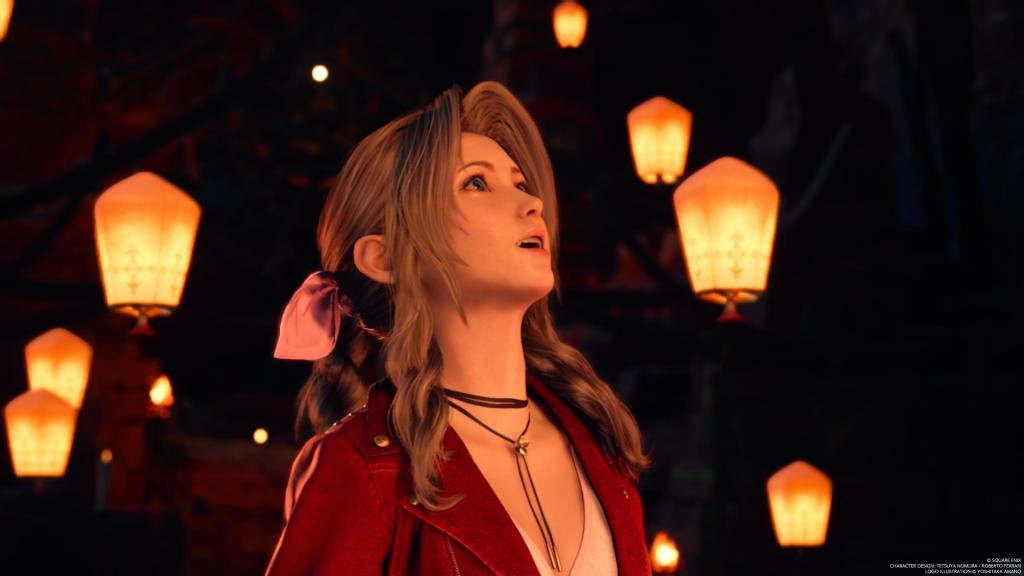
To sum up, I loved this game 🙂
Making it an open world was the first step in igniting something that was missing from Part 1: a sense of adventure and an understanding of what were these characters fighting for in the first place. Notwithstanding, it is what you do in the open world, particularly the side activities characteristic to each region, that does the trick in making you happy in it. Makes you empathize with all these characters full of personality. And makes you want to save them all from eco-destruction.
The combat was always fun throughout the 160 hours I adventured in the game. The combination of turn-based strategy and real-time action allows for creative experimentation, while being sustained by classic RPG metrics we’ve come to expect.
All those hours later I was still having breakthroughs in ways of combining abilities and stats. Brainy and entertaining, that’s the best. And the way these developers managed to add cinematic flair to the combat engine also makes everything more connected to the rest of the story and adventure. Summons and Limit Breaks continue to make even random battles very epic. And the star of the show this time are the Synergy Abilities.
You use Synergy Skills to boost the ATB gauge of the two characters teaming up even faster. Then, you use that gauge to activate standard abilities. Which, in turn, charge up the Synergy meter needed to activate Synergy Abilities. And these, not only are amazingly cinematic team-up attacks, but also have an impact on the relationship status between the characters during the story, even unlocking extra missions with them.
Even more fun because all these abilities are locked behind a very-RPG skill tree that requires you to choose not only between improving the character or their relationship with others, but also which relationships to invest in. And, since it’s almost impossible to fill out any individual tree in a single playthrough, I love that we have to make these choices, as it adds to the narrative around the characters and their relations to each other. Then, it relates to how you build your teams, etc etc.
And, of course, this wouldn’t be a conversation about Final Fantasy if I didn’t talk about the music. At the same time, there is not much to say: this is probably the best soundtrack ever composed for a video game.
It helps that the original from Nobuo Uematsu is already one of the greats. But, there’s so much more to it. I always try to avoid mistaking quantity for quality. Yet, this one is undeniable. From the decisions of what to remix and what to leave untouched in the original themes, to entirely new epic tracks that should feel comfortable around the greats, or even quirky tunes that made so much sense for their respective moments. It’s almost an entity in itself. Like the adventuring, side actives, epic encounters, and overall story of this game could be entirely told just through music. Like an all-time great opera.
All in all, Final Fantasy VII Rebirth is one of the best AAA open world games I have ever played. It is designed in such a way that it will be tremendously engaging for both first-timers and long-time fans.
Gamers are accustomed to being introduced to over-the-top scenes before any other arts enthusiasts. Even so, this game blew my mind. It’s one of the most epic adventures I have ever experienced in any medium.
Amazing.
 Opinion Seed