Happy to mention
Suika Game
You know what game logic means?
It means a small cherry having the power to nudge away much bigger and heavier fruits, so you can start a chain-reaction of fruit fusion that will make you tremendously giddy.
Suspension of disbelief is even more gratifying in games, because you have small and ridiculous agency like that.
Season: A Letter to the Future
Not entirely sure this game works as a cohesive experience.
The biking is more tactile than I expected. And recording the world through photos or audio clips becomes an acquired taste.
Narrative-wise, some interesting themes are also addressed. And the magical realism of it all was enough, for me, to warrant a mention in a games of the year list. More magical realism in games, please! And surrealism, while you’re at it, also.
But then… the biking and the recording of the world, even if they make sense as mechanics for what the game is trying to say… don’t really go beyond tasks to unlock a new story beat. A story that I don’t feel is also fully realized.
So, mechanics with potential not fully developed by narrative context, and narrative context not fully elevated by interactivity.
There’s an interesting magical realism game here, with compelling themes to explore. But, it either didn’t get enough time to cook, or didn’t get enough money to support the vision. Or both.
DNF Duel
I know Dungeon & Fighter has been around for almost 20 years, but I must admit I wasn’t in the slightest familiar with it. South Korean gaming history is indeed a blind spot in my knowledge of the industry.
Well, it didn’t stop me from having a great time with this spin-off. I might not have had context for the characters, but leave it to Arc System Works’ animators and artists to make you vibe with designs that, in other hands, could pass as generic archetypes.
Yes, the game is a bit bland across the board. But the fighting isn’t. As a matter of fact, the way ArcSys embraced its choice for the control scheme, and how combos and specials can be executed and linked together, made me pull off some of the craziest stuff I’ve ever seen in a fighting game.
It’s so much fun to just pick-up and play. Nothing more than that. But, sometimes, that’s enough for a recommend to a fan of the genre. Have some friends over and boot DNF Duel on. I guarantee you’ll have a good time.
Viewfinder
I remember, back in the beginning of 2020, seeing the tweet from Matt Stark about the breakthrough in the prototype that would end up becoming Viewfinder.
It blew my mind then, and it’s still very impressive today. Honestly, one of the best mechanics I’ve ever seen. However, Viewfinder is proof that a great mechanic, per se, does not ensure the making of a great game.
The mechanic has to artistically and interactively cohere with everything else that makes up the game. And, the impression I ended up with was that the developers were so blown away (like me), by the immense possibilities a VFX tech like this can afford both who designs and who plays, that they devalued the experiential irregularity such infinity could bring forth to their virtual world, story and gameplay loops.
It’s so funny, because the story of this game is about the search for a trailblazing technology and not knowing how to deal with both the research phase and the ‘what we discovered’ phase.
Maybe the devs did do anticipate the consequences of not putting checks and balances to their innovation, but intentionally ignored them, in service of players not like me. Fair game.
Mario Kart 8 Booster
With the amount of courses added through last year, Mario Kart 8, a game released nearly a decade ago, got a new life.
How to measure ‘a new life’? Well, when it re-released back in 2017 with the Deluxe subtitle, it certainly got a first boost, because much less people bought a Wii U.
Yet, it is Booster Course Pass the truer expansion. More new courses and characters. And, a new life for a game comes when you realize you are playing it as much as when the more obvious Deluxe tag came along.
It might not have photorealistic graphics, or give enthusiasts the tools to spec around their favourite cars. Even so, Mario Kart 8 remains the definitive racing game. From pick-up-and-play with friends to harder difficulties against the AI, Nintendo has here a package that is a guaranteed first-ballot hall-of-famer.
Good games
15. Street Fighter 6
I love fighting games.
The genre that is responsible for me finally seeing the potential of this medium as a revolution in art making was the JRPG. But, it was fighting games that, from an early age, revealed to me the other potential of video games: how you can keep having fun from the simplest construct – engagement with the mechanisms of movement and character animation themselves, whilst having depth and joy in learning how to chain them together, both strategically and self-expression-wise.
Bushido Blade, Tekken 3, 2D Mortal Kombat and Soul Blade are formative experiences in my relationship with games.
And, of course, Street Fighter – the GOAT – was also part of the rotation.
In fact, Street Fighter is so great to play that it is was the first of these (and only) I attempted to get good at. Didn’t happen =D, but it was a period of my life that I will always remember fondly.
So, when I say that Street Fighter 6 is the best Street Fighter has ever felt to play since Alpha 2 (the sub-GOAT), I have an history with this franchise to point to.
Street Fighter 6 is simultaneously a high-water mark in a wall of honour already difficult to climb, but also a step forward in mechanical engagement this series, and the fighting game scene as a whole, has been needing for quite a while.
The new Drive system, and all the mechanics linked to it, make 6 feel like the first true sequel in years. Sequel, because it doesn’t reinvent the franchise. It takes the old pop and rhythms that made people tick, and adds layers of complexity that, rather than being used like gimmicks, connect to the classic beats and expand them coherently to an enhanced (if not new) player appreciation of a Street Fighter battle.
It’s been a while since I got curious about learning and get better at Street Fighter. And, even though I regret no longer having head-space for that, due to my own choices of time allocation, Drive Parry, Drive Impact, Drive Reversal and Drive Rush were all so fun to pull off and exciting to mix with my previous knowledge, bad habits, and self-expression in something that has always been dear to me.
And the new alternative control scheme, with shortcuts for the classic directional inputs, is a non-insulting addition to the capabilities of both veterans and newcomers, as it never compromises on what’s compelling about improving in Street Fighter. Hopefully, this will allow for more people to start a similar, or even better journey than the one I’ve been having with this series.
All that being said, and precisely because of all the respect I have for what these developers did to a special franchise to me, it’s a shame that everything else that makes up Street Fighter 6 doesn’t live up to its potential.
Like I said, I would’ve loved to find a bridge between my current interests and Street Fighter, to play it more and learn more about the Drive system. But, the story mode is lacklustre. Additionally, the new entrants to the fighters’ roster are even less charismatic or mechanically gripping than Street Fighter V’s (who were already a stepdown from the Alpha days).
And even the visuals and the music, which I think is the most captivating and self-confident Street Fighter has looked and sounded since (you guessed) Alpha… never fully vibed with me.
Street Fighter 6, and, looking at the priorities in the last main entries, maybe Street Fighter the franchise is no longer for me as a complete package. I will always play the new one, but, as a AAA fighting game, I would prefer for it to go on a more epic route, rather than the bigger focus on the online-only player segment.
Nothing against 🙂 I already had my hours of thrills in that realm, and Street Fighter has nothing to prove if it continues having gameplay as pristine as 6’s. It’s still the GOAT fighting game, and will be hard for any other to win that belt from it.
14. Wo Long: Fallen Dynasty
The two Nioh games are the best Souls-likes, because they have artistic independence and, in some combinations of features, have a better game feel than FromSoftware’s works.
Due to their development timelines, though, Nioh 1 and 2 never paid tribute to Sekiro, a FROM masterpiece with better game feel than most.
Consequently, it was not unexpected that Team Ninja would want to one day throw their hat in the ring of parry-centric gameplay.
However, the reason why Wo Long is not on the same level of the Nioh games is not due to the fact that its most important mechanic – the parry – is not even close as good as Sekiro’s. That’s not a fair comparison, because I never played any other game that has a parry as satisfying as that one. Wo Long’s is actually pretty good, and, more importantly, quite distinct from Sekiro’s to the point of having artistic independence and being engaging to learn and get better at.
It’s, by far, the best part of the game, and one of the best mechanics of the year.
What puts Wo Long below the Nioh quality is everything else. I don’t know what they did with their graphics engine, or if it is a different team of visual artists, but this game looks significantly worse than its predecessors (and Nioh games were not like this unattainable benchmark of polygons and art direction). And the story is also way less interesting (not that Nioh’s were amazing, but, at least, the political intrigue in the backdrop kept you curious).
Still, there are some positives I enjoyed in Wo Long. The music is really good, maybe better than Nioh’s in some stretches (which already had wonderful soundtracks). And the Lü Bu boss fight did not disappoint. One of the best encounters of the year.
I was there for quite a while, but with his move-set and presence on one side, and my enjoyable parry and magical abilities on the other (magic is something Team Ninja generally does better than FromSoftware, with the exception of Elden Ring), I kept having fun and motivation to get better while losing (essential for these types of games).
And this battle can be seen as a microcosm of the entire game. At first you might be deflated by the visuals and the story, but the game feel, even if not as good as its muse’s, is so gratifying that you don’t even notice how many hours you already spent having fun.
13. Venba
Indie games are hard to make.
As such, reaching the end of one and being left with the sensation that more would be welcome is a tricky reaction to parse: is the game incomplete, or is it so good I wanted more?
Maybe both. I wouldn’t literally describe Venba as incomplete. It has a complete arc. But, the in betweens needed a little more existence and livingness so that the narrative beats of the game could feel a little bit more earned.
They are still very poignant and resonant, but even I, who doesn’t like over-characterization in story and over-contextualized plots, was left wanting for a bit more fleshing-out of the game world. Even more when it’s noticeable that the humanism and artistry are there. I loved, for example, how the different dynamics between the characters were portrayed through intentionally inconsistent UI.
Another aspect I loved and left wanting more was the puzzle-cooking gameplay. The visuals and direction applied to every scenario were always full of soul. The music is not just a side dish, but an integral rhythm-setter to the sequential puzzle-solving. The attention to detail given to the puzzles in the form of recipes, as well as the animations in your cooking actions were delicious. And, the way they used and expressed the UI, again, built a very sturdy bridge between gameplay and story.
I think Venba, with more financing, could’ve been an instant classic.
Even so, what starts as a gameplay mechanic of touching food to get in touch with your roots, becomes an intelligent use of the three-act structure to interact with the different generations of the emigrant experience, and how that intersects with something we all have to reconcile with: generational gaps.
12. Alan Wake II
Entirely torn down the middle by this game.
On one hand, it has some of the most fanciful scenarios I’ve ever seen in any audiovisual media.
Some of the best use of music in any game, for example. As a fan of Poets of the Fall since 2006, I love to see their artistry expressed this way.
And, related, it is also adventurous with its thesis on the damaging power of storytelling, narratives, and the creative process that brings them about. To both inventors and consumers (eventually propagators), what starts as voyeurism can escalate to interactions that can really have a negative impact on real people, and real lives.
On the other hand, gameplay did not measure up to those ideas. Controls and overall movement are too finicky and not properly weighted. You also do not feel enough impact from hit detection. And exploration is a bit inconsequential.
Yes, the graphics are good. But, the art direction is either trying too hard or not trying hard enough.
Finally, for a game with such intrepid ideas on the influence of a captivating story to its audience, it never goes beyond that first impact of meta-boldness. Either on a gameplay or purely narrative level. Sooner or later, becomes apparent that the creators of the game were themselves also enamoured with their own contribution to the discourse.
Despite not playing great, it would be disingenuous of me to suggest a movie version of Alan Wake 2 would be better. The interactivity does indeed elevate its ideas of storytelling as a destructive force.
But, that’s it. A first layer of communication between the two elements. Everything else is just stylization. Wouldn’t call it either style over substance, since it has indeed thoughtful and cogent visions on the relationship between art and society. However, the execution did not live up to the potential.
Still, Poets of the Fall rule.
11. Like a Dragon: Ishin!
Like an old-fashioned sword-and-sandal classic from Hollywood, there’s as much non-revolutionary to Ishin as there is endearing rendition of the murkiness between epic historical facts and myth.
Bakumatsu (1853–1867) is arguably (and simultaneously) the most tumultuous and important period of Japan’s last three centuries, helping make sense of many of the ups and downs the country put itself through in the subsequent eras.
So, it is exceedingly fitting that Ryū ga Gotoku studio decided to create their own rendering of the events. You get the epicness and self-seriousness staples of this studio, and the game gets to shine as both an engagement with chaotic action and a depiction of dramatic legend.
As a conundrum, Yakuza fans may or may not feel quizzy about the character models being the exact same as the modern-day franchise. It was something that took its time for me. And, even after going through those trials and tribulations with the cast, I still don’t have a completely rational perspective on that choice. Which is admittedly very weird, since this is what theatre and cinema are: Heath Ledger portrayed Ennis Del Mar and the Joker three years apart.
What I shall not put through arbitrary nitpicking is the combat and the set-pieces of this game. Even if not as smooth as the most recent works from the studio, the feedback on the stick, the fluidity of movement, the choreographies and even the cinematography managed to impress me, knowing this is a remake of a 2014 game.
It might not have the style of Yakuza 0, or the storytelling of Yakuza Kiwami 1, but this is a better modernization effort than what the studio was capable of at the time of release of those two.
If you are curious about why Late Edo period is fertile ground for Japanese folklore, Ishin will surely guide you through one of the coolest history lessons on the subject.
Best of the year
10. Tchia
Top 10 of the year, solely on its merits as a gameplaying experience.
In any case, “A Game inspired by New Caledonia” can’t be separated from what that experience is, and how such inspiration shaped its design and delivery.
Videogames are really good at making players get a deeper understanding about themselves, but, whether you take more than that from Tchia, it is so rare and substantial for interactive entertainment to also educate us on other people, other ways of doing, other ways of seeing, and other ways of living.
And that’s precisely where Tchia’s gameplaying strengths reside. This is neither a game with a lot of play separated from small educational sections, nor the other way around. Gameplay and progressing through the adventure were designed with interactive education in mind.
The first premise was: you are in an open world, but you have no waypoints. If you want to progress, you have to explore. Only through engaged understanding of where, how and why quest givers are dispersed do you better navigate the archipelago.
Then, activities (in or out of quests) are surprisingly tactile for what seems like just a vibes game. Manoeuvring the boat, for example, is not a two-button automatism – you have to account for the independence of both the rudder and the sail, and how each one is affected by the environment.
Another example, Photo mode. Not just a vibes game, but still a lot of inner motivation to photograph your adventures in the world. To do so? Once again, not an automatism. You need to choose which best film for the occasion. Take the photo. And then, go to a physical space in the world and develop the negatives. In those moments you interact with the people around the island interested in photography, and they share their own stories.
Speaking of more interactivity as education, playing the ukulele could be expected to be just a side-activity. It isn’t. Tactile also, with notes and variations mapped across a radial UI. These musical sections are an enticing constant across the main story, because Tchia (and you) getting better at playing this traditional instrument is part of her connecting to her roots, and also to the different cultures throughout the archipelago. She is never alone in those moments, and they are either motivated by her trying to communicate with the essence of a village through her ukulele (and those people joining her), or her trying to join music that is already happening.
As you can see, this game is more nuanced than what meets the eye at first. Even the story, goes to places of dark humour, cautionary thrills, and affliction I was not expecting.
The combat is the only sore spot. Even so, I see what the developers tried to do with it. They could’ve easily made this a wall-to-wall non-violent game. Just exploration and contextual storytelling. But, the loss of all this beauty was also a core feeling they wanted to convey through gameplay. And the combat scenarios were looked upon as opportunities to provide player agency in fighting back pollution and industrial destruction. It didn’t work. But, at least, was implemented with a robust idea in mind, and not just for the sake of hacking and slashing.
In turn, and to balance that out, the game could’ve been just the core mechanic of soul jumping between more than 30 different animal species and traversing their habitats, and I would’ve been a happy gamer. It feels that good.
Thank you for the pure fun, and also the empathic teaching.
9. Dead Cells: Medley of Pain
Full disclosure: Return to Castlevania renders this entry eligible for a 2023 list, but, despite being a great expansion on its own, the real reason why I had to have Dead Cells in here comes from the fact that I finally played and cherished Dead Cells to completion.
Back in 2018, I followed the hype and bought Dead Cells. Played it for 6-7 hours, and, contrary to Hades two years later (which suffers from the same fundamental problems I am about to describe), the story wasn’t enough to propel me through repetitiveness in non-diverse scenarios.
Despite that, the gameplay was already excellent back then. So, the bug to eventually give it a second chance never left me. Return to Castlevania was just an excuse I gave myself.
What did the trick this time was indeed DLC, but more the entire package of Medley of Pain: The Bad Seed; Fatal Falls; The Queen and the Sea; and Return to Castlevania.
Suddenly, repetitiveness was no longer a factor, because each run I had at my disposal a way more diverse set of paths and tools to self-express. The gameplay ‘aged’ like fine wine (remains stellar with more distractions). And even the story improved in quality, by the way the new levels flesh out the lore introduced in 1.0.
Dead Cells, with the total package, is one of the most enjoyable and best games you could play in this genre. Now, a classic.
8. Super Mario Bros. Wonder
It’s so difficult to improve on perfection.
How do you make 2D Mario better? (notably with the inherent constrictions of 2D gameplay and worldbuilding)
To face that challenge, the developers of Mario Wonder followed the same design philosophy of the creators of Tetris Effect: enhance the sensations and feelings we thought we already had for a classic, and re-experience it like it was the first time.
And they nailed it.
Mario controls like old Mario, but better. With enhanced animations that revive the connection we have with such a beloved character.
The new Wonder flowers are explosions of creativity tightened in a 2D space. They are a pleasure to find and a smile to become. But, not infrequently, they also feel like even better starting points of ideas to expand in a 3D game.
There’s no waste in Mario Wonder. Even if the designers intentionally avoided the temptation to re-invent the wheel, they sure committed to attach it to the most polished and geared-up motorcycle ever. Every level has the screen mapped with interactivity. Every hub world is incredibly paced with diverse levels. And, every pause between levels is greeted with bonuses, that, despite miscellaneous, transmitted thoughtfulness and handicraft.
Anyway, the unfairness to be just a great 2D Mario game.
Difficult to improve upon, even arduous to not fall back in love with it again.
7. Jusant
Climbing is the breather between combat sections, right?
What if climbing was the combat sections?
Apparently, you can build a pretty spectacular game from that premise.
And Jusant didn’t need anything else. The main (and only) mechanic of climbing is so nuanced and well-mapped on the controller that your attention, thought and enjoyment are in a complete state of flow.
It has this nice feedback loop because you get to do those things on scenarios and geometry design that are very imaginative. A funny conundrum, since you are smiling with the surprises, while having to adapt on the spot to a new learning of how to climb.
You are fighting against the mountain, but, more importantly, connecting to it on an intellectual level.
Which brings me to the third layer of game design Jusant didn’t need as explicitly, but that ended up capturing my imagination. Throughout the climb, you don’t come across anyone else, but there are letters of a presumably long-lost civilization that can be read and collected.
At first, I was not digging the writing that much. However, there comes a point when they start to become more intriguing (the more you piece-together, through environmental storytelling, how the different hierarchies, preoccupations and overall hopes and dreams were dispersed along the mountain). Particularly, the tales of Bianca, a climber, who seems to have gone on a similar journey as yours, years ago.
Oh, let me assure you: all that climbing… the ending is worth it. It’s audio-visually beautiful, and its message about environmentalism is emotionally meaningful.
A shoutout to the musical score also: one of the year’s best.
6. Armored Core VI: Fires of Rubicon
Let’s get this out of the way first: I love Souls games, but the best thing about this new Armored Core comes from the fact that FromSoftware didn’t feel forced, after 10 years since the last one and massive acclaim in a different formula, to turn AC into Souls with mechs.
Despite coming from the incredible sub-team that gave us 2019’s GOTY Sekiro Shadows Die Twice, Fires of Rubicon is an Armored Core game absolute.
There are some changes here and there, but nothing that messes with the series identity: ACs move way faster in Fires of Rubicon than what I recall from Armored Core 2 (2000), but that’s actually nicer. And, there are one or two good ideas coming from their own Bloodborne and Sekiro games. Still, for the most part, this is a game unconditionally confident about its unique value proposition.
For example, I don’t tend to find the fun in games whose main attraction is the customization of builds or the tinkering under the hood, but Fires of Rubicon positions those systems so neatly and assuredly across the gameplay spectrum that I found myself engaging with them on both a mechanical and a narrative level.
Since I don’t tend to play those types of games, ‘character’ customization, for me, usually unravels into aesthetics and self-expression (Fashion Souls). However, this game forced my hand brilliantly.
It’s not mandatory, yet it’s implicitly nudged, by the way some tough enemies not only differentiate from each other but also from your own build at the time you are facing them. The player should mix-and-match body parts and weapons to surmount different kinds of challenges.
This could’ve been very frustrating for a player like me, but the designers made it fun on two levels. The first is the quality of life: they give generous checkpointing just before all of those skill-check encounters; and, every time you die, you have access to the customization menu with no timer, and very legible trade-offs of changing one part for another. The second level is the feeling on the stick: it was no longer just aesthetics for me; the mech did really control differently, and being ultra-fast but fragile or ultra-strong but slow always felt good for equally viable reasons.
And then enters the story into the picture. To be honest, after the first few hours, I was not expecting much from this narrative design: codec calls, narration over static images… Those are indeed the majority of ways storytelling is delivered to you. However, as the hours passed, the voice acting became more identifiable and poignant, the themes in scrutiny became less generic, and the implementation of choice before and during missions became more diverse and abrupt. I ended up falling in love with the world, the stakes, and my agency in shaping them.
To the point that the campaign, which has two whole runs of New Game+, and I, who almost never finds the time to replay games (let alone just after finishing one), didn’t think twice right after the credits rolled. And it’s completely worth it. The NG+ exclusive missions and decisions are even more bonkers, and the new endings escalate to amazing hights.
It helps that the missions are immaculately paced, bite-sized to generate that ‘just-one-more’ feeling. At the same time, you keep unlocking exclusive and differentiated body parts and weapons that you need to beat the new bosses, and also want to tinker with because they are so cool and role-playing inducing.
I don’t get tired of saying this: Fires of Rubicon is just an awesome game. It controls splendidly well. The art direction and the storytelling are top-notch. And, everything together contributes to stylish escapism full of assertive vibes.
FromSoftware are in complete control of their craft.
5. Cocoon
I’m not the target audience of puzzle games. My brain rarely feels pumped or special after that type of problem-solving.
But, Cocoon is completely undeniable.
The brain and ego surge weren’t there again, for me. Yet, my delight came from appreciating how the designers put three strong and discrete elements in total communication with each other.
First, the puzzles themselves. Since I’m not a capital G gamer of the genre (xD), I can only comment that I found them creative and well-dispersed throughout the game world. But, what really kept me interested was how they *were* the level design. Not that the whole world was built as a macro puzzle, but the fact that the contraptions made complete sense in the worldbuilding and metaphor-environment the devs wanted to take us through.
Second, the minimalism in the controls. You use two buttons: the directional stick and the action button. And, the puzzle gaming is better because of those auto-imposed constraints. The dialogue with the player is never one of ‘everything is possible’, like many other puzzle games that impress more from wow-ing than from demiurgic design. Cocoon is clear about the rules of its universe from the start, and the box is not going to get more tools to surprise you. The expansion and inspiration come from gradually noticing how much you can do with those strict controls, rules and tools. If BIG is something that galvanizes you, this is less improv with infinite possibilities, but more a tightly neat orchestration, tinkered to the millimetre by a genius composer, who knows exactly when and how to crescendo.
Then third, the vibes. These are some of the best sound and visual designs of the year. They achieve something rare: alien is neither gross nor anthropocentric to not be gross. Here, alien is part of life, and the strong suit of the game is how you gradually uncover that through mechanics. This is a game about ecosystems depending on each other for the whole to function, and going from biome to (and within) biome is an elegant way of expressing those themes through gameplay.
Forth (I know I only spoke of three elements). The boss battles are the icing on the cake. Never forced, and fun to face with such minimalistic controls.
4. Resident Evil 4 Remake
The relationship I have with Resident Evil games is the same I have with Quentin Tarantino movies.
Mad appreciation for the innovation they brought to their respective industries, but I much prefer their more recent instalments (RE 7 and Village; Inglourious Basterds and Once Upon a Time in Hollywood).
In this parallelism, Resident Evil 4 is Pulp Fiction.
Experienced both in my teens, got shook by the new perspective, but neither blew my socks off.
Of course, by coming from fundamentally different artistic fields, the reasons why I wasn’t able to connect with these works were also distinct.
Earlier Tarantino was, I suspect, the post-modern nihilism as edginess that made me shrug. Which is funny, because it was that ‘crutch’ (as I see it) that allowed him to do all those disruptive things to his films.
Earlier Resident Evil was, without suspicion, the tank controls.
I don’t know how much of this signature mechanic in Resident Evil 1 (1996) was inspiration or technological necessity. What I do know is that, in 2005, technology was no longer a bottleneck (look at Onimusha or Devil May Cry). But, that limitation of movement sure was convenient for the developers when it came to instil tension in their horror game. Another crutch 😛
The beauty of cinema is that we can’t remove nihilism as edginess from Pulp Fiction. That’s what makes it an indelible snapshot of both filmmaking and our lives at that point in time.
Whilst, game making is also beautiful in its own opposite way. We can remove the tank controls from Resident Evil 4 and see if this new rendition has i) artistic merit to exist, and ii) gameplay quality to engage years of fans of the original.
I can only speak to point number one, and, through that lens, can happily say that, thanks to the removal of the tank controls, I finally connected with Resident Evil 4. Curiously, it also made me finally understand the fans in point number two:
why this is considered to be one of the best games ever made
I’m trying to be as unbiased as possible in saying this: my newfound fascination for Resident Evil 4 doesn’t come from realizing how influential the game has been to other games I loved throughout the years – I already knew that.
Resident Evil 4 Remake is genuinely a great game in 2023, with 2023’s standards.
Even if the story is not up to those, everything else is top-tier stuff. The pacing is incredible, with no padding or fat game design. You’re always engaged in something interesting. The combat has some of the best 3rd-person action out there. The exploration and resource management seem to have been optimized with a scientific formula to always be reactive to one another. And, amidst all this cascade of player agency, the game is still horror in control through-and-through.
It’s a juggling act that makes RE 4 a masterpiece in gaming, and a reference for any other media.
3. Final Fantasy XVI
Look, turn-based Final Fantasy VIII is my favourite game of all time.
Turn-based convinced me 25 years ago, at a young age when I would be prone to be less patient about the non-immediate gratification of non-real-time action.
And, throughout the years, not only have I played mechanically more nuanced and engaging games that could’ve easily dethroned FF8 from that first place, but I also experienced turn-based gameplay that makes me think that such structure can still feel very much state-of-the-art: Persona 5 and XCOM Enemy Unknown are some of the most electrifying games I played in recent memory.
Be that as it may, turn-based gameplay is not what defines Final Fantasy. As a matter of fact, the design language of turns in Final Fantasy 1 was more of a concession to technological bottlenecks than a purely creative decision.
All this to say: judge the 16th main entry in this anthology for what it is, and not for what it once was… or what you wanted it to be.
Final Fantasy XVI is not turn-based. Fine. Not an RPG either. (nor is it trying to be one). Also, fine. (not like many other games nowadays that try and end up becoming watered-down versions of themselves).
What FF16 set itself out to be was a character-action game.
And what a character-action game it turned out to be!
I would even venture to say that this courageous decision, to deviate from the expectations of what a Final Fantasy is, was what put them on track to create, quite possibly, the best character-action game ever made.
It might not have combat as deep as the other greats in the subgenre, but it is most definitely better than them in other elements: music; sense of place; character; story; and even spectacle.
I should be here all grumpy. After all, my comfortable nostalgia lives in the happy days of turn-based Final Fantasy.
But, it’s also impossible to not be happy for FF16 and its developers.
This game had a vision. And they executed on it perfectly, with the kind of confidence and will to disrupt that one can only applaud at. Congratulations Creative Business Unit III.
I wrote more in detail about my respect for Final Fantasy XVI in this review:
2. The Last of Us Part I
In the trailer for Grounded II, the making of The Last of Us Part II, someone says something along these lines:
Last of Us 1 was a cherished experience, that garnered tons of accolades. However, an unintended consequence of such success was that many fans, justifiably, didn’t want us to venture into developing a sequel to a ‘perfect’ game.
On the other hand, one hope we have for Last of Us 2, among others, is that its existence is going to make the first game feel even better.
That sentiment echoes precisely what I was feeling after finishing Part II in 2020.
I had played the original seven years prior, and my opinion right before Part II was the same as it was after finishing Part I at the time of release: indeed, a near-‘perfect’ game. One of the best examples of moment-to-moment gameplay and a progression system making the time to play not feel independent from worldbuilding or storytelling. But, without the Part II recontextualization, I also found the story of Part I to be just good, not great.
That being said, after playing The Last of Us Part II, and the way it deconstructs the events of the first game, the story of Part I, and even part of the gameplay loop with Joel, started to feel much more aggrandized in my mind.
Don’t get me wrong, Part II is still, design and plot-wise, a better game. But, with the release of this new treatment of Part I to PS5 and PC, I wanted to check if this newfound appreciation of a memory was just mental gymnastics, or if it was supported by hands-on evidence.
And.. I’m here to confirm that Naughty Dog did it again on two counts: Part II does elevate the experience of re-playing Part I; and this PS5/PC restoration of Part I, on its own, continues to be one of the best games out there, even 10 years later.
Of course, the graphics are better. But, what really matters is how timeless the visual tone and art direction are. They are stronger than any new shaders the devs could throw at the engine. And, I would never favour increased fidelity if it meant messing with that core expression.
Additionally, all these years later I’m still incredulous of how they made Joel’s movement feel on the stick. The best balance I have ever felt between ‘realistically’ weighted and fun/engaging to control.
The Last of Us world Naughty Dog created is the closest an aberrant fiction has come to tricking me into verisimilitude. (Much more through the game than through the TV Series). Precisely because, like I said, the moment-to-moment gameplay and progression systems are extensions, rather than fun moments that only work in suspension of disbelief.
One of the best journeys in gaming for immersion and empathising in interactivity. One of the greats.
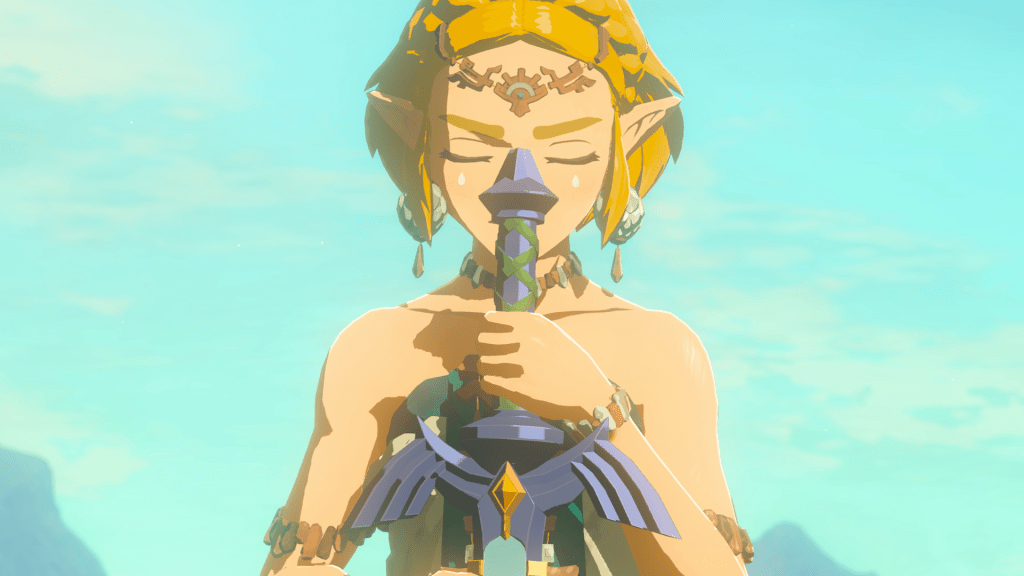
1. The Legend of Zelda: Tears of the Kingdom
The sequel to one of the most ingeniously designed, influential, beloved, and critically acclaimed games of the last decade… renders that predecessor, apart from its immovable historical significance, instantly and completely obsolete.
Tears of the Kingdom makes Breath of the Wild feel like a prototype.
Everything is better: locomotion; combat; the sandbox; puzzle solving; art direction; music; and story.
And making Breath of the Wild look that way means that Tears of the Kingdom is one of the best games ever made. The creativity of the new mechanics, and how they cohere to elevate the living in that world and the experiencing of its story, will make even harder for the next Zelda to trailblaze like this.
But hey, never underestimate Japanese game design.
I wrote about this masterpiece in more detail, here:
Best of the year
- The Legend of Zelda: Tears of the Kingdom
- The Last of Us Part I
- Final Fantasy XVI
- Resident Evil 4 Remake
- Cocoon
- Armored Core VI: Fires of Rubicon
- Jusant
- Super Mario Bros. Wonder
- Dead Cells: Medley of Pain
- Tchia
- Like a Dragon: Ishin!
- Alan Wake II
- Venba
- Wo Long: Fallen Dynasty
- Street Fighter 6
Happy to mention
- Mario Kart 8 Booster
- Viewfinder
- DNF Duel
- Season: A Letter to the Future
- Suika Game
 Opinion Seed