
Final Fantasy is more than my favourite gaming franchise. It is the reason why I fell in love with this artistic field.
I grew up a Sega kid and, with the exception of Pitfall The Mayan Adventure, almost no games from that generation were captivating to me, or are now better remembered because of nostalgia.
Almost three years into having a PlayStation 1, I was starting to feel the same emotionlessness towards the medium (3D graphics are not inherently more soulful than sprites). Out of nowhere, I get Final Fantasy VIII as a gift, even though I was not asking for it. I didn’t understand it from the outside – what kind of game is this?
Everything changed.
Of course, nearly 25 years later, what I expect from a Final Fantasy experience is informed by a ton of rationalizations and emotions, sometimes in conflict with each other.
So, what kind of game is Final Fantasy XVI?
The new mainline entry in this role-playing franchise is, first and foremost, the biggest departure from the core gameplay tenets that have come to define its identity and positioning as one of the fathers of its genre.
Yes, Final Fantasy, as an anthology with more than 35 years of existence, has been healthily prone to shake things up from time to time. For example, discrete turn-based battles were disrupted in 1991 when Final Fantasy IV introduced ATB – Active Time Battle. And the deviation towards a more real-time action gameplay has been taking form since 2006, with XII and then XIII.
That being said, Final Fantasy XVI is all-in in that direction. And, when I say all-in, I mean ALL-IN. When it comes to the combat, FF16 is closer to Bayonetta or Devil May Cry than to any other Final Fantasy. Not necessarily because it is real-time action through and through, but because you have almost no control over the other members of your party.
I should note that, despite the focus on a single character, this is not a character-action game as a whole. At the same time, it’s also tricky to say that it is a full-fledged role-playing game.
It is an adventure game, with RPG elements, more than Bayo or DMC. However, its combat is much more interested in spectacle than other recent adventure-RPGs like God of War (2018) or Dark Souls.
All in all, you are Clive Rosfield, firstborn son of the ruling family of the Grand Duchy of Rosaria, and thanks to treacheries and machinations worthy of a Game of Thrones plot (truly, as the first Final Fantasies were heavily inspired by Lord of the Rings, FF16 is the Japanese take on GoT), he finds himself roaming the semi-open world of Valisthea, tackling new missions in either the big events happening at the core nations, or side quests at smaller (but well realized) villages surrounding the conflicts.
Essentially, besides the occasional fetch quest, you fight yourself out of the roadblocks.
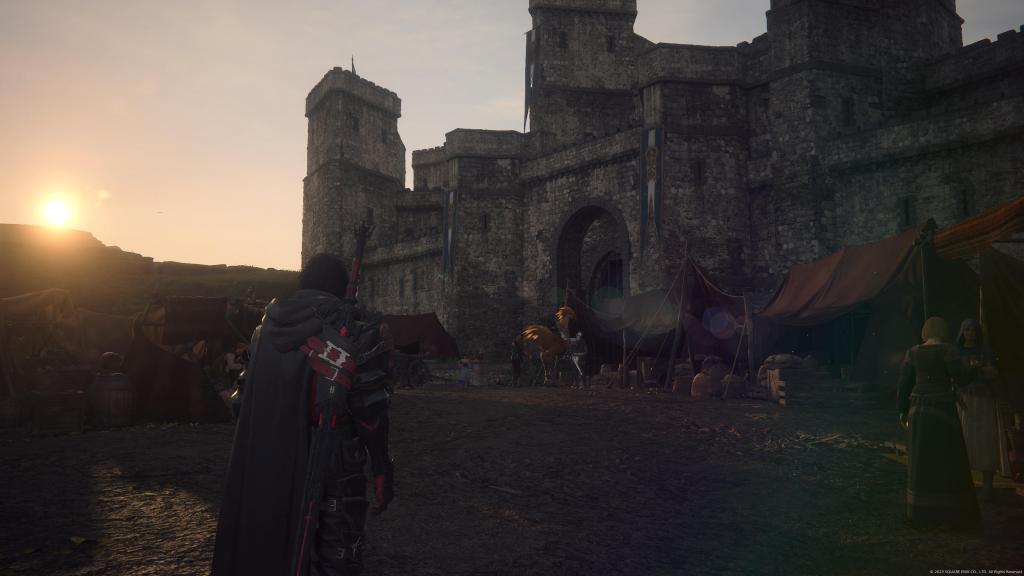
There’s a part of me that would love for this game to have an extra activity in the moment-to-moment gameplay: the dialogue choices and consequences of The Witcher; the environmental puzzle solving of God of War; the platforming sections of Bayonetta; or even a staple mini-game like the Final Fantasies of yore.
Still, I shouldn’t sell the fighting short.
Even if not as deep as the kings’ of combat-only (Sekiro and Nioh), it maintains its fun throughout the 65+ hour adventure.
Clive’s animations immediately look and feel immaculate, and the buttons do cool actions that never tire. Like I said, coolness and spectacle were the design cornerstones here, but even more impressive is how smooth all that visual style can be pulled off and how everything links up within a myriad of options for self-expression.
The basic attacks and movements guarantee a baseline of quality, yet it is the level of customization of sequences and specials that keeps you engaged with the game’s sole proposal. For me, it never reached the emotional highs of customizing party members (it’s really a shame that you have zero control over the other characters, particularly when they are so well-written and fleshed-out – more on that later), notwithstanding, the gradual acquisition of powers from different Summons does a lot of heavy-lifting in regards to that diversity of actions a fully-controllable party used to provide.
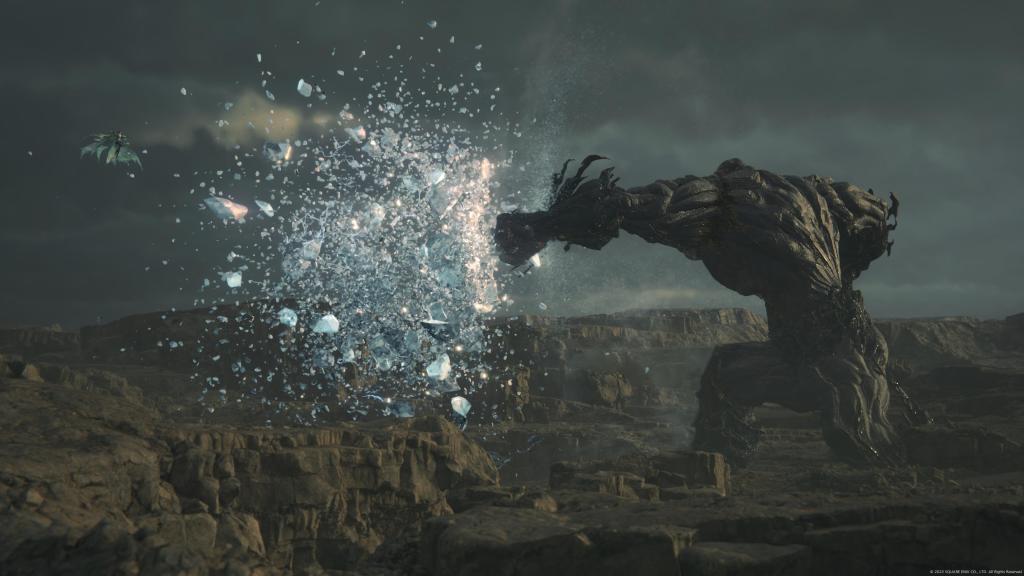
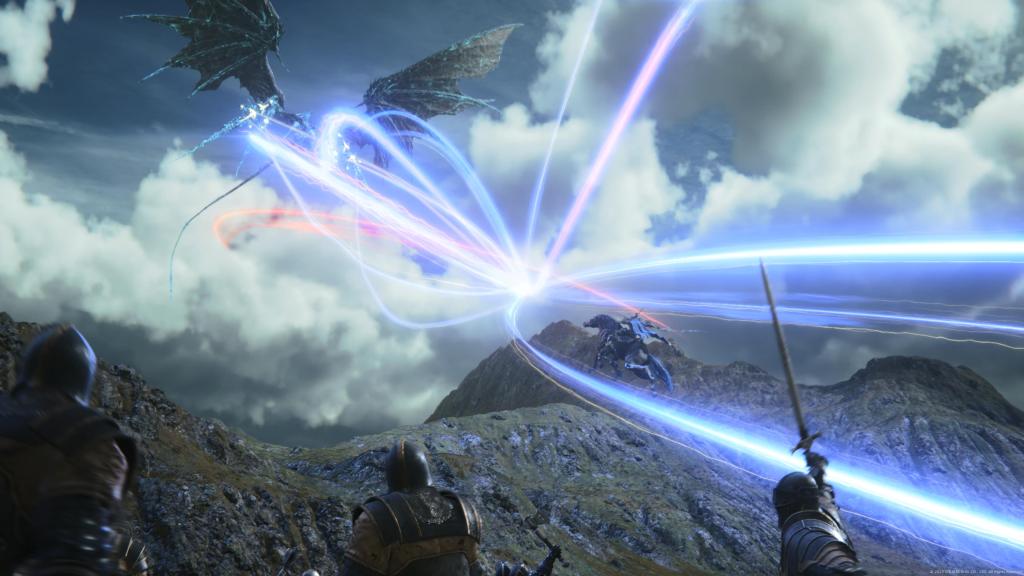
Summons, or Eikons in FF16, have the best characterizations of the series. They act as theo-political sources of identity to the different nations in the world, while simultaneously serving as invasion deterrents in the form of weapons of mass destruction.
I appreciated notably the fact that the game only allows you to take 3 Eikons at a time to a battle (like controllable and customizable party members in the Final Fantasy games of old). As such, you have to make decisions about the best combination of powers, how they link up with each other, and the also very important element of how you are feeling at the moment and how you want to express those feelings through over-the-top visual flair.
This decision-making keeps working because, even if you reach the level cap of 50, you never get max ability points to unlock all powers. Simultaneously, the designers were shrewd by allowing us to always be able to remove points from one Eikon and allocate to another. More, if you max-out a specific power you can assign it to a different Eikon. I never did this because the identity of each one was so well-defined in the story that I treated them as characters with their own specialties. Nonetheless, I can imagine the permutations of attacks that allows for, since, with even my self-imposed restrictions, I was already pulling off some insane numbers.
On a less than positive remark, I would’ve loved for the enemy design to require the use of specific powers on specific foes. Alas, I guess that would’ve undermined their trade-off philosophy of 3 Eikons per battle, and would’ve required an approach of constant availability through a power wheel of some sorts.
More importantly, all Eikons are so viable in their own right that I never found myself addicted to stats and/or the visual results of just one or two combinations.
It is such a joy to use those powers.
And to GET them?
Oh god…
I said above that Game of Thrones is a big source of inspiration for the overall vibe of Final Fantasy XVI’s world. And it is: there is political stratagem between nations; twists and turns out of whims; dark human behaviour; addictions that make the peoples not be black or white; or even the bad reception of your good deeds by the ones who had most to gain from them.
Though, as much we can say this is the most self-serious and down-to-earth visceral Final Fantasy has ever been, this is also the MOST FANTASY FF has ever been.
It’s honestly a disservice putting into words the sheer magnitude of what happens in those epic battles against bosses. Let me just say that, if you have a big 4K TV supported by surround sound (the audio mix is stellar), you will witness the first true technological leap of this generation of consoles.
Moreover, it’s not only spectacle for spectacle’s sake. You establish a connection with the weight of that destruction, because you know the cultural and political importance of those summons to that region. And also, get to go see, in situ (with ‘small’ Clive), the ripple effects of that loss on the cities, villages and peoples of each domain post battle.
Your powers come at a cost, and the game is consistently good at navigating that theme. As well as Ben Starr, the actor portraying Clive Rosfield – his voice and facial expressions have the nuance essential for that dichotomy to come off-screen.
And I’m being borderline disrespectful for taking so long to mention the original soundtrack.
Music is an integral part of the Final Fantasy experience. It’s the connective tissue making moving around, fighting, caring for characters, and feeling a sense of place all come together in a cohesive potion of worldbuilding and escapism.
Even if you don’t like Final Fantasy games, it is undeniable that Nobuo Uematsu’s works are some of the best scores ever composed for any audiovisual media.
And this legacy is in good hands.
I admit to not having prior knowledge of the work of the new composer to the series, Masayoshi Soken, but I had heard raving reviews coming from FF14. And people were not wrong. This dude is a heavy weight!
Soken clearly knows what made Uematsu’s compositions beat like the heart of a Final Fantasy world. That core is there, with new and old leitmotifs organically flowing in at the right place and time, without ever superimposing the moment (but underscoring the feeling) – I will never forget the new Cid’s theme.
Even so, he is a heavy weight because he also knows how to grab the moment and elevate it with big orchestra and symphonic choir. FromSoftware composers have been the undisputed champions of epic music in videogames for a while, particularly those boss fight tracks. Yet, I risk saying that it is Soken, with this FF16 score, that is reaching closer to the power of what Hans Zimmer achieves in movies.
It is THAT good.
I also have to give my two cents on the ‘other’ integral part of the Final Fantasy experience – the story and its writing.
This was THE THING that made me fall in love with the franchise, and with gaming, for that matter. Final Fantasy, thanks to its anthological nature, quickly became a canvas for transgressive strokes on the conventions of its monolithic forefathers – Lord of the Rings, Dungeons & Dragons.
And you, as a player, were not only observing disruption of principles and rulesets, but were also actively engaging with the consequences of those transgressions to fantasy storytelling and worldbuilding.
Magitek, where magic is no longer looked at as only an ethereal expression of mysticism, but also as a resource that can be exploited to fuel engineering advances, leading to transformations in objects of daily use, of military, and of power mongering – Final Fantasy VI (1994).
Medieval fantasy mysticism in a post-industrial science-fiction milieu, expressing cyberpunk revolutionary action, mixed with pre-industrial communion with Nature, and leading to a mission statement of eco-activism against (not a kingdom, but…) a megacorporation – Final Fantasy VII (1997).
Child soldiers, gifted with the power to summon fantastic beasts, are separated and sent to different nations in order to serve as military deterrents and maintain peace. As they grow up, the more they resort to the mythological creatures, the more they lose their memory and recollection of having known each other. With pieces of the puzzle being grasped through missions in each other’s nations, not only their shared past is gradually revealed, but also the realization that their present is not more peaceful than when they were orphaned. They decide to attempt time compression in order to recover their memories and also usher in a new world in which peace is fought for and not manipulated by – Final Fantasy VIII (1999).
Final Fantasy XVI’s story is, in essence, a convergence of these three themes. The writers at Square Enix polished the edges of each one, becoming narrative threads that were simultaneously more comprehensive in their respective lines of thought and also made sense as a unified thesis.
Like I said, this is a Game of Thrones world, with all its tropes and archetypes. But it is also very much a Final Fantasy world. And it’s in this intersection that this game’s worldbuilding finds itself with a strong knot.
I know George R. R. Martin wrote the lore for Elden Ring. And while I love Elden Ring’s story, FF16 feels way more like the game fans of GoT have been clamouring for (maybe because George didn’t want Elden Ring to feel like GoT).
This Thrones’ approach to treating nations like entities capable of movement and of establishing relationships with each other helped propel the plot of FF16 without resorting so heavily on the macguffin device like previous entries in the franchise.
Also, the Thrones’ angle on decision-makers and political/military leaders brought a new dynamism to the way protagonists and antagonists relate to each other on a micro level, while supporting the macro movements of the ‘nations-plot’ and the macro thesis of the game as a whole:
Beings do so much to hide their imperfections and obsessions, that they obsess over progressing towards perfection, marginally destroying more in the process, and creating more physical and mental shackles than innovation.
The journey of Clive and his allies is to break that cycle and those shackles.
And, despite that not being an innovative concept, the ending of this game’s story is ballsy and, more importantly (to sustain your interest throughout the previous acts), it is the way the Thrones’ structuring informs the Final Fantasy styling that keeps giving worldbuilding morsels that engage your curiosity to see how the characters and the nations will react to your actions in the next big mission.
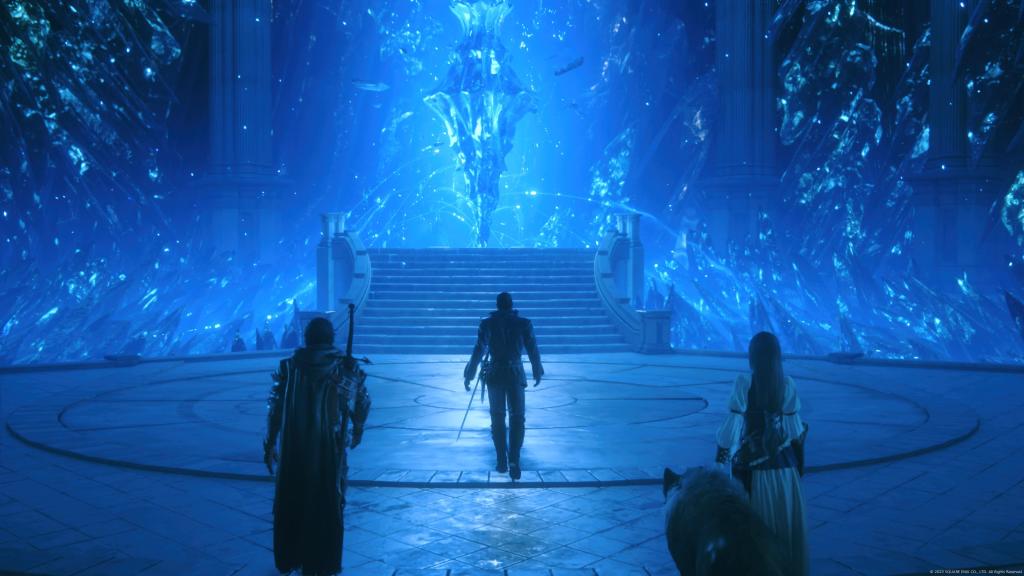
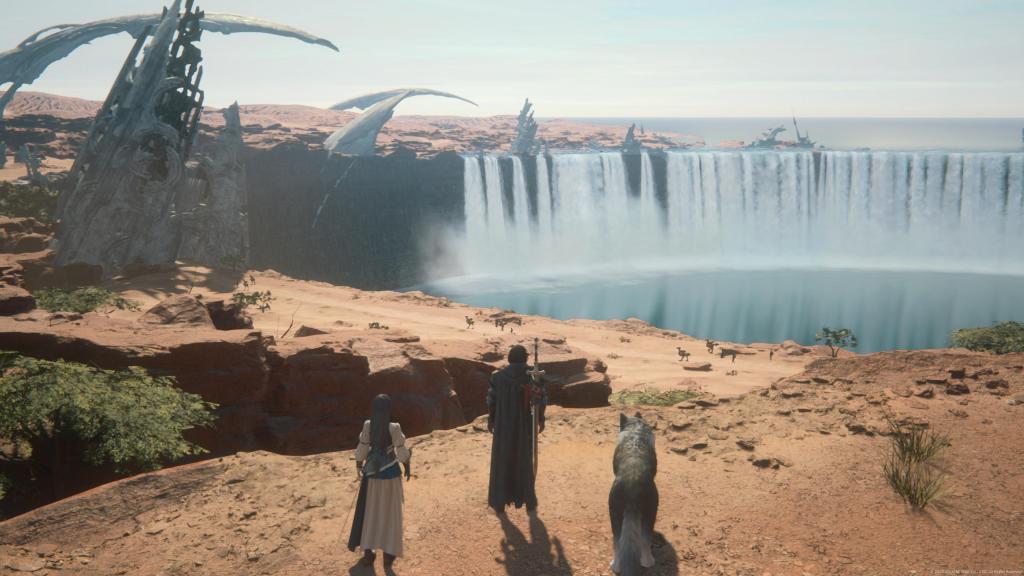
Previously, I stated that I would love for this game to have an extra activity in the moment-to-moment gameplay (dialogue choices, puzzle solving, platforming, etc.). Notwithstanding, and even if I maintain that, Active Time Lore might have just occupied that space. And what a new feature!
The development team was so proud of the rich world they wrote and created (if you are about to pastiche GRRM, you better up your game when it comes to descriptive and fictional detail) they designed a very innovative framework to engage with information and chronology (or even anecdotes) about characters, landmarks, mythology or other living creatures.
This feature is very well implemented because it transcends the user interface. That is, the experience of using it more than connects gameplay to narrative – it enhances this relationship.
You just need to press the touchpad during a cutscene or while on a mission (while roaming the semi-open world this doesn’t work because that’s the map button), and 5 or 6 bubble-portraits will appear on screen – completely contextual to the place and moment you are currently in –, allowing you to open them and get an ‘up-to-date’ summary of a character, event or concept.
Not only is this frictionless, but the devs also expand on it. You have an NPC in your group who is an historian curating information about the world and your adventures. And you engage with him so much because of planning missions or side missions that you end up peeking his compendium. It’s gamified to a point that, if you go to him, every time you complete a big mission his knowledge grows and you unlock secrets and curiosities about the world that makes everything feel way more interconnected and lived in.
Additionally, when the story starts to become even grander in scale, you welcome another NPC who is an expert in geopolitics, and she structures all that information of the Active Time Lore in two very comprehensible frameworks: a dynamic map that changes based on a chronological slider; and family trees that also change through chronology. These allow for complete control of the timeline (up to that point), and every element on them is clickable. In each point of the chronology you can click on a character, on a city, on an invasion, on a battle, and get contextual storytelling of motivations, status, plotlines that Clive did not witness (this part is so cool, because it ‘populates’ the world).
As you can see, Active Time Lore is so present throughout your adventure and, more importantly, is so seamlessly interactive that one might risk and even call it a core mechanic.
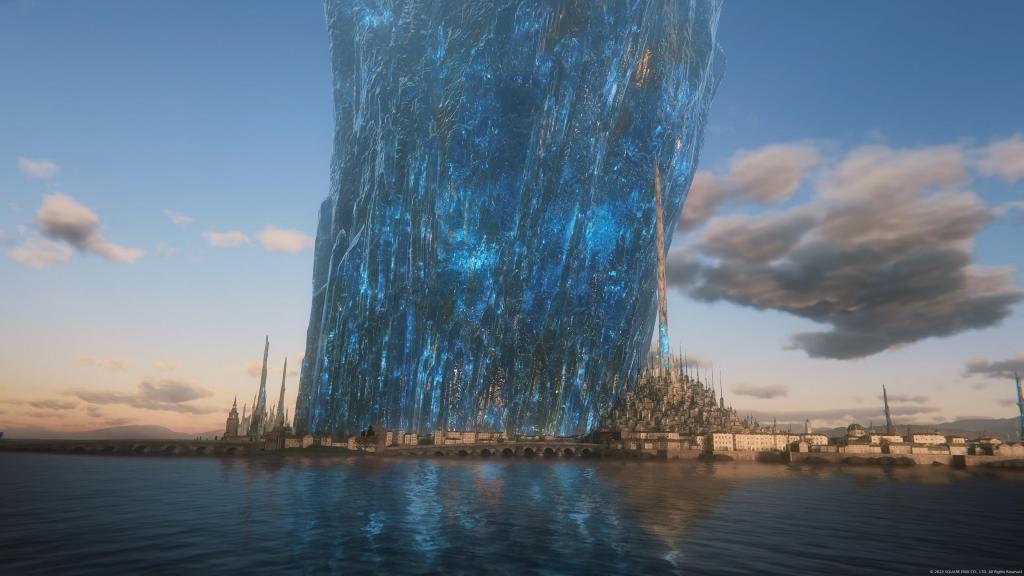
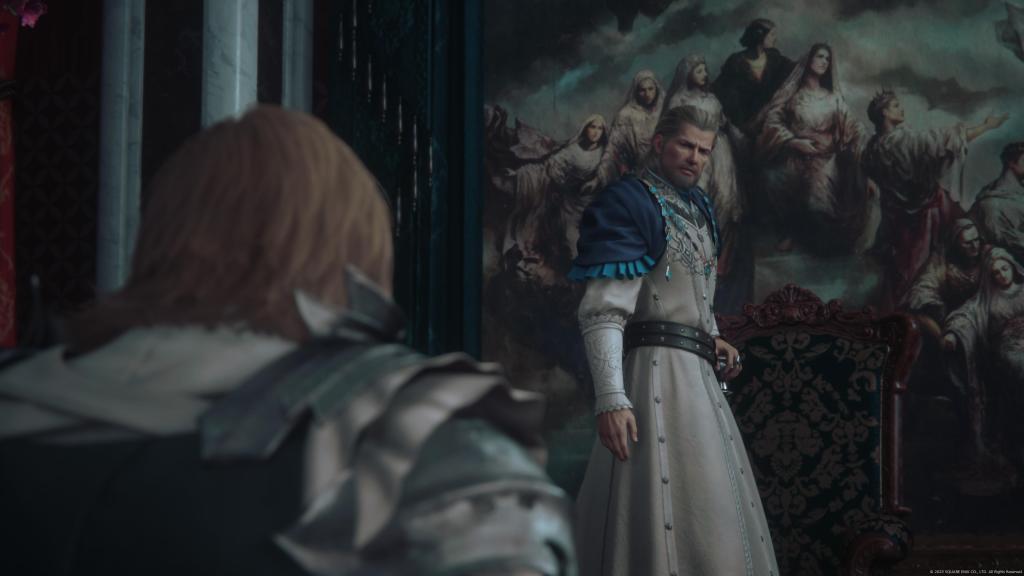
Of course, nothing of these would be possible or so engaging if the writing wasn’t immaculate. And it is. So very much. From item descriptions after each battle (yes, they show it immediately, and it is glorious), to side quests (not all are great, but some have the best writing in the entire game), to the cinematic dialogue of the grand-stage dramatic sequences.
This quality of writing also nourishes character, characterization and character development. They are so compelling and layered that made me even more irritated with the fact that you don’t get to control or customize your party.
I just had to come to accept it and enjoy their intricate believability on those terms.
Clive, the character you indeed control, gradually becomes one of the best protagonists the franchise has ever had. Believe me, this is not hyperbole, I also did not see it coming. Look at his design! His name is ‘clive’. And yet, writing and Ben Starr (the actor) completely elevated him. He has more than an arc. He organically changes throughout the years. You get to know him in three stages of his life, and all make sense as periods of agency to the player (the teenager chapter is particularly poignant in retrospective).
The time skips and the ending are so powerful. I’ll leave it at that.
Cid, the first big companion you get, is another immediate entry to the Final Fantasy hall of fame. Probably the most influential character in all of this game. His voice is an inspiration to so many other characters. And what a voice. Ralph Ineson, the actor, gives one of the best performances in all of gaming history. Not hyperbole again. I never thought Ineson’s gruff tone would suit such a smirkish character. But that’s the power of great writing. And Ineson’s raspiness made the intelligence of Cid’s words even more memorable.
Torgal, the wolf (direwolf?) companion that you exceptionally get to command, also gets to have an affecting characterization. Probably one of the best animal companions in the history of gaming. The final side quest dedicated to him is also very lovely (once again, the teenager chapter of Clive will collect its fruits).
Jill, the woman companion, if not on the level of Clive or Cid in terms of writing, has a vigorous main chapter, and is a counterpoint to Clive that he always values and assimilates.
Dion, the Bahamut summoner, is the coolest opponent in the game.
And even the side characters or remote NPCs get to shine in their own side quests. Those optional missions might not be the most captivating in the beginning (still better than grinding like in the old games), but if you follow them through you will be rewarded with some of the best emotional bonding a protagonist has had with his network of allies. These interactions elevate both Clive as a character and the world around him.
All in all, a game with great writing.
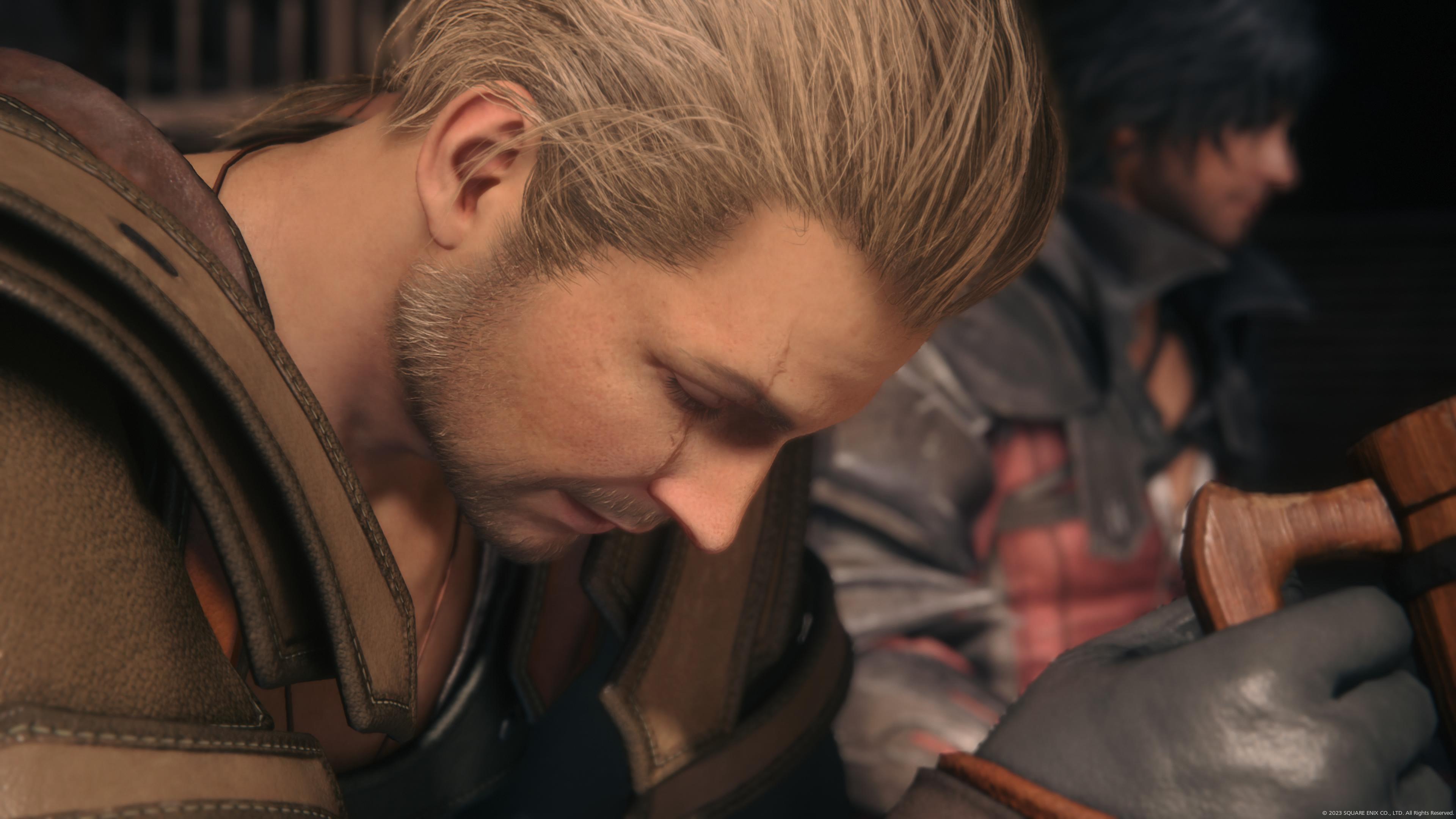
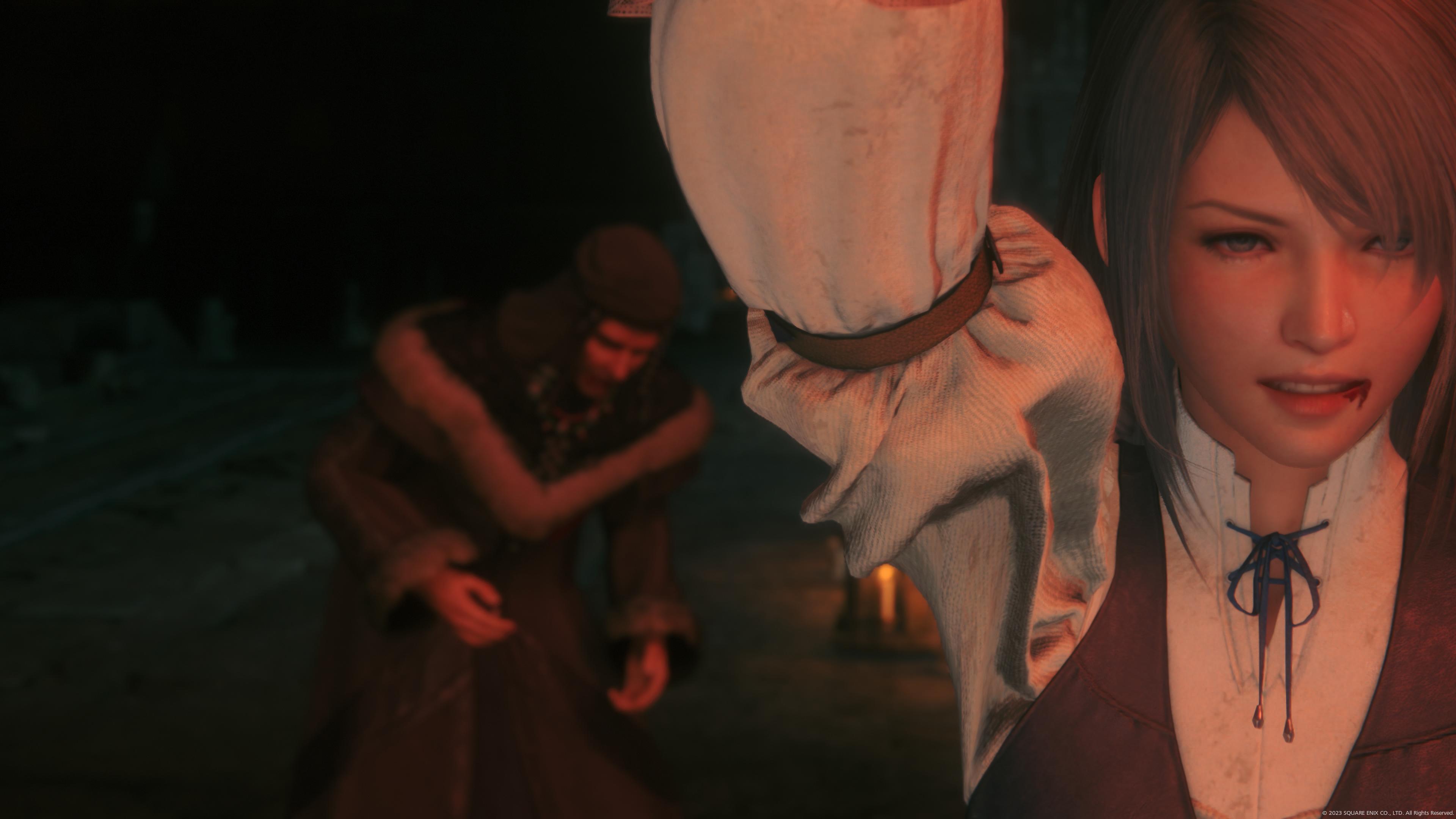
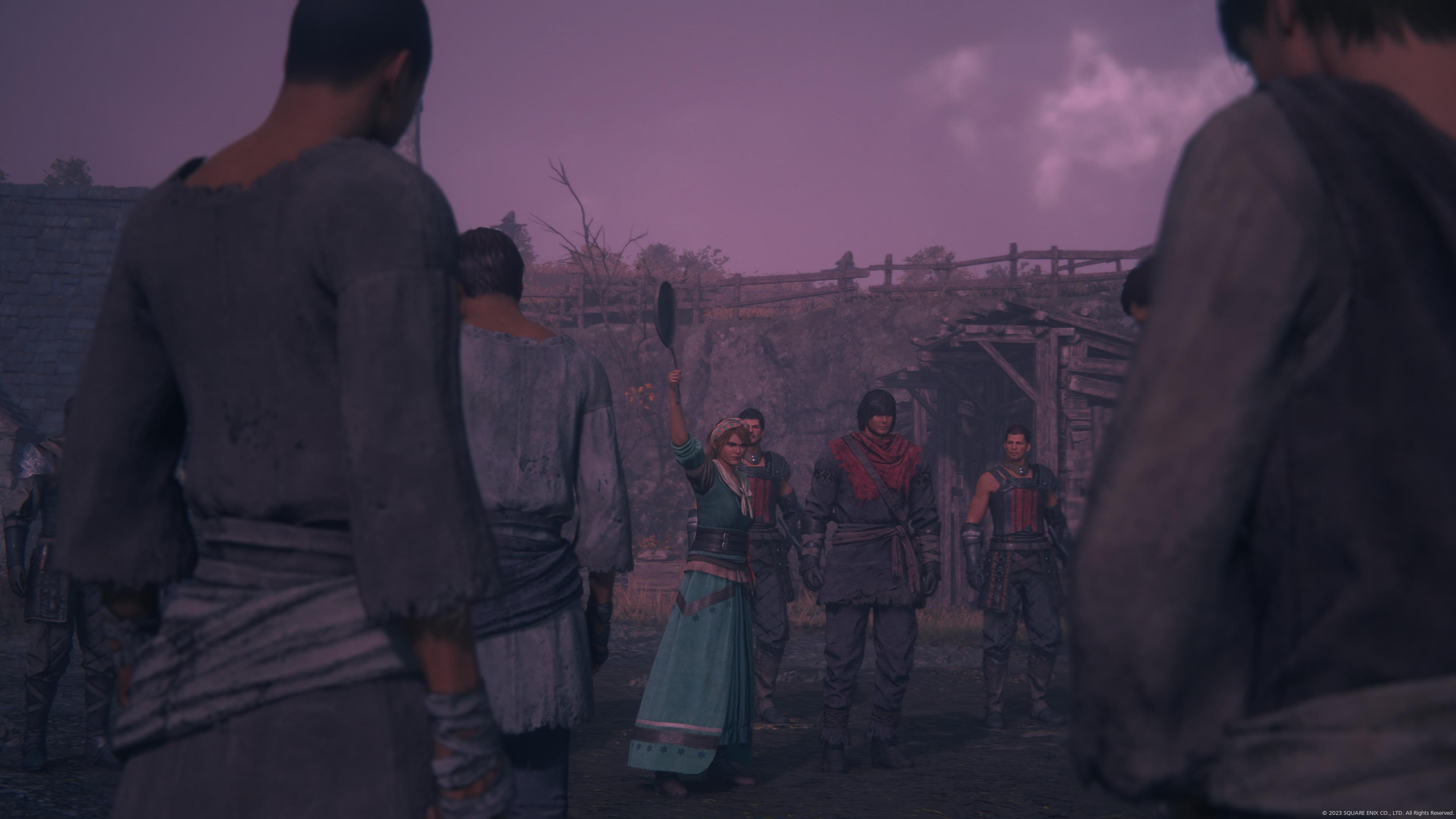
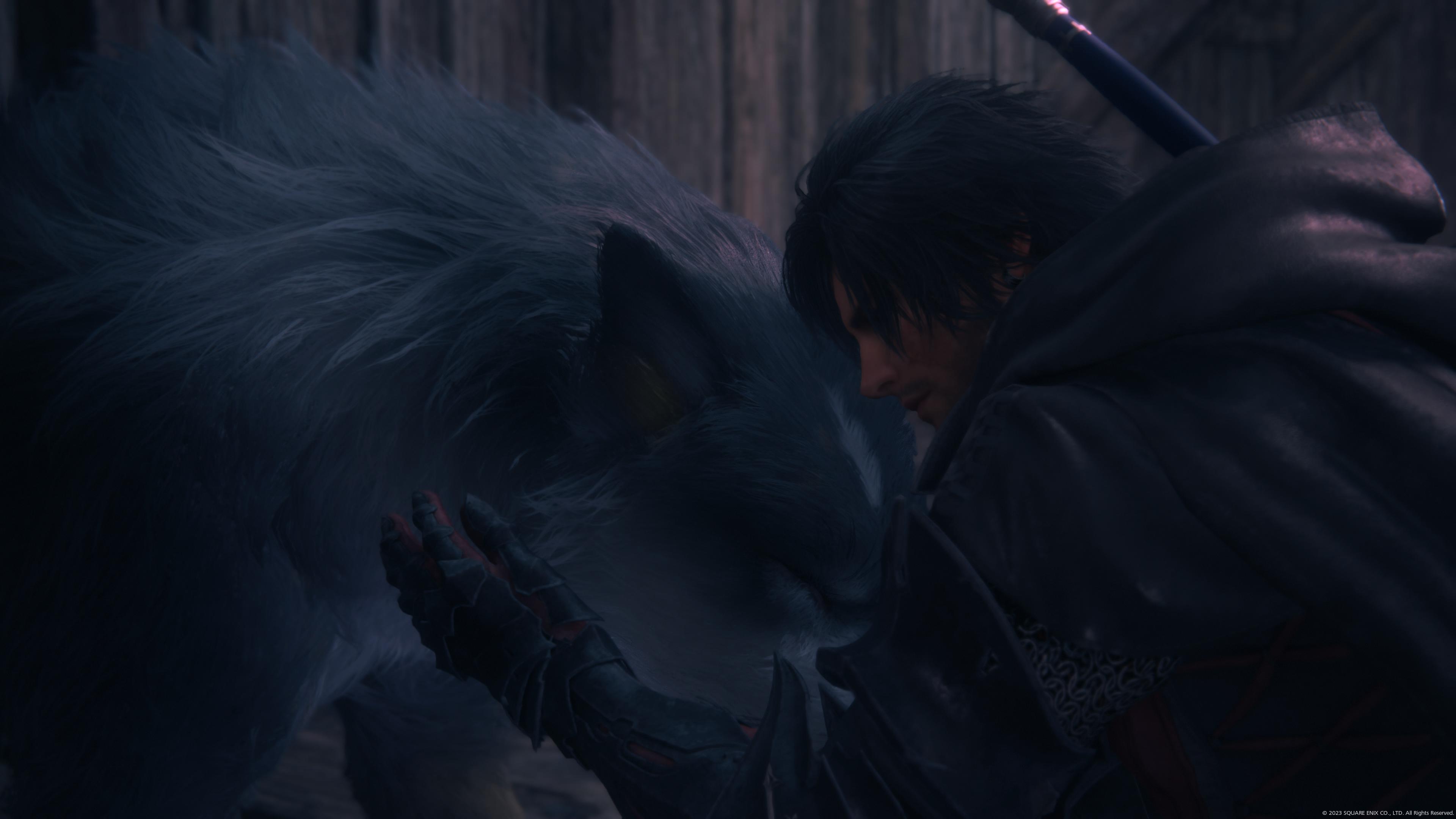
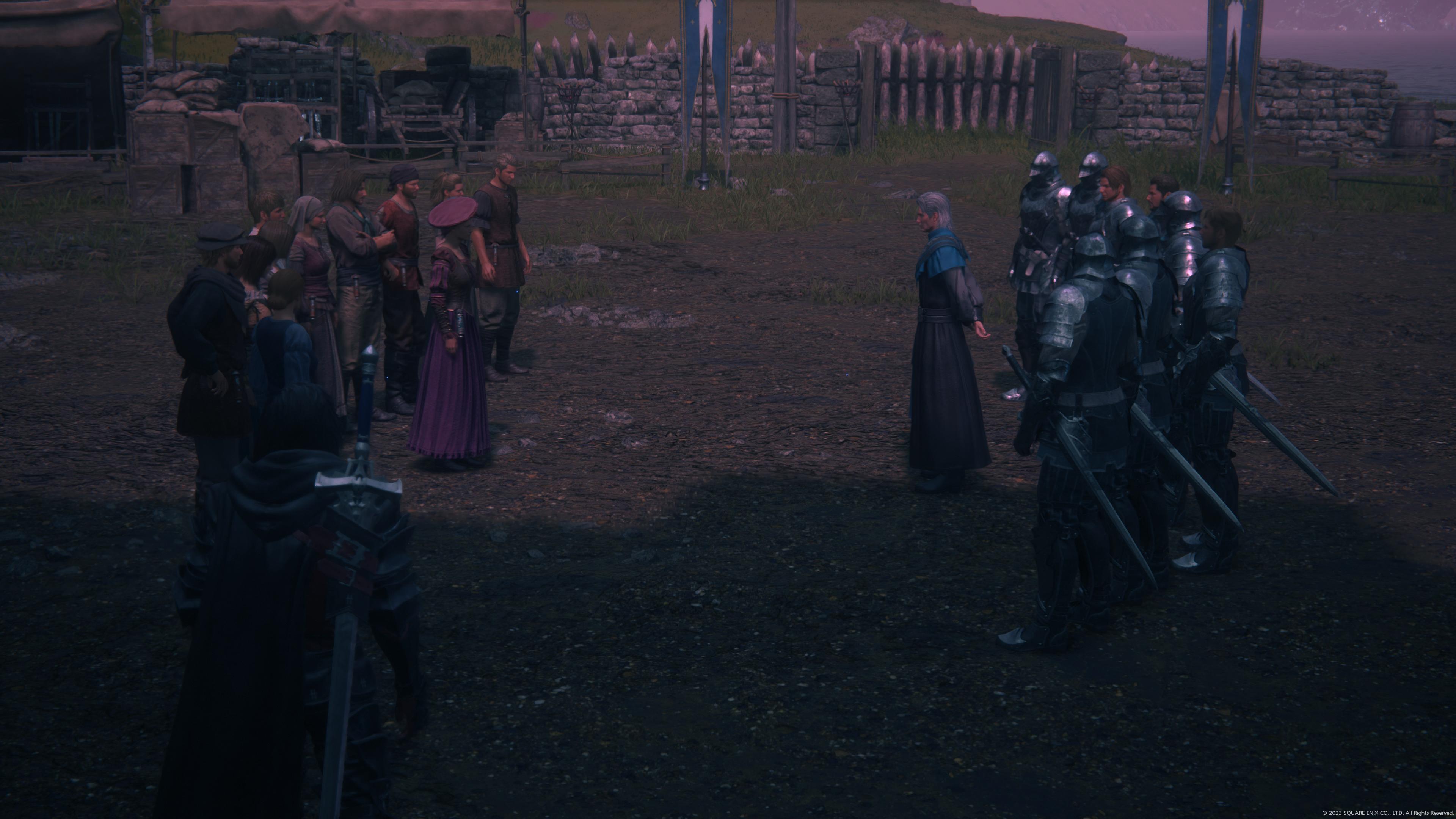
Coming to the end of this review, I can say that I have very much enjoyed Final Fantasy XVI.
This franchise means a great deal to me. Still, I abominate the ideology of being a ‘purist’ of something.
What made me fall in love with this anthology was that its best entries are uncompromised and subversive takes on its templates.
And, Final Fantasy XVI, regardless of its big deviation from my references, had a vision and thoroughly and passionately executed on that.
On those terms, I still have some nitpicks with it:
- Character writing would be even more heightened if you allowed for control and customization of the party members – after all, what makes gaming rise above other art forms is character control;
- The world could be more open – these nations and their cities and villages have such strong lore that I would love to feel their interconnectivity through more realistic geography and not corridors;
- Less is more – the game has a substantial quantity of well-written side quests, so it doesn’t need that many extra to pad and diminish the value of the good ones;
- I would love for this game to have an extra activity in the moment-to-moment gameplay (dialogue choices, puzzle solving, platforming, etc.); and
- Since combat is the majority of what you do, and it has an in-world implementation of accessibility options that make newcomers feel cool instead of demeaned, I think the game should also have a harder difficulty option from the start (only the last bosses made me deplete my potions). More importantly, the combat should be better at showcasing and engaging you with its depth (like its inspirations of Bayonetta and Devil May Cry that, for example, have enemy design that require the use of specific weapons and/or tools to beat) – and I know this fighting engine has depth, because I tested the auto-combo accessibility option and it presented amazing combos with the different summons.
In summary, and without hiding away from the type of measurable critique a commercial product like this should be submitted to, with these less positive points, the baseline structure of the game starts at a 6/10.
The combat has a lasting fun that raises the score to a 7/10.
AND the amazing feat to realize on the design and direction to meld Game of Thrones with Final Fantasy AND the spectacular nature of Japanese action choreography, all weaved in with elegant and provocative strands of writing, cements this overall experience at a strong 8/10.
Like Game of Thrones was an easy recommend, even for people who don’t like medieval fantasy, Final Fantasy XVI is the perfect entry point for newcomers. And for the old guard like me? Enjoy that IP can be this disruptive and confident each time it has a new vision – more should be like this.
 Opinion Seed