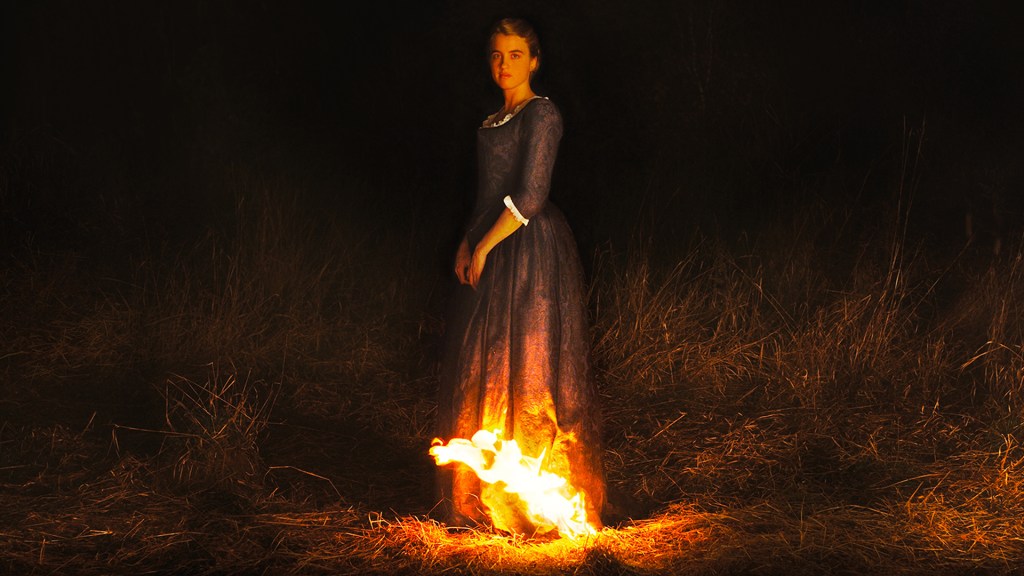
Despite the pandemic context, that forced theaters to close, 2020 ended up having a catalog of releases not that dissimilar to previous years, in quantity and quality, as many distributing companies decided to sell their rights to streaming platforms.
This is a ranked list of the most agreeable experiences I got from cinema in this period, and I hope that it’s both helpful and enjoyable 🙂
But first, let me share the criteria I use when ranking movies:
- Entertainment factor. Either from the plot, the acting, the lines, the special effects, or everything combined, the film should keep my attention, and maybe show me something new;
- Emotional response. Fear, anger, joy, or tears;
- Intellectual content. A new perspective I had never seen before, or by presenting concepts that leave me questioning myself or the world around me;
- Re-watchability. I want to see it again. I want to share that experience with someone else, so they can feel what I’ve just felt.
55. Mulan
I know there are a lot of people who question the need for these live action remakes (and their artistic merit), particularly when they are 1-to-1 reproductions of the original.
Honestly, I don’t care if they are remade, revamped, reimagined or whatever. I always have two hopes for these productions: 1) they end up good movies on their own; 2) some of the grand amount of profits these safe intellectual properties generate will help finance new original endeavors.
Mulan (2020) is one of the least 1-to-1 recreations in the recent Disney trend. And, even if I applaud the effort to transform it a bit, and the fact that the movie is an entertaining watch, it’s nowhere near as good as the 1998 original.
They tried to spruce it up with Wuxia elements, and it’s not a bad train of thought. The problem is that they stopped midway. Always go all-in with Wuxia.
54. The Old Guard
Cool action movie, built on a semi-novel premise.
The choreographies and visual effects don’t let down the unusual proposition, and the cast is too good for this story.
53. Weathering with You
I have mixed feelings about this.
On one hand, I acknowledge that Weathering with You is a very good animation movie, with cutting-edge craftsmanship. On the other hand, the experience of watching it was nowhere as riveting as the previous work from Makoto Shinkai – Your Name.
It’s a bit unfair to be disappointed with this movie, since Your Name is one of my all-time favorite films. Even so, and trying to be as objective as I can, Weathering with You is not as expertly written and edited (also Shinkai) as its predecessor. It is as ambitious in its messaging, but never finds the same balance between visual and verbal storytelling that makes Your Name so enchanting. This ends up hurting its pace, since it has more aggressive cutting to serve character instead of action lines.
Still, like I said, this is an audiovisual powerhouse. The cinematography, even if not by Shinkai, is as high-level, and the music by RADWIMPS continues to be perfectly cued to bring about some tears.
52. Calm with Horses
In crime movies, if the filmmakers decide that the protagonist is going to be one of the bad guys, usually he’s the mastermind, not nerd, who exudes rock star vibes and has his vices. The embodiment of power fantasy and guilty pleasure.
Not in Calm with Horses. Here the main character is the muscle grunt down the ladder.
This choice might make a movie lose some mass-appeal, but, what this film surrenders in entertainment-factor, it gets back in a cogent character arc that efficiently (less than 2 hours) analyses how crime exploits the disenfranchised.
51. The King of Staten Island
Not the typical Judd Apatow comedy.
It has some of his chirpiness, but you’ll find this screenplay way more caustic and less carefree with serious subjects.
I would argue that this cast, a bit more stinging than other Apatow’s productions, helps a lot. Marisa Tomei and Steve Buscemi, in particular, are really good at conveying sharpness and bringing down the frivolity, without losing the fun.
50. Borat Subsequent Moviefilm
The biggest irony in this new Borat movie is that the first (2006) was so monumental and influential that, since then, other comedians have tackled 2020’s issues in ways that make Subsequent Moviefilm feel a little bit dated.
Sacha Baron Cohen’s undertaking is still very powerful and impressive; especially if you contemplate that he works a talented drama career in parallel. He has a keen eye for identifying the micro sources of macro problems; but, he doesn’t point them to us. What remains fresh in his act is the way he makes us point to ourselves.
Additionally, the movie introduces Maria Bakalova, portraying Borat’s daughter, and she is riveting at this improvisational, even dangerous, approach to comedy.
49. Enola Holmes
The jolliest movie of the year.
What makes it such an easy-going watch is the vitality of the cast. All contributed with the proper amount of energy.
Even so, I should highlight Millie Bobby Brown. She has tremendous range and is more than comfortable being a lead.
Daniel Pemberton’s music also helps. It will liven up your spotify radio.
48. The Personal History of David Copperfield
Armando Iannucci keeps adding memorable movies to his occasional filmography.
He has a knack to let his casts get their hands dirty, without ever falling into overacting. This allows for continuous shots that become the kind of kinetic and verbose of set-pieces in action movies, but instead of guns and karate, the weapons are the English language and theatricality.
This movie, in particular, was really apt at making the naturally erratic pace of someone telling his life story, with all its ups and downs, feel pleasantly imaginative and dream-like, instead of erratically eccentric.
As a matter of fact, its biggest triumph is not making you believe in the story, but in the legend of David Copperfield as a great storyteller. Dev Patel’s talent, of course, plays a big role in achieving this effect.
47. Palm Springs
Groundhog Day on a wedding.
This narrative structure allows for some smart considerations on the meaning of things: what it means to be a couple; what it means to be happy with another person; to find happiness in another person’s happiness, etc. etc.
All in all, it’s a cute movie, with a great performance by Cristin Milioti.
46. On the Rocks
Only Sofia Coppola could make a conventional romantic comedy look so pictorially elegant.
The fact that so many shots are so dignified tricks you into believing this story is more than what it seems. Without this cinematic atmosphere, the mystery in the plot wouldn’t work.
And, also thanks to Coppola, we get to see Bill Murray at the top of his game again. I honestly can’t tell if he was improvising in half of the scenes, but it’s just fantastic.
45. The Life Ahead
First-timer Ibrahima Gueye is the standout performance of this movie.
What is more impressive is the fact that he goes toe-to-toe with 86-year-old legend Sophia Loren.
Alongside the acting, the film also has a gentle story that is worth watching.
44. The Way Back
Yes, it’s one of those…
…wait wait wait wait…
It’s also a more refined version of that. Let me explain.
For all who know what Ben Affleck’s been going through in his personal life, it becomes clear how this movie is more than a cinderella story. There’s a weight of redemption in many scenes – a genuine scrabbling.
He is channeling his own catharsis through this character. That’s why the melancholy in the cliché beats doesn’t feel manipulative like in other movies of this genre. And that’s what makes the explosive moments so charged and raw.
43. The Assistant
This is a tough watch, nothing happens, and it’s all intentional by writer-director Kitty Green.
It’s precisely the absence of action, and reaction, that makes the message of this movie much stronger.
Even so, you have to be ready for the mundanization of concealment, encapsulated in 1h30 of film.
42. Listen
The strength of this film resides in its cinematography and acting.
Almost every frame is claustrophobic, recreating the persecution and collapse this couple certainly lived in.
And the performances by Lúcia Moniz and Ruben Garcia are so authentic that their wrinkles look like scars.
41. Martin Eden
If there’s one thing this movie accomplishes above any other this year is the recreation of charismatic happiness.
Anchoring this joviality is first and foremost Luca Marinelli, the main actor. His demeanor is crucial, since he’s asked to portray a proletarian autodidact who finds joy in culture and education.
This affability is even more pronounced when a love interest from the upper-class motivates Martin to educate himself. And, from here, the crux of the movie starts to reveal itself: is he moved due to new found artistic sensibilities, a search for a political voice in his proletarian condition, or a hope to achieve placement among the elite?
The way Martin questions the liberalism of his aristocratic circle, fighting back those who assume socialism out of his condition, and affirms himself as a non-hypocritical individualist makes me think that Eden is the quintessential young mind infatuated with the eloquence of schools of thought fighting for decades.
His journey might seem like a fairy tale, but the way it is scarred by real human drama suggests that the motif here is indeed an attack on individualism, and that socialism as a “slave morality” is a cry for acceptance within the group.
40. A White, White Day
An intentionally sterile and minimalist depiction of the need to control death and memory.
Ingvar Sigurdsson is an imposing presence, while flawlessly presenting emptiness. More precisely: a void in fulfillment.
39. The Trial of the Chicago 7
Inspirational courtroom dramas don’t get much more formulaic than this.
Being conventional, however, isn’t mutually exclusive to quality writing an quality acting.
If you like a star-studded ensemble cast being hearteningly eloquent with a verbose script, look no further.
38. David Attenborough: A Life on Our Planet
When I was a kid, I dreamed of one day having the job that David Attenborough had.
I’ve been watching his documentaries with great attentiveness and passion, and I never thought there was something missing in them.
Now I know there was something missing: his opinion.
Sir David is the best descriptor of wildlife. Nobody reached so many, taught so many, enchanted so many. And yet, he always maintained his journalistic neutrality and scientific matter-of-factness.
No more. At 93, Sir David has come to us at a tipping point in the sustainability of our home and delivers a mission statement that is both disciplinarian and uplifting. It is disciplinarian because it is based on crude hard facts that he has seen with his own experienced eyes. And it is uplifting because his eyes have also witnessed the good that humans can do when they put their explorer’s minds into something.
It really is impressive how he’s not lost hope at this age.
37. Ammonite
Sadness, resentment and overall anger don’t always have to be portrayed through the lens of melodrama.
This is what sophomore writer-director Francis Lee proves with Ammonite. The performances he endorses from Kate Winslet and Saoirse Ronan are beautifully nuanced, with very subtle mood swings.
The plot is about how social and familial expectations become enclosing constructs, which would be a worthwhile examination in itself. However, Francis Lee is more interested in exploring that moment when you break with what is bottled-up, and how you relearn to be happy again.
36. Ma Rainey’s Black Bottom

Based on a play, and, in accordance to the main message here, the filmmakers do not shy away from those roots.
This makes the movie a little bit less cinematic. However, being thought for a stage also gives it the type of production arrangement ideal for extraordinary acting.
Viola Davis as the titular character is the true embodiment of blues, with so much to tell, but no time for small-talk. And the late Chadwick Boseman, despite his lankier presence, is even more dominant of the screen.
Even if the acting is on the theatrical, it is very clear that their dramatization is grounded in deeply painful truth.
35. Wolfwalkers
This movie has some of the most beautiful hand-drawn animation I’ve seen in my life.
It really is mesmerizing, not only from a technical perspective but also from a decisions’ point of view. So many frames could work as a single painting, since the arrangement of visual elements keeps giving and giving. And the most impressive aspect of it all is how Cartoon Saloon and Melusine Productions do not treat their artistic signature as sacred, letting the animation test its own boundaries whenever the narrative asks for it.
The story in itself is also avant-garde for the animation genre, even if the plot isn’t. Behind all the folklore and fantastical elements, there’s an emotional core of acceptance, and finding common ground among those we find so different.
34. Emma.
I usually don’t care much for costume dramas. Or costume comedies, for that matter.
By feeling the need to level the writing to the flamboyancy of the dresses, those movies tend to be over-encumbered and move too slow for my taste.
No this one.
This is a self-assured script that trusts in its cast’s ability to land their chamber piece rhetoric, and is innovative enough to even try some physical acting.
It helps that all the main performers are completely comfortable in their own skin, and their wit is there to serve the character and not their careers. This humanizes them, instead of the typical ciphers of the genre.
Finally, the articulation between the production design and the cinematography also generates a canvas in which this avant-garde approach is right at home.
33. Red, White and Blue
The third film in the Small Axe anthology is a gripping snapshot on the assumption that systemic maladies are more easily fixed from the inside, than from outside action.
John Boyega goes through an array of emotions, and yet, he maintains an inspirational through line, even when so many ideals fail him.
32. Alex Wheatle
The fourth episode in the Small Axe anthology is responsible for the best line reading I’ve seen all year: “Class and classicism (…) If you don’t know your past, you won’t know your future (…) Education, education…”.
31. Vitalina Varela
I acknowledge that Vitalina Varela is a cinematic masterpiece.
It studies the negative space of the frame with the type of confidence that only a true artist considers. This vision makes the love story in the film not worried with reflecting back at the viewer, but truer at soliciting reflection on how poverty and despair create a different type of love.
That being said, I also recognize that this subgenre of slow cinema is a hard watch for me.
30. Tenet

Christopher Nolan is my favorite director.
I don’t consider him the best, but he’s certainly the one that has managed to simultaneously make me think and have fun in the biggest percentage of career filmography.
His new movie, Tenet, is certainly thought-provoking and entertaining. I just don’t think it is as coherently polished at fusing both dimensions as his previous works.
Nolan’s greatest triumph is that he is really good at translating complex ideas (scientific or not) into discernible filmic language, always respecting the space for the audience’s intelligence and curiosity.
Tenet’s premise is certainly complex, yet, instead of working his magic, the movie seems to want to adhere to the palindromic nature of its title and has a scripting that makes some moments feel more convoluted.
Another aspect of Nolan’s that is always memorable resides in the creativity of his practical set-pieces. In Tenet, they are permeated with ingenuity, sure, but the artistic beauty is not on the same level.
To sum up, if you measure this film against others of the director, you’ll probably be disappointed. However, if you forget Nolan and compare this movie with other action flicks, you’ll give it credit for originality and prowess in visual storytelling.
Oh, and the music, despite not being Hans Zimmer, is really good. Composed by Ludwig Göransson, from Black Panther and The Mandalorian.
29. Divine Love
The Lobster brasileiro.
Both Gabriel Mascaro (writer-director) and Yorgos Lanthimos have something to say about the industrial complex of marriage, and the institutionalization of love, honesty and monogamy.
However, while The Lobster was much more focused on the fear of loneliness and depicted marriage as a constant trade-off evaluation on happiness and a compromise to not lose it, Divino Amor is much more concerned with how society (religion, in particular) perceives women’s bodies and how pregnancy influences the relationship balance.
Dira Paes is really delicate at juggling all of these themes, and even with the hypnotic cinematography and set-pieces, she makes the movie her own.
28. The Whistlers
A good old fashioned crime drama that, despite its formulaic underpinnings, is a very enjoyable watch.
The whistles are a bit of a gimmick, but since everything else was crafted with care, you also cherish your time with the movie.
27. The Domain
The best film of the year coming from my home country.
This is a very long movie, ending at the 2h 45 mark, and yet, I would have loved to see an extra half an hour with Albano Jerónimo’s character, João, completely aged and facing his demons in current-day Portugal.
Even without that, the themes of the narrative are properly fleshed-out, and its final message comes through. I just have the feeling that we could have been in the presence of an epic classic, with that extra weight in the third act.
26. The Traitor

The acting of Pierfrancesco Favino and the staging of the relationships within Cosa Nostra are so good and detailed, that the movie left me wanting for more backstory on Tommaso Buscetta.
The courtroom scenes are allotted a considerable portion of the runtime, not only to show how many years this case lived in Italian courts but also to reiterate that this change was achieved through the rule of law.
However, I wouldn’t mind seeing some of those scenes shaved off to give room for a more complete character study on this informant, particularly his crime past.
Still, this is a high quality production that goes toe-to-toe with the bigger budgets of Hollywood mafia dramas.
25. What the Constitution Means to Me
You won’t get a much better explanation of how Constitutions should not be looked at as some sacred texts with all the answers, rights, or instructions on how to be moral.
They were written by humans, which makes them, by definition, subject to human reappraisal. And we should acknowledge that, every time we interact with another person, the social laws that inform our behavior are predicated on yesterday’s views of the world, not today’s.
If the mandate of Constitutions is to serve us today, and tomorrow, how can they not be living documents?
24. Dick Johnson Is Dead
Much more than a documentary.
The way Kirsten Johnson introduces playfulness and inventiveness in the staging of such a real drama is bigger than creativity, it’s a cathartic celebration of love and life.
And none of this inspiration would work if Dick Johnson himself wasn’t such a pleasant personality.
23. The Painter and the Thief
The best documentary I’ve seen all year.
Of course, the subject matter is compelling. But, what really tickles your curiosity, and gradually fills you with emotion, is the cross section between artistic motive and criminal motive.
This journey they shared, and how it deepened and expanded their respective self-discoveries, is unequivocally profound. Not being a universal story doesn’t make it any less inspiring.
It shows that you don’t have to sympathize in order to empathize. And that acceptance has a transformative power. Accepting the other, and accepting help from the other.
22. Education
The final film of the Small Axe anthology is, if not the best all-around movie, certainly the most important of the five.
Racism and schism are the through-lines of the anthology; yet, Education goes even deeper, the roots of those “isms” – the system of class and classism. Why were the children of Africa dragged to the West? Money.
Cheap labor benefiting the upper classes (lining their pockets). And that starts at the inner city schools, with institutional racism designed to prevent the progress of certain communities. Otherwise, who will build houses? Who will clean houses? Who will drive public transportation?
Sir Steven Rodney McQueen, the writer-director of Small Axe, and one of the most revolutionary filmmakers of our time, is of Grenadian and Trinidadian descent. He grew up in Ealing, West London and has shared that he, himself, was a victim of a unofficial policy of transferring disproportionate numbers of Black children from mainstream education to schools for the so-called “educationally subnormal”, where he had been placed into a class for students believed best suited for “manual labor, like plumbers and builders”.
The second half of this film has, maybe, the best 20 minutes you’ll see on screen all year, when both the mother and the father of this kid are called to action.
21. Lovers Rock
The second film in the Small Axe anthology is a superb encapsulation of a roar.
In its 70 minutes, the movie creates both a claustrophobic and exultant atmosphere in the same space. This is powerfully affective at manifesting the segregation of these voices.
20. I’m Thinking of Ending Things
Look, I love me some flair of the quill. But, this movie dashes it.
It has spotless taste in production design and cinematography, and the two main performances are some of the best of the year. Really, their ability to clock these dialogues and monologues is astounding.
These phrases… They are hard to gel.
In the end, the themes do converge into a poignant message, but you either have to fight through the verbiage, or let the torrent wash over you.
19. Bacurau
There were spaghetti westerns, and now we have a new subgenre: feijoada western.
At the same time, Bacurau is not cookie cutter. It homages westerns, as a root that helps explain many societal phenomena in current-day Brasil, but it breaks the mold in ways that will catch you off-guard.
On a deeper analysis, the whimsical is more than entertaining. It’s an artistic statement about cultural standardization, and how communities will always fight back a type of modernization that erases lore.
18. Proxima
This film ends precisely when it needs to for its main message to land comfortably.
It’s a bold ending for a movie predicated on space exploration, yet, it’s precisely that unconventionality that provokes thought and a better understanding of what the narrative is doing to its characters.
I should also highlight the production design and the performance by Eva Green. Both are so proficient that it makes the emotional core of the film seem more believable.
17. Sound of Metal

It’s not lazy to say that a movie called Sound of Metal has one of best uses of sound of the year.
It’s not lazy, because it’s one of the best audio signatures ever. Both editing and mixing are more than technically impeccable, they are saying something and, in inverse to most movies, they command the visuals.
Riz Ahmed is a powerhouse of emotions, without letting any supersede the character and the personification. And I want to see Olivia Cooke in more movies.
16. Another Round
The fact that Thomas Vinterberg chose the buddy-comedy setup to frame this story makes it even more biting.
This is not a study on alcoholism, but how resorting to alcohol is symptomatic of a rooted inaptitude (or external constraint) in being our true selves, even with our closest friends.
Laughing to and with these people will make you think about that tipping point. Should you be more like that person you are after two glasses of wine? Is that person, after eight glasses of wine, the most honest version of you?
Mads Mikkelsen gives one of the best performances of the year, portraying a normal dude.
15. Ema
Did this movie filled with reggaeton just executed a seductive allegory on one of the most ubiquitous myths of mankind – the fallen god/angel?
I think it did…
14. The Forty-Year-Old Version
You won’t get a better window to the clash between patronizing forces and cultural integrity of the arts.
Condescending expectations is the name of the game, and this screenplay is sharp as a needle at pointing where the starts and stops are. The movie, by juxtaposing documentary-like insights with jazzy cinematography, becomes a precise cautionary tale on how commercialization is really good at telling you where you want to go, and what you want to do once you’re there.
Stopping taking yourself too seriously is the hardest moment. Becoming someone you, not others, could be proud of. From this, the movie becomes a comprehensive proclamation on how cultural expression is the sum of differently fulfilled self-expressions.
Can’t wait for the next work by Radha Blank, irrespective of artistic field.
13. Corpus Christi
A finger on the wound that is the institutionalization of faith.
This is a big subject matter, and yet, the film is staged in a small environment. How come?
It is precisely the closeness that is best at portraying disenfranchisement and the need to believe that palpable dramas have resolution.
The film wouldn’t work without this scope. It relies on technical proximity and graceful authenticity. And, of all cast and crew, there isn’t a better example of this than the work of lead actor Bartosz Bielenia.
He disappears into the character of Daniel, the personification of the movie’s statement: intimately scarred, institutions deepen his crimes, yet there is spiritual healing in human connection. Interestingly, the plot is about deception, but the story is about honesty.
12. Bad Education
Best comedy of the year.
Which happens to also be a very piercing drama.
This is starting to become the signature recipe of Cory Finley’s movies. In 2018, his directorial debut, Thoroughbreds surprised me by “not holding any punches with its humor, while being grimly coherent”.
I would have the exact same descriptor for Bad Education, adding that Finley got even better as a director, getting career performances out of a more established cast, crafting a more painterly photography with returning DP Lyle Vincent, and more confidently cutting jokes with also returning editor Louise Ford.
If you are in the mood for a comedy where all the main characters are bad people, go on this ride.
11. The Nest
A thriller in every sense of the word; this movie plays with your expectations until credits roll.
At the same time, it is very clear at saying what it wants to say about men and their definition of success, and how that shaped culture and our relationship with careers and money. How that shapes our perception of self and self-worth.
Carrie Coon continues to be one of the most intriguing onscreen presences in the medium, since we discovered her in The Leftovers and Gone Girl (2014). She is simultaneously apt at creating relatable characters and giving them an inner strength that turns into inspirational.
10. Out Stealing Horses
The way this film switches from past to present, and how it uses different colors and angles for each time period will forever be imprinted in my mind. Like an old painting about something new at your grandparents’ house.
This is a story about innocence lost. How the adults in our life are no longer gods, and how we stop appreciating nature and the little details once they become humans in our eyes.
Years later, you are so desensitized that you find yourself roaming your memories in search of that moment right before everything, when work was fun and summers were hot.
9. Mank

Citizen Kane is considered by many to be the best movie ever made.
Regardless of your opinion on all-time rankings, it is indeed remarkable how a movie from 1941, directed and produced by then 24-year-old newcomer Orson Welles, and with a principle cast of also outsiders to the movie industry, is so rewatchable in 2020.
One of the biggest reasons for this resides in the screenplay co-written by Wells and Herman J. Mankiewicz. Despite being filled with different ideas, it never drags or starts and stops – a pacing that will feel current probably forever. What also feel contemporary are its themes. Enter Mank.
The 2020 biographical drama, directed by David Fincher based on a screenplay by his late father Jack Fincher, is about more than Mankiewicz and his contribution to Kane.
It is shot and written in ways to recapture old Hollywood’s filmmaking. And, despite the authorship of Citizen Kane serving as a backdrop, the movie really focus on the politics of the time, which, more than the personal melodrama, really moved Mank, which informed Kane, and makes both movies philosophically and culturally relevant today.
8. A Sun
The most understated epic of the year.
It’s certainly a long story, as befits the meaning behind these characters’ development, as well as the dramatic twists and turns the movie keeps on having.
At the same time, I say it’s understated because every emotion and idea are downplayed. Every performance is of a very high level, yet, there’s one that really sets the tone of the movie – Greg Han Hsu gives such a soothing and wise characterization, that even when he’s not in a scene you feel his presence.
Contrasting with this sobriety, we have a cinematography and musical score filled with color and overall liveliness that elevate this crime story to a metaphoric fable, making you search more ardently for the message behind the clouds of the plot.
7. Soul

Since 2009, when Up opened the prestigious Cannes Film Festival, we know that Pete Docter, writer-director, makes animation movies different from the majority. Like Hayao Miyazaki, he has a knack for telling visual stories that are simultaneously important for children and adults.
Even though Miyazaki has a more extensive track record, I’m finally not afraid of mentioning Docter’s name alongside the Japanese master. The American is on a run: after Up, he made Inside Out, arguably one of the best films of the 2010’s, and now Soul.
What makes these animation directors so special is that they don’t try to make their movies adult-relatable by resorting to cheap tricks like nostalgia or “the joy of being a kid again”. They design their stories around universal concepts that create drama in our lives from an early age, and accompany us through adulthood. This makes different ages reconcile with the subject matters in their own terms.
Soul is even more than a philosophical triumph. It’s an audiovisual feast. The music by Jon Batiste, Trent Reznor and Atticus Ross is imposingly creative without ever losing precision. And the cinematography is technically immaculate, while being trailblazing for its genre.
6. Mangrove
The first film in the five-part anthology Small Axe.
By being the most extensive of the five movies, with a running time of 128 minutes, it allows for more diversity content-wise. Mangrove depicts calm days in the West Indian communities of London, the inside of the Mangrove restaurant (masterful cinematography and direction at expressing identity, culture, atmosphere and closeness), the violence carried out by the police inside and outside, protests on the streets, and the trial of the Mangrove Nine.
There are so many concepts and forces colliding here that it risked losing some of the focus of the other 4 movies in the anthology. Quite the opposite: it’s precisely the staging of such juxtaposed moments that elevates its importance and vindicates these lives.
One of the most important movies of and for 2020, despite, sadly, depicting 1971 events.
5. Da 5 Bloods

Spike Lee joints are always unmistakable.
This is because he’s always been a director completely comfortable with what he wants to say, and how he wants to say it. At the same time, that doesn’t mean he is repetitive or shoots in a single style.
On the contrary; and Da 5 Bloods is proof of that. This is another innovative entry in Spike Lee’s filmography. His discourse on black ownership towers above many of his contemporaries; the way he realizes this vision on the film reel has space for both fact and creativity; and he’s so courageous with the message, that he leaves it be in some moments, testing your absorption with audiovisual entertainment, fourth-wall breaking, or twists in action and of action.
The movie is a roller-coaster ride, and that’s its greatest strength. You get to experience a reverence to the past, stylistically and humanistically, and suddenly pulp takes over, and all your expectations about the movie gain a life of their own and go on different directions. By the end, you notice that Spike Lee’s message was never lost in the ride, and was precisely the reason why the assortment of scenarios gelled so well.
4. Les Misérables
Kinetic filmmaking that both illustrates how half-truths turn you into a patronizing outsider, and how complexity must never be treated with simplicity, with the risk of generating ungovernable multiplicity.
This is also a trigger-happy movie at pointing out how morality is not the property of institutions, laws, creeds, strata or age. Morality is an anthropological abrasive that make us level with each other. It has been here long before any other social contract, and when we think of ourselves above this tabula rasa, our fellow humans are as brisk as this film at ridiculing the hubris.
In the end, Les Misérables is a timeless story that states that a staircase sustained by underpinning morality is prone to suffer tension, and that, without a collective effort to look after everybody in the building, doors start closing angrily and up rising turns into uprising.
3. First Cow

The sweetest movie I’ve seen all year.
Despite the advised dirtiness in their costumes and makeup, the two main characters emanate more of a pleasant naïvety (for example, a new pair of boots is a pure moment).
At the same time, Cookie and King-Lu are not caricatures. They are believable because their dreams are humble and their touch is delicate. All asserted through the meek, precise and unassuming performances of John Magaro and Orion Lee, respectively.
As a motion picture, the work of director and editor Kelly Reichardt is devoid of any faux folklore, being cut at the rhythm of its protagonists’ misgivings, and foreboding more of a folksy and enveloping wilderness than a megalomaniacal enterprise in the arid frontier.
2. Never Rarely Sometimes Always

Intentionally, this is not a movie where many of its crafts stand out. Even so, amidst this deliberate stillness, it’s noticeable how close-ups and isolationism are used to transmit discomfort and sadness.
Considering this is Sidney Flanigan’s first acting credit, it is even more daunting how she uses micro-expressions to deal with her loneliness with the camera. And, Talia Ryder, another newcomer, is also a steady and fierce reminder that genuine empathy and support can make a world of difference in another person’s life story.
This film is expertly edited and paced to show how outside forces can stuck you in a dark place, and how we should leverage any positive idea and influence to create a forward momentum towards a better day. It’s a profoundly arduous path, where control and freedom are present at every intersection.
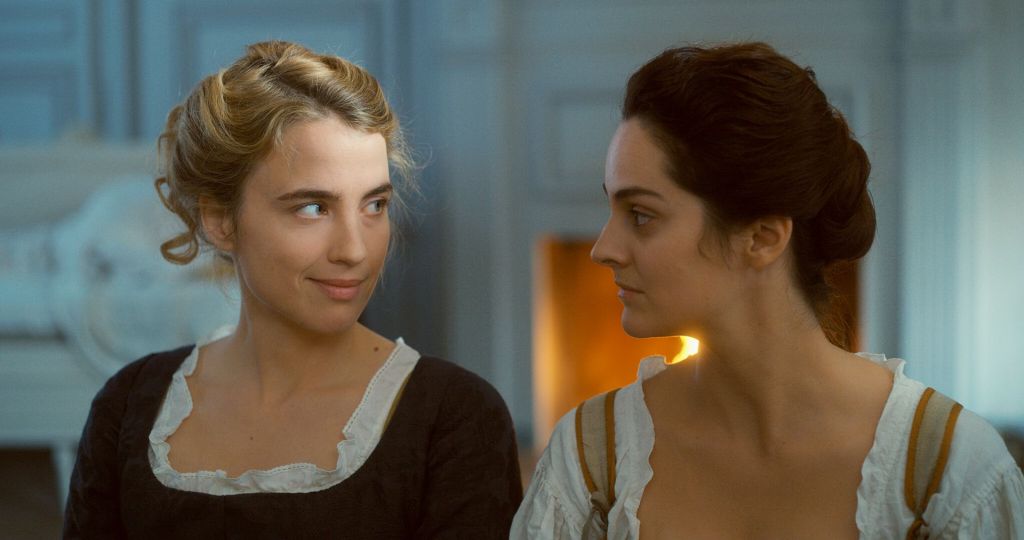
1. Portrait of a Lady on Fire

A complete visual transportation.
Not only does the cinematography of Claire Mathon take you there with her heightening of natural elements, but also the direction of Céline Sciamma aligns your gaze with a nonrepresentative feminine perspective.
The photoplay becomes truly part of you forever. Like an unforgettable sightseeing, you always remember the way every frame simultaneously elevated and limited the saturation of colors or the glow of natural light, showing how the visual frontier of reality can be a fairy tale on its own.
With that visually metaphoric island of mysteries, the writer-director has a set, and setting, in which to authentically weave the narrative’s interpretation by Noémie Merlant and Adèle Haenel.
This is both refreshing and meaningful because, irrespective of your age or gender, the world is shown and, more importantly, allowed to be seen through the eyes of a woman. A privilege that is granted and achieved through trustworthy silences in the script, au courant physical spacing, and gracious editing.
I hope that this movie can become another real contribution to how we should be better to women. Love and feminine fire are forces that bestow humanity with such accomplishment and beauty, and are real, not a fairy tale.
- Costume/Makeup: Ma Rainey’s Black Bottom
- Stunt/VisualFX: Tenet
- Production: The Traitor
- Sound: Sound of Metal
- Music: Soul
- Acting: Never Rarely Sometimes Always
- Screenplay: Mank
- Editing: First Cow
- Cinematography: Portrait of a Lady on Fire
- Direction: Da 5 Bloods
- Portrait of a Lady on Fire
- Never Rarely Sometimes Always
- First Cow
- Les Misérables
- Da 5 Bloods
- Mangrove
- Soul
- A Sun
- Mank
- Out Stealing Horses
- The Nest
- Bad Education
- Corpus Christi
- The Forty-Year-Old Version
- Ema
- Another Round
- Sound of Metal
- Proxima
- Bacurau
- I’m Thinking of Ending Things
- Lovers Rock
- Education
- The Painter and the Thief
- Dick Johnson Is Dead
- What the Constitution Means to Me
- The Traitor
- The Domain
- The Whistlers
- Divine Love
- Tenet
- Vitalina Varela
- Alex Wheatle
- Red, White and Blue
- Emma.
- Wolfwalkers
- Ma Rainey’s Black Bottom
- Ammonite
- David Attenborough: A Life on Our Planet
- The Trial of the Chicago 7
- A White, White Day
- Martin Eden
- Listen
- The Assistant
- The Way Back
- The Life Ahead
- On the Rocks
- Palm Springs
- The Personal History of David Copperfield
- Enola Holmes
- Borat Subsequent Moviefilm
- The King of Staten Island
- Calm with Horses
- Weathering with You
- The Old Guard
- Mulan
 Opinion Seed