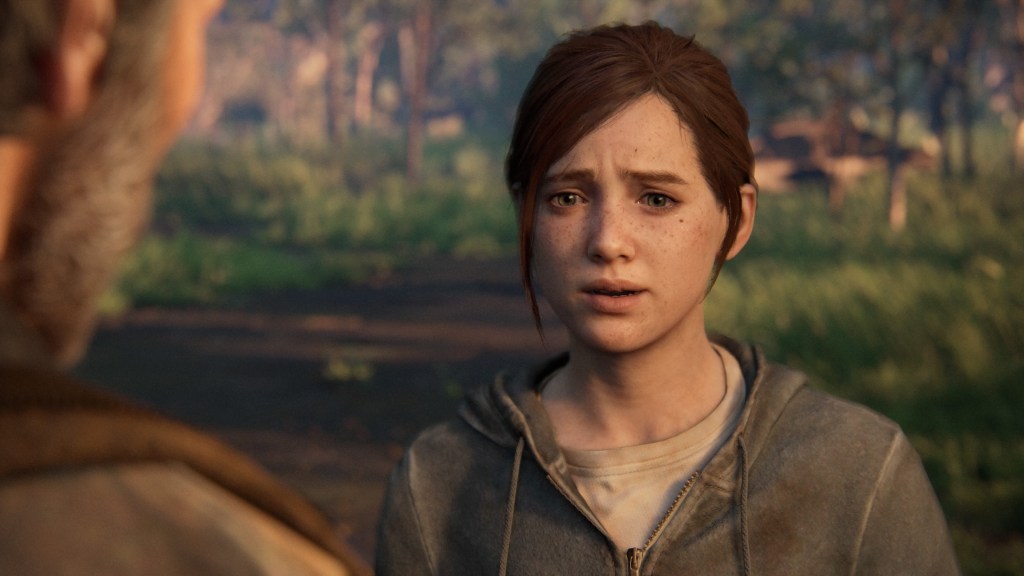
This year, I played as much older games as new releases. With that in mind, I decided to approach this list a little bit differently. It’ll have two Top 10’s, one for past releases and another for the current year, and both lists will get to have individual awards.
All in all, this was an excellent gaming year, in which I got to experience different genres and creative visions.
Not released in 2020, or remasters
10. Call of Duty: Modern Warfare 2 remastered
Continues to feel as eventful as at the time of its original release, 11 years ago.
Its globe-trotting campaign remains grand and ambitious for today’s standards. The variety and spectacle in the gameplay scenarios are still wtf-inducing. And the score by Hans Zimmer is just *chef’s kiss.
9. Shadow of the Colossus remake
Academically, I subscribe to the school of thought of Fumito Ueda.
Even if I think that his works end up lacking in the execution department, I can’t but admire how he connects idea, art, interactivity and message, and makes a game out of it.
Shadow of the Colossus is probably the most celebrated showpiece of this mastery. And, consequently, the dichotomy is also present. The horseback and climbing controls are intentionally unwieldy, the open-world is meditatively empty and barren, and the colossi are impressive but also intentionally repetitive.
Every joyless choice has a reason and a meaning. They are meticulously and artistically conveying a message and a bit of wisdom through gameplay. The problem is that, as a game, it does walk a thin line between immersion and disengagement.
8. Tetris Effect

I’m neutral to Tetris.
Sure, it’s genius design, the kind of universal game logic that all games should strive for. But, artistically, it’s not much more than that, right?
Apparently, it can be. Tetris Effect is not just a coat of paint over the blueprint. Tetris Effect is not just a new expression of the formula. Tetris Effect is a new kind of experience, a state-of-the-art breakthrough, unfamiliar sensations to your mind and body.
Maybe another reason why I’ve been impartial to Tetris is because I suck at Tetris. Suddenly, I wanted to get good at Tetris (still ain’t), not because I started caring for the original game, but as a result of wanting to beat levels in Tetris Effect to taste all that kinesthesia and atmosphere this game exudes.
It’s difficult to put into words. The avalanche of abstract virtuosity, visual and sound effects, or the pictorialized music just take your senses somewhere else. Ironically, the minimalism of Tetris’ mechanics helps to get in the zone.
Go play it. It’s Tetris, for crying out loud! No barriers to entry.
7. Untitled Goose Game
A simple premise, a straightforward gameplay mechanic, and the amount of experimentation and fun (and chaos) it can generate.
There’s space for everything and everyone. You can play around with random objects and NPCs, or you can follow the curated experiences suggested by the developers. You can play alone or in co-op, and the game gains an extra dimension.
Who knew that the daily routine of a goose could be so enjoyable (and cathartic)…
6. Marvel’s Spider-Man


I know Spider-Man is a fictional existence, but if one had to explain what it is to embody that superhero, I would point at this videogame.
There’s really no other way to describe it. You just have to sense the maneuverability in the web-swinging traversal mechanics, how he fluidly transitions to climbing along walls and other obstacles, or how languidly he shifts from stealth to combat, using a myriad of gadgets without ever looking or feeling complicated.
It’s impressive how everything seems to follow the same physics’ rules, creating the illusion that traversing, combat encounters or even narrative missions are all occurring in the same sandbox.
Speaking of story, this is another achievement of Insomniac Games. The pace, twist and turns, acting and choreography are all of a very high caliber, competing with Hollywood production values and coming out with, probably, the best Spider-Man rendition in any audiovisual medium.
Even the use of music is grandiose, with orchestral crescendos as you swing to your next mission. If you are a fan of Spidey, you can’t miss this interactive take, and, even if you are indifferent, you should try it just for the joy of the open-world traversal. There’s nothing quite like it in the AAA-space.
5. Bayonetta 2
She’s back.
And more stylish than ever (apparently it was possible).
PlatinumGames, even with family-friendly Nintendo financing, doubles down on the over-the-toppedness; which, in turn and interestingly, cements the legacy of this franchise.
Cereza is even more powerful since she unlocked her memory in the first game. She gains access to a bigger arsenal of weapons, and with these come their unique and sometimes extravagant movesets.
And since she has been unleashed, the epic fights with gigantic angels and demons are not saved for the end of the game. Count with them every few levels.
And… not only angels and demons, but also norse mythology! Why not?!
The creativity in enemy design, combat scenarios, and Bayonetta’s attacks continues to be the reason to play these games. If you haven’t, you owe yourself the right to witness this gaudy originality.
4. Donkey Kong Country: Tropical Freeze
One of the best 2D platformers I have ever played.
It all starts with Donkey Kong’s weight. Despite this being a game genre where airtight controls and physics are crucial to reach reliable rhythms and momentum, the fact that the main character is heavier than what you are accustomed to does not encumber or clog that flow state. Indeed, it’s the sturdiness that gives this platforming even more precision and assurance.
The game was clearly designed with that weight in mind, and each platform and sequence of obstacles meticulously positioned and oriented to account for the gorilla particularity. This creates a pulsation in you that instinctively transitions between risky jumps to halting at the poignant audio design of DK’s firmly landing on a spot.
Stomping on enemies is also very gratifying, as they seem to follow the same anatomical rules of size and weight of the gorilla. And this internal rhythm is even more inflated by the external coming from the game – the music is so groovy and catchy.
Tropical Freeze is filled with variety. Levels, music, enemies, and even gameplay scenarios that confront you with trade-offs. A joy from beginning to end.
3. Sayonara Wild Hearts
Do you know that feeling when listening to a music album sequentially and it’s telling you a story?
Sayonara Wild Hearts is that, but interactive.
I don’t really know how to better describe it. The music and the visuals quickly become indistinguishable: music is showing you a narrative thread, and the visuals are making your heart beat.
I will never forget my time with Wild Hearts, as I was having a really bad week and it immediately made me genuinely happy. It’s that type of transformative experience, and it stills elates me every time I re-listen to its soundtrack.
2. Super Mario Odyssey


A smile from start to finish.
I knew this was going to be a delight of a game when, in the first minutes of the first area, I noticed that, if I tested the limits of Mario mechanics and movement by interacting with idiosyncratic elements in the environment, I would, more often than not, be rewarded with something. All the rules of the sandbox condensed into one: have fun!
It helps that Mario controls with immense fluidity and precision. Despite having different moves at his disposal, you always know where he’s going to land with each acrobatic (many 3D platformers struggle with this).
And then, there is Cappy. Mario’s iconic hat is now a character on its own, and you can throw him like a boomerang, not only extending your range of action (which clearly informed the level design), but, more importantly, allows you to possess any (yes, any) enemy you come across (this also CLEARLY informed the level design).
Mario on its own is a joy to play with, but adding the variety in mechanics of every other creature and adopt them to solve environmental puzzles and progress makes this game one of the greats.
This feeling of diversity is even heightened when you land on a new area. Not only the main level is always distinct, but the different zones within each one keep introducing novelty features left and right. Such cascade of newness is prone to generate thematic incoherence. Not in Odyssey. The fact that each zone follows the same rules of the level, and that specific enemies of a region provide a specific solution to the new puzzles makes every main level feel like a self-sustaining biome.
Odyssey is a charming adventure that keeps surprising you, and I highly recommend it for anyone, any age.
1. Final Fantasy VIII remastered





Since 2000, Final Fantasy VIII has been my favorite game of all-time.
With the exception of Red Dead Redemption 2 and The Witcher 3, no other game has ever came close to dethroning it.
It took some months for me to acclimate to it (I even considered selling it), but when I finally understood the Junction system, everything unlocked for me: its music, its visual art, its story, etc. To this day, it’s the oldest game I retain in its original physical format, and it’s the game I replayed the most.
However, I don’t recall touching it since 2006. So, when this Remaster was released, I had to know: is it still #1, or am I looking at it through rose-tinted glasses?
After 100%-ing it again, like riding a bike, Final Fantasy VIII is still my favorite game.
The original soundtrack by Nobuo Uematsu is still his magnum opus, and we are talking about one of the greatest game composers ever. FF8’s score is so rich, varied and bold. It goes from dark and big orchestrations to love melodies without losing coherence. And the way it mixes classical symphony with electronic grooves remains fresh today.
On the visual front, even if technology is a demanding mother to videogames, FF8 will always live and die by its art. Yes, the graphics were impressive for its time, but the amount of storytelling and character that exudes from all of its art is timeless. People and places have such a presence and identity. The game, without voice acting and tons of sound effects, tells so much of its world through visual culture.
Playing FF8 is a breeze. In exchange for complexity and, admittedly, some obtuseness of its main gameplay system – Junctioning –, FF8 has one of the most player-serving structures to ever grace a JRPG. If you are patient and pay attention to how every other system establishes relationships with Junctioning, you will notice that such depth is accessible to you from the start, and that you can unlock a lot of potential in your characters, thus giving you unprecedented agency on how to face combat encounters. This makes FF8 one of the few JRPGs that does not require any type of grinding.
Last, but not least, its story. I don’t want to sound old, but we no longer see adventures this audacious and out of the box in the AAA space. From where you start, to where you end up, alongside all the places you go in between, is not only a feat in creative writing, but also an accomplishment in directing to coalesce all those ideas into a coherent experience.
This game will always be there to show me what human imagination is capable of.
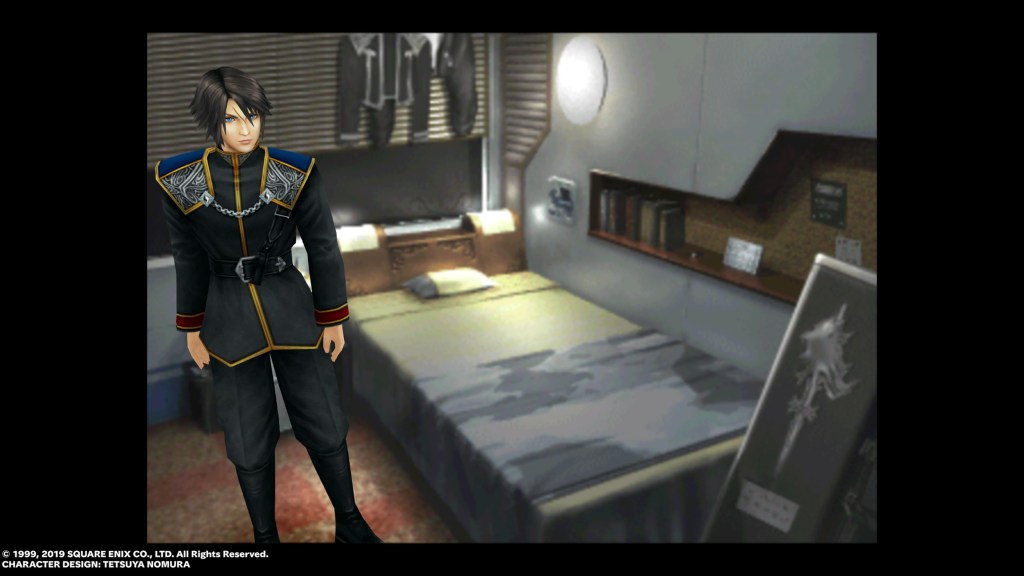
- Final Fantasy VIII remastered
- Super Mario Odyssey
- Sayonara Wild Hearts
- Donkey Kong Country: Tropical Freeze
- Bayonetta 2
- Marvel’s Spider-Man
- Untitled Goose Game
- Tetris Effect
- Shadow of the Colossus remake
- Call of Duty: Modern Warfare 2 remastered
- Audio – Tetris Effect
- Music – Final Fantasy VIII remastered
- Visual Art – Final Fantasy VIII remastered
- Technology – Marvel’s Spider-Man
- Controls – Super Mario Odyssey
- Gameplay – Super Mario Odyssey
- Progression – Final Fantasy VIII remastered
- Acting – Marvel’s Spider-Man
- Story – Final Fantasy VIII remastered
- Direction – Final Fantasy VIII remastered
Games released in 2020
10. Arise: A Simple Story
A distillation of interactive sweetness.
Be that as it may, don’t be fooled by its gentle aesthetic. This game is about the hardships of growing old, and in consistence with that theme you’ll have to engage with reasonably evolved mechanics to overcome the trials in this journey.
And even if the complexity of the levels gradually require more of your gameplay attention, that never distracts from the delicate communication between environmental art, music and story.
You should try it, it’s indeed a soulful pilgrimage.
9. Huntdown
A good old fashioned side-scroller.
It controls well, with very precise jumps and cover-shooting. And, with this in mind, it becomes really enjoyable to fight back the somewhat difficult AI. You are comfortable with the mechanics, and start being more patient and situational-aware.
The other two aspects that stand out are the weapon variety, which introduces a new level of decision-making and strategic thinking, and the audiovisual style of it all. This game has definitely a vibe, and that boosts the gameplay experience by taking you back to the inspirations and references of the genre.
Don’t underestimate this one due to its retro look. The bosses are the fun amount of challenging.
8. Astro’s Playroom
Surprise of the year.
Not surprised with the quality of the product, since the previous game of Asobi Team is considered by many as the best Virtual Reality game ever – Astro Bot Rescue Mission.
But, surprised with the scope of this free game that comes pre-installed in every PlayStation 5. I honestly thought this was going to be a tech demo for the new DualSense controller, like The Playroom was for the DualShock 4.
The 3 hours I spent in Astro’s Playroom were almost on par with 3 hours in Mario Odyssey. The sheer condensation of creativity and jolly good fun in each of its worlds is remarkable. Add to that very good 3D platforming physics, big areas to explore, delightful rewards to curiosity, really catchy tunes, and you have a winner.
I honestly don’t know what comes out on top: Astro Bot or the DualSense?
Astro Bot is so freaking adorable. Even if Sony has clearly proven that they don’t need a mascot to sell, they have one undeniable here.
And the DualSense is a game-changer. I still maintain that the mandatory installation on solid-state drives in new-gen consoles will help breach new frontiers in level design. Convoluting your imagination to allow for assets’ loading will probably be a thing of the past. Not mutually exclusive is what the haptic feedback, voice coil actuators, adaptive and resistant buttons in the DualSense bring to the table.
If studios start taking advantage of this controller the same way Asobi Team did with Astro’s Playroom, moment-to-moment gameplay is about to become even more immersive, and could easily become the “secret sauce” reason to buy a PlayStation 5.
I’m also really impressed by Sony, yet again, internally grooming another talented team. It’s highly likely that they will get a bigger budget in the future to expand this marvelous creativity. Especially in a genre that Nintendo’s own Tokyo studios have dominated for generations.
7. Hades
Supergiant Games is my front-runner for best indie studio in the industry.
Notwithstanding, Hades was the first of their games that I was not hyped for. I just had a suspicion that the rogue-like format was not going to maximize their talents.
Yup, my skepticism came into fruition. Hades is the second best rogue-like I have ever played, behind Rogue Legacy, but it is not as great as the other Supergiant’s titles.
There are three main reasons why I love their games: 1) they control really well, with fun and intuitive combat; 2) they look and sound above their budget, with fantastic visual art, memorable voice acting and blazing music; and 3) the choices you make from system-level to even mechanics-wise inform the worldbuilding and storytelling, which are exceptional on their own.
What makes Hades such a good rogue-like are precisely those three characteristics. It’s never repetitious to go for one more run, because the combat is engaging, the procedurally generated dungeons are artistically beautiful, the music is “hit-on-repeat”, and experimenting with different loadouts makes you witness different narrative threads.
On the other hand, the repetitive nature of the rogue-like subgenre does dilute the highlights of this studio. In their previous linearly curated games everything was more memorable, because they presented one environment instead of another, one song instead of another, or one line of dialogue instead of another as it made more sense at that point in time in the gameplay. Here, there is somewhat of a disconnect between your progression and everything else (they were actually really good at this in their other games).
Environments, music, characters and story become filler, which is a shame, since isolated they retain all the qualities of this studio. And the link between loadout and narrative rapidly becomes a sterile process of stats’ optimization, instead of an artistic engulfing of gameplay.
This is still a really good game, with Supergiant qualities all over the place, but Bastion remains their most charming title, Transistor their most innovative, and Pyre their best expression.
6. Final Fantasy VII (part I remake)
Final Fantasy is my most cherished franchise in gaming.
So, when there’s talk of a remaster or a remake I’m all ears. Well, when it comes to FF7, there’s been talk for more than 10 years. Not only is it beloved, alongside Metal Gear Solid, as the cultural, historical and aesthetical forbearers of cinematic storytelling in games, but also is the one entry of its generation that did not age exceptionally well, in terms of character models and other polygonal limitations.
And boy, does this remake look good and make justice to the cinematic precedent set by the original.
Another facet that the remake had to bring to modern days and expectations was the combat. Let’s be honest, what was a technical limitation in the 90’s – turn-based combat –, that sharpened ingenuity in role-playing design, no longer cuts it for the new generation of gamers. With the exception of Persona 5 (through dynamism and style), turn-based games have been having a harder time engaging new players.
FF7 remake brings forth a pleasing solution: hybrid combat. Doesn’t rejuvenate the format the same way as Persona, but it’s a compromise that works well in 2020. In essence, you play it like a real-time action game, but the game stops every time you want to issue a command like a special attack, magic or using an item.
Now, time to address the elephant in the room: this game is not a remake of FF7 in its entirety, just a “part I”.
In principle, I have nothing against this approach. It only shows how game development has become bigger and more expensive. Curiously, in the same amount of time that it took Square Enix Business Division 1 to remake a part of a game, Square with fewer resources in the 90’s developed FF7, 8 and 9.
However, the one quality that makes me love this franchise above all others is its unabashedly devotion to expansiveness and worldbuilding. Thus, by limiting this remake to one area, the game doesn’t feel totally Final Fantasy to me. Add to that many constraints in level design to mask load times, and some of the imaginative nature of the franchise is also lost.
Even with these caveats, the remake retains a lot of the artistry and flourishes of FF, and, if you are not discouraged by this not being the entire game, you are in for a very engaging spectacle.
5. Resident Evil 3 remake
Neither too much puzzles, nor too much action.
This has been a tight balance to achieve in this historic franchise. Resident Evil games, traditionally, always have something for someone, even if it’s just the jump scares.
But looking at its core systems and mechanics, one can point out that realistic buildings that seem to have been engineered to accommodate whimsical environmental puzzles can break immersion and tension. Or, intentionally limiting the character’s movement can generate more frustration than fear. Or, in later entries, giving karate kicks and tons of ammo for automatic weapons can feel less horror blob and more sponge bob.
Or… we have this new remake of the classic Resident Evil 3: none of those problems. The right amount of puzzles to make you work for upgrades and special resources. And animation tech that lends the game a modern feedback on the joystick, making fear and action become all about resource management.
I also would like to add that the way this story becomes over-the-top in its final gameplay scenarios is Japan at its best.
4. DOOM Eternal
Play it right.
This is a catchphrase you won’t have to put up with from anyone on the new DOOM games.
Expanding on the core concepts of 2016, Eternal retains the crown at id Software of “best game at making the players play the way the authors’ intended”.
Those concepts are materialized in systemic bumpers to the gameplay, craftily curated in a way that makes the player feel limited and powerful at the same time. How does that work?
Essentially, the designers intentionally push you against the ropes by restricting fundamental resources like health and ammo, and overwhelm you with quantity and quality of enemies. And then, they intelligently give you tons of different weapons, and teach you which one is ideal for each type of enemy. If you don’t follow these martial arts’ lessons, you are punished. But, if you do, you gradually become a black belt.
And it works. You really feel like you are playing the way the designers intended; you are seeing everything they wanted to show you, and what they think their game’s great at. This makes you feel really badass, because you are putting forward Hollywood-level choreographies without being on rails.
Add to that the vibrant visuals, filled with saturated colors, and the aggressive soundtrack, and you find yourself inside an extravagant and stylized pinball table, efficiently executing gun-fu moves.
This is all very cool and exhilarating, but if you decide to play devil’s advocate on this design philosophy, you realize that such perfectionism does remove some agency and improvisational experiences from the player.
Still, it IS cool and exhilarating.
3. Cyberpunk 2077
Disclaimer: This ranking is predicated on a next-gen experience. It’s an analysis on the creative and technical merits of a development team that has been tirelessly working on this project for more than 5 years. And, since I can only speak about my experience with the art and craft in front of me, I want to underscore how detestable was the decision by management to launch this game on last-gen hardware. They knew it wasn’t going to meet consumer expectations on polish, performance and fidelity for a game succeeding The Witcher 3, or expectations for a project of the scale of Red Dead Redemption 2 or The Last of Us Part II, that run cutting-edge tech on 2013 hardware. That being said, I owe it to the developers to look at this game as detached as I can be from the publishing mal-supervision and mal-administration surrounding it. Don’t play Cyberpunk 2077 on last-gen hardware.
On February 2nd, 2019, I published a list of my most anticipated games until Q1 2022. Cyberpunk 2077 spearheaded a ranking that even contained predictions that had yet to be announced.
It’s not surprising that I had the highest of expectations for the team that recently created my #5 favorite game of all-time – The Witcher 3. And transitioning from a 3rd-person perspective in a medieval setting to a 1st-person POV in a future, tech-ridden world, made me more interested in it.
Honestly, Cyberpunk 2077 is only an inferior experience to The Witcher 3 precisely because of the 1st-person direction (and the voice acting, a little bit). What certainly started as a decision to heighten the role-playing immersion, ended up giving back a dated engagement with the character and the world.
Each gaming generation is responsible for breakthroughs in the medium: 3D, open worlds, online, HD, etc. The generation that now ends was responsible for many milestones, though, if I had to choose the one that impressed me the most, I could talk all day about the leap in 3rd-person animation.
Many games used to resort to 1st-person POV because technical limitations made 3rd-person animations look robotic and non-immersive. Notwithstanding, we are now at a point when animation fidelity is so crisp that player agency only feels complete if you can see everything.
This is where Cyberpunk loses to The Witcher. The world is as complex (not as expansive, but more vertical). The writing is as nuanced, giving range to role-play and meaningfulness to side characters and side quests. The combat is a step up, not only with a bigger variety and creativity in weapons and their usage, but also with the viable option to tackle the majority of encounters non-lethally, resorting to cyber-ware that is also diverse and dynamic (really well implemented in terms of flow and moment-to-moment gameplay). And the degree of customization is also a step up from The Witcher: skill trees are deeper and equate better to your choices in gameplay; you have a wide array of vehicles at your disposal, all with personality, controls and aesthetic-wise; and I love that you can get clothes with good armor and be fashionable at the same time. Yet, the 1st-person perspective never made me feel as in tune with V and Night City as I was with Geralt and The Witcher Continent.
I found myself riding bikes much more than cars, because it was the only time I could see myself in 3rd-person.
Even so, Cyberpunk 2077 is, from the ground up, an ambitious and impressive endeavor, built on unthinkable complexity like taking the mechanic and systemic legos of 1st-person RPGs, just as Fallout, the emotional story-driven thrills of more linear games, such as BioShock, and combining them into an open world adventure brimming with core gameplay content that gives the player immense agency of what that gameplay even looks like: Deus Ex? Shadow Warrior? Mirror’s Edge? GTA?
The staff members in the trenches at CD Projekt Red deserve a round of applause for pushing entertainment to the limit.
And, on that note, I would like to conclude by saluting the writing and art teams for their approach to the cyberpunk subgenre. Albeit the more interesting stories found on some side missions, and a voice acting below the level of projects of this dimension, the main plot of V and Johnny Silverhand is the kind of punk that has been missing from so many renditions of cyberpunk.
I know that cyber is trendy nowadays, with internet media, geotracking and digital algorithms making people feel like leading-edge philosophers by ascertaining that machines and tech corporations will take over the essence of humanity. But, never forget that cyberpunk is also deeply rooted in the stylized Marxism of punk rock.
2. Ghost of Tsushima
An action-adventure set in open world feudal Japan is my dream game. As such, this one had to fight off some pretty demanding expectations.
The first test always comes rapidly with me: if I am about to role-play a samurai in free-to-explore environments, how does it feel to control him, and his horse?
I was very happy that the movement and animations have a nice balance between flexibility and weightiness. You don’t have to curtail your imagination, while knowing that your decisions have impact. This is essential for a game that wants to deliver us our idea of samurai, but not necessarily a 1-to-1 recreation of feudal Tsushima – grounded in reality, not hindered by realism.
This quality of the controls made the gameplay scenarios more engaging than their lack in diversity could result in. Riding from point A to point B was joyful, and fighting enemies was always cool.
In unison with the principle of interpretation above reality, the visual art of this game is, more than beautiful, creatively apt at stimulating imagination and curiosity to explore, without ever looking implausible or artificial. The variety in biomes alone makes you yearn for what’s beyond the horizon, and the game is really good at curating this open-air museum since big or small missions are treaded in routes with alluring landmarks, not forcing the player into diluted deviations.
These design choices create a mood when traversing the open world, and, when the soberly robust musical compositions of Shigeru Umebayashi come with the wind, playing this game becomes an enchanted and enchanting experience.
The story is not particularly unconventional, but the way the difficulty ramps up alongside the unlocking of shinobi mechanics turn Jin’s character progression into an expression of growth from both a gameplay and narrative perspectives. Maturing Jin’s samurai skills is the game’s idea of power fantasy, but showing you the player that you have to start to learn how to become the Ghost is when the game grounds itself through agency and historical meaning.
This parallel journey of game systems and story makes character progression feel much more personified, establishing a much closer connection between player and Jin’s struggle. And, even if the mission variety is not great, by having a smaller cast of characters with whom you do activities with/for, Jin’s journey becomes even more of a learning process, as you adapt to each other and to the evolving narrative.
Ghost of Tsushima is the best action-adventure game set in open world feudal Japan. If you would like to be transported back to that recollection, let yourself go and enjoy the ride.
1. The Last of Us Part II
How do you begin developing a concept of the sequel to The Last of Us? One of the most universally loved games of the last 20 years.
You start by being honest with its characters, their motivations, and thus their stories. Part II, by having the courage to serve itself more than the consumers’ world of expectations, becomes more than a sequel.
While “Part I” was the best post-apocalyptic game we had ever seen, Part II is one of the best narrative creations I’ve experienced in any medium. The fact that it is a game only makes it more gripping. Naughty Dog designed gameplay so bewitching that stealth, combat, exploration, leveling up and narrative became so realistically spliced that made both interactivity and non-interactivity more compelling.
The Last of Us Part II is one of the best examples of how a game can be a “page-turner”. Everything is character progression: you move your joystick in combat and exploration because you want to know more about these characters, and you transition from a cutscene to an interactive level propelled to act because the mechanics and tools at your disposal make so much sense.
Of course it helps that the game looks and sounds astonishingly immersive. Yet, it’s in the gameplay where Part II really enthralls you. The combination of smooth controls and animations, variety in tools and problem-solving, with a trailblazing level and encounter design makes your moment-to-moment journey in this world immensely engrossing.
After so many years witnessing technological advancements in this industry, I can still be in awe with graphics and visual fidelity. But, what really caught me off guard was how they completely shattered my expectations of areas and moments in games. More often than not, this game doesn’t give you the distinction between combat arena, exploration zone, or upgrading room. Everywhere is everything. The geometry and architecture is not game-y, it’s realistic, like a world where people live(d) and enact(ed) their stories, like you are doing right now.
This, coupled with the smoothness in the mechanics I described above, and systems that do not rely on hermetic design not only surprises your gamer brain, but, more importantly, puts you on edge every time you come into a new area. The gameplay becomes less of a power fantasy and much more about choices, since most levels have a trade-off. I can explore more to find more resources, but I will likely find enemies that I could have avoided and will deplete said resources.
Naughty Dog had already implemented this philosophy in the first game, but on a micro-level: the same materials were used for weapons and medicinal kits. Now, this tension is present on a macro-level. The world is your user-interface, making player agency much more meaningful and lived in.
In the end, all this interactivity in character progression converges to elevate a story that is trailblazing in its own way. People are people here, not archetypes. The writers do not need your sympathy for the personification to work, and you are not manipulated into accepting motives or feelings. As a matter of fact, the game even pulls a literary instrument by the third act to expose paternalism and false-empathy.
This is really a momentous creative endeavor, in all of its artistic contributions, making you re-think transition gameplay in other games, and introspect about its study on humanity for a very long time.
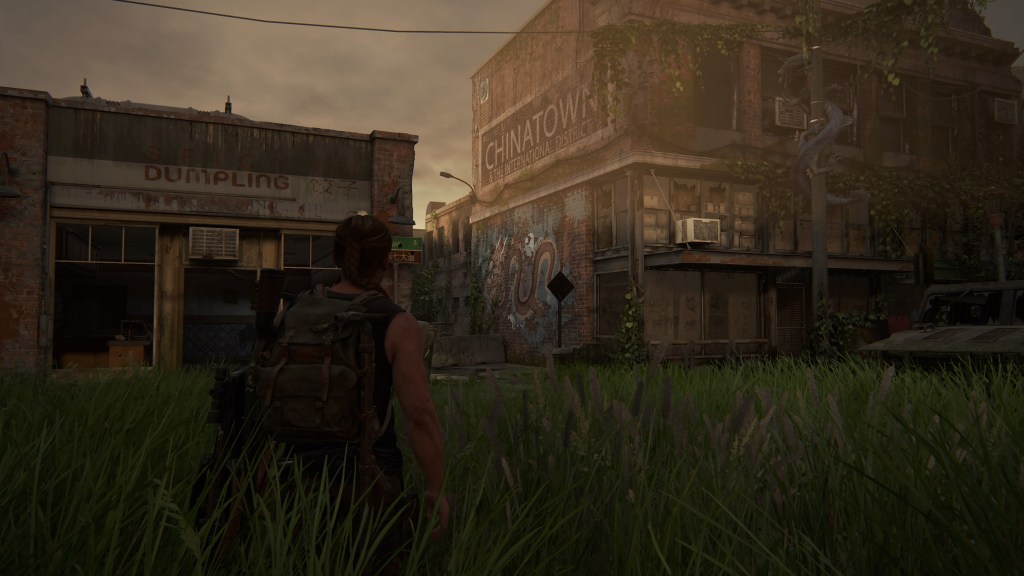
- The Last of Us Part II
- Ghost of Tsushima
- Cyberpunk 2077
- DOOM Eternal
- Resident Evil 3 remake
- Final Fantasy VII (part I remake)
- Hades
- Astro’s Playroom
- Huntdown
- Arise: A Simple Story
- Audio – DOOM Eternal
- Music – Ghost of Tsushima
- Visual Art – Ghost of Tsushima
- Technology – The Last of Us Part II
- Controls – Ghost of Tsushima
- Gameplay – The Last of Us Part II
- Progression – Ghost of Tsushima
- Acting – The Last of Us Part II
- Story – The Last of Us Part II
- Direction – The Last of Us Part II
 Opinion Seed