Since 1994, Sony has been synonymous with leader in the games’ industry.
Excluding handhelds like the Nintendo DS and the Game Boy, which benefit from inflated sales in the kids’ market, Sony is responsible for the Top 3 best-selling consoles of all-time.
The PlayStation crushed the Nintendo 64 and Sega Saturn by combining more advanced tech with more mature software. This made video games decouple from toys, and start selling to the parents also.
PlayStation 2 was even more dominant, selling more than all its competitors combined (155 million, in comparison to the 136 million sum of Xbox, GameCube, Game Boy Advance AND Dreamcast).
PlayStation 4 has also been impressive, with a 2:1 lead almost since its launch in 2013 (112 million, versus the 50 million of Xbox One and 61 million of Nintendo Switch).
And, what about the PlayStation 3?
Precisely the story that motivated me to write this.
PlayStation 3, despite ending up above its main competitor, the Xbox 360 (87 million versus 84), was part of a generation that was more even than anticipated, especially after the success of the PS2.
I’ve already pre-ordered a PlayStation 5; still, I’m here to help you with your choice, as I believe this coming generation will be, albeit for different reasons, as equitable as the PS3-360 gen.
Hardware
I’ll start with a raw analysis on how technical specifications equate to the price of these two machines.
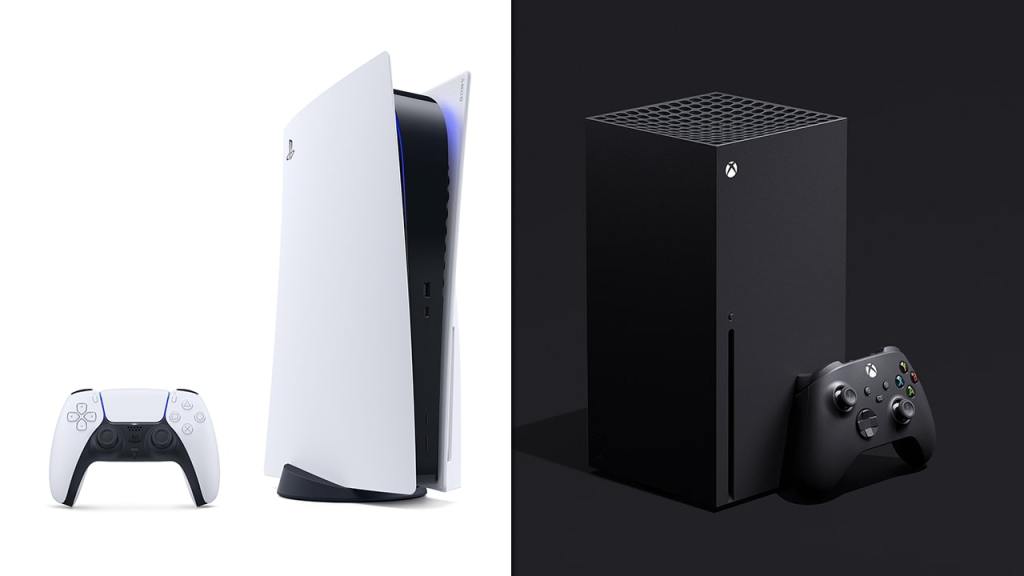
In essence, it’s somewhat simple to build a consumer narrative: they both retail for 499, and are technologically very similar.

To note: PlayStation has an alternative version of the console that retails for 399, but it doesn’t have a 4K Blu-ray player. Xbox has a version called Series S, that retails for 299, but it also doesn’t have a Blu-ray drive, and its GPU is not capable of rendering 4K.
The Xbox Series X has a better Graphics’ card, while the PlayStation 5 has a better Solid State Drive to load game worlds. At the moment, it’s tough to say which feature will be more important. A better GPU is a more traditional approach in machine building (the most expensive component for PC gamers), future proofing its capabilities in asset rendering and visual fidelity. While a better IO Throughput can change how games are ultimately designed.
It’s up to game developers to decide if their budget in the coming years will be more directed towards 8K and Photogrammetry, or more time and resources for designers to come up with less convoluted levels and worlds, blending exploration and action in more organic and believable ways, thanks to an internal storage that doesn’t bottleneck their imagination.
All in all, you can be comfortable with either machine, as their CPUs and RAMs are very strong for the price you are paying.
Software
Tech and specs aside, we all know the #1 reason to buy a machine like this is to experience the GAMES.
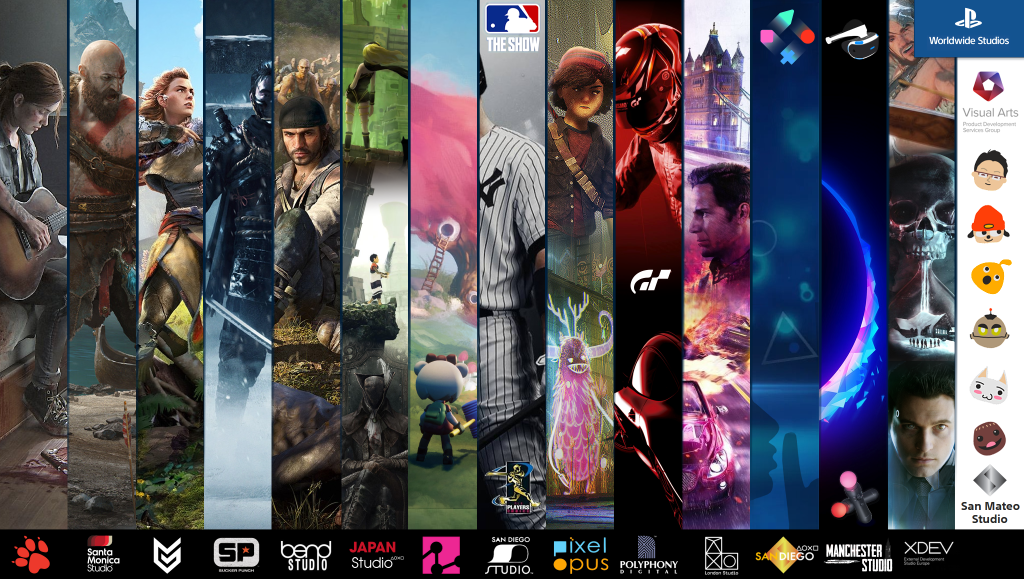
This is where PlayStation has exceled since 1997. Game of the year exclusives like Final Fantasy VII and Metal Gear Solid are mainstays of premium interactive storytelling. Grand Theft Auto III and Vice City, by coming first to PS2, showed not only developers, but also millions of consumers what to expect from game design. And, the Worldwide Studios, that Sony has been nurturing from the PS3 generation, continue to deliver GOTY-caliber experiences: The Last of Us, Bloodborne, Uncharted 4, Horizon Zero Dawn, God of War, Spider-Man and Ghost of Tsushima.
I don’t consider myself a Sony fanboy, as I own Microsoft consoles and Nintendo handhelds. But, to be honest, with the exception of Super Mario Galaxy and The Legend of Zelda: Breath of the Wild, there hasn’t been much of a competition in terms of first-party publishing for more than a decade. If we are to be even stricter, dating back to 2003, Nintendo and Xbox exclusives only won consensus accolades in 2 moments: Star Wars Knights of the Old Republic and Breath of the Wild.
However, there’s a chance that this dominance is about to be softened.
Microsoft has acquired ZeniMax Media and its game publisher Bethesda Softworks for $7.5 billion in cash.
For starters, to put this into perspective, Disney bought Star Wars AND Marvel for 8.
This is a really big get. In that same period I was analyzing above, Bethesda Game Studios developed GOTY products like Oblivion, Fallout 3, Skyrim and Fallout 4. One can argue that, alongside BioWare, they were two of the highest-level studios in that generation.
And even if you rebut that, also like BioWare, they are a studio that has had one of the most pronounced slumps in the current gen, Bethesda Softworks, the publisher, has been recently responsible for other GOTY experiences like DOOM, Dishonored and Wolfenstein.
As such, with this acquisition, Xbox becomes the place to play First-person games.
Let’s then look at what can we expect from these two families of first-party studios. On the PlayStation side we have these:
- Naughty Dog – The Last of Us part III, and a new IP;
- Santa Monica Studio – God of War Ragnarok, and a new IP;
- Guerrilla Games – Horizon Forbidden West, and a new IP;
- Insomniac Games – Miles Morales, Spider-Man ‘2’, and Ratchet & Clank: Rift Apart;
- Sucker Punch Productions – Ghost of Tsushima ‘2’;
- San Diego Studio – Uncharted ‘5’;
- Bend Studio – Days Gone ‘2’;
- Polyphony Digital – Gran Turismo 7;
- Japan Studio – games in the vein of Astro Bot Rescue Mission or Gravity Rush;
- Media Molecule – games in the vein of Dreams or Tearaway;
- Pixelopus – smaller, artsy games;
- London Studio – VR games.
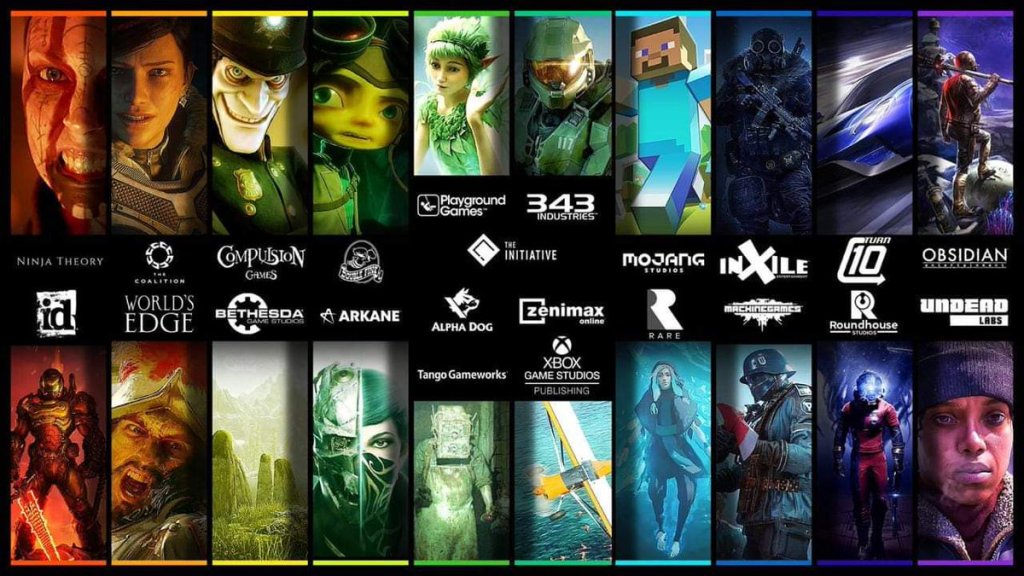
On the Xbox side, we have these:
- 343 Industries – Halo Infinite;
- The Coalition – Gears ‘6’;
- Turn 10 Studios – Forza Motorsport ‘8’;
- Playground Games – Forza Horizon ‘5’ and Fable;
- Obsidian Entertainment – RPGs, working on their ‘Elder Scrolls’ take;
- Ninja Theory – Hellblade 2;
- inXile Entertainment – Old-school RPGs, in the vein of Wasteland or Bard’s Tale;
- The Initiative – Allegedly working on a third-person reboot of Perfect Dark;
- Rare – games in the vein of Sea of Thieves, Kameo or Viva Piñata;
- Double Fine Productions – games in the vein of Psychonauts or Broken Age;
- Undead Labs – State of Decay 3;
- Bethesda Softworks – The Elder Scrolls VI, Starfield, Fallout ‘5’, DOOM ‘3’, Wolfenstein ‘3’, Dishonored ‘3’, Prey ‘3’, and The Evil Within ‘3’.
Positioning
As you can see, both companies have a portfolio of diverse genres, for diverse tastes. I would argue that PlayStation Studios have a more proven track record in terms of engineering, art and talent to meld engaging gameplay with “page-turner” stories; but, Xbox, with Bethesda on their side, got +2300 developers with very impressive curricula.
Tastes aside, buying a console is also about the ecosystem, and how that hardware-maker’s positioning in the gaming market/landscape suits your lifestyle.
This is where I think each company is speaking a different language for different typologies of consumers/gamers.
On one side, we have Sony boasting the phrases “We believe in generations” and “Our main focus is to keep wowing gamers with single-player, narrative-driven experiences, that cost 100 million dollars to create”.
On the other side, Microsoft is offering a services infrastructure that delivers on the mantra of “Play anywhere the biggest catalogue of new and old games”.
To make this more palpable, I think it wouldn’t be bad for us, consumers, to look at analogous examples in similar industries, and analyze how these different philosophies are serving us.
For me, Microsoft, with their 10 €/$ a month subscription service – Game Pass –, is trying to become the Netflix of games. An all-you-can-eat buffet that gives you dozens of ‘older’ options and a sparser diet of zeitgeist moments throughout the year.
Sony, in turn, are the traditional movie studio that makes you go to the theater and experience that artwork in a way that maximizes its production budget and its authors’ intent.

Like in the movie industry, Sony’s model is dying. In the last 5 years, Marvel aside, fewer and fewer people feel like it’s worth spending their money on 1 movie, when they have a catalogue of them through subscription.
In games, this is even more pronounced, since a brand-new experience costs you between 70-80 €. However, I can’t imagine not going to the theater to watch Oscar-caliber films like Parasite or Dunkirk.
There’s a reason why, with a few exceptions, there is the term “Netflix movie”. A production that gives its filmmakers just the minimum to realize their vision, while delivering on the desires measured by an algorithm.
There’s a reason why Disney, with one of the biggest streaming services in the world, decided to postpone all of its 2020’s theatrical releases to 2021.
The subscription model is not financially viable for the “100 million dollar” budgets that PlayStation wants to create “to keep wowing gamers”.
And looking at the recent acquisition of Bethesda Softworks by Microsoft, it becomes difficult to imagine how the big games coming from those studios can turn a profit without the 70-80 € entry point. Are they going to be less ambitious and “wow-inducing” to fit the subscription model?
Game prices are increasing because game production is getting more expensive as well. In the period between 1997 and 2000, SquareSoft released three legendary open world RPGs – Final Fantasy VII, VIII and IX. Nowadays, a bigger team took 5 years to produce a linear remake of 1/5th of FF VII.
Bethesda Game Studios, in one generation, developed Oblivion, Fallout 3 and Skyrim. In the next generation, in the same time, their bigger resources only produced Fallout 4.
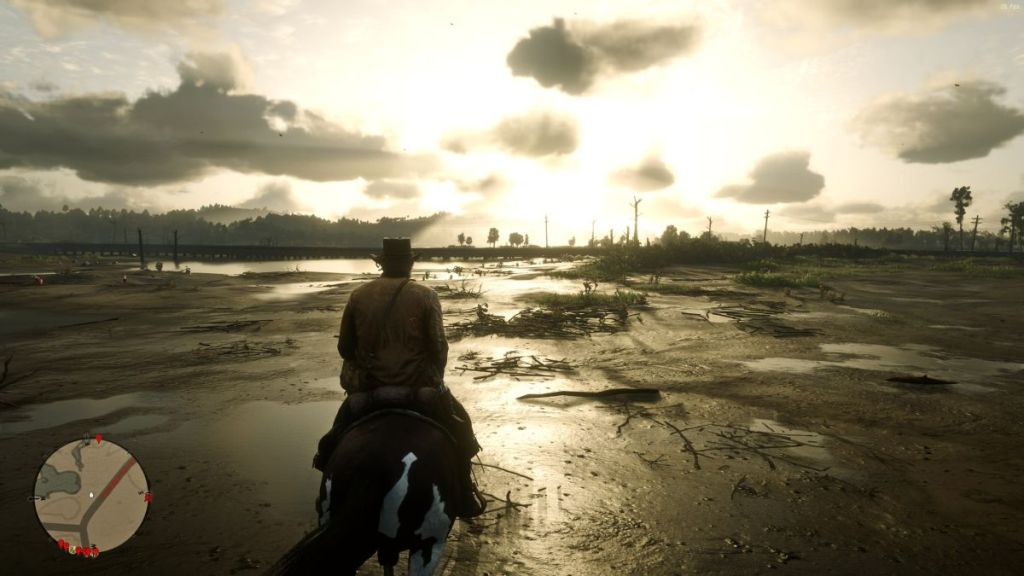
Maybe a scale down is in order for the games’ industry, and subscription models will certainly bring some. The stories of crunch and overwork needed to deliver GOTY-caliber experiences like Red Dead Redemption 2, The Last of Us Part II or Cyberpunk 2077 are unsettling.
Do consumers want a scale down?
Capitalism says no. We are insatiable, and we demand that our money keeps wowing us. We expect companies to keep pushing the technological frontier, even if, ironically, hurts us as workers.
Honestly, I don’t know which company (console) to recommend. What I know is that gamers can be placed in a gradient between Experience and Entertainment.
Xbox is catering more to the Entertainment end of the spectrum. Those gamers that either spend a lot of time in 1 game with short gameplay loops – like sports, shooters, fighters, racers, etc. –, or jump from game to game without finishing their stories.
PlayStation is more focused on Experience consumers. Those that play less hours a year, but, when they do, expect that their money and time will deliver something memorable and modern.
More than in other generations, I believe that this decision will come down to what type of gamer you are, or in what stage of life you find yourself in.
I know it’s not easy, when you plan to stick with one brand for an entire generation, to forecast which one will serve you better, but I hope this analysis was still helpful, and that I was able to cover the different facets that entail a console purchase decision 🙂
 Opinion Seed