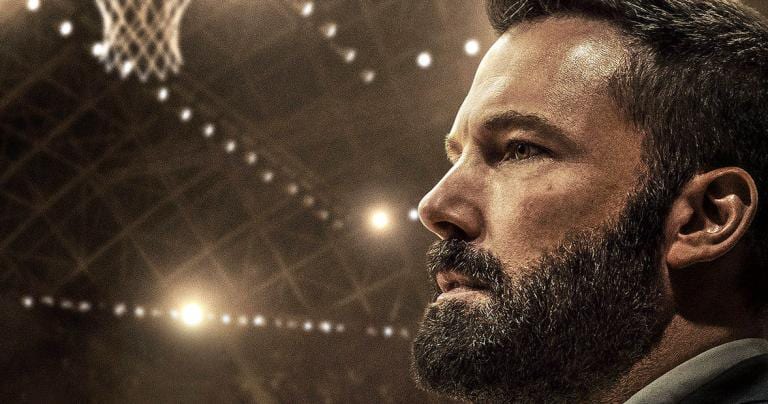
Yes, it’s one of those…
…wait wait wait wait…
It’s also a more refined version of that. Let me explain.
It all starts with the fingernails. Yup, you read it right the first time: nails.
I bet you weren’t thinking I was about to support my argument, of how The Way Back is a more polished and acute take on the sport’s coach movie, with dirt in the fingers.
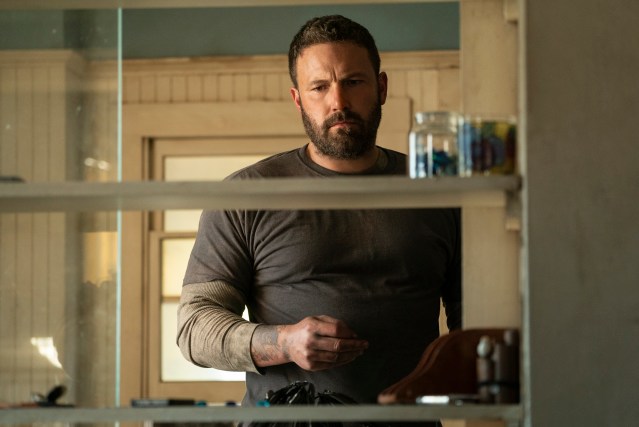
But, it’s important to understand what motivated the filmmakers to make another one of ‘these’. The moment I noticed that the production team decided that Ben Affleck’s character would have dirty fingernails for the majority of the scenes, I realized that nuance was the calling card.
This film is on a higher level than its peers. You immediately sense that the visuals and the music are more worked than those other coach movies.
The score, by Rob Simonsen (long-time collaborator with Mychael Danna from Life of Pi and Moneyball), is very good, elevating the images with its power without ever crossing the line.
The cinematography, by Eduard Grau, is also very sophisticated with no pretentiousness. His use of color and light sometimes surprises you, which then stay in your memory as moments of meaningful narrative angles. As well as the way certain frames were composed, with a precise and genteel artistry, carrying the weight this story intended.
Taking advantage of all these high-level crafts, we have here a consolidated cooperation between the writer (Brad Ingelsby), the director (Gavin O’Connor) and the editor (David Rosenbloom), that led to a myriad of out-of-the-box choices, which, not only kept me on my toes, but also created room for a more complex subject matter.
The basketball scenes have the right pace, with expert cutting and post-production. And, more importantly, they always come on time and serve a purpose.
The non-basketball scenes are when this movie raises the bar. It is in those where all the above mentioned aesthetic and screenplay choices meld and expand. Suddenly, the film is no longer about sports. Instead, we witness the rhythm of addiction fueled by tragedy, fueling a descent.
Problematics and choices that all converge into Ben Affleck’s back. And he carries all of that.
For all of us that have been following Ben’s career, and life for that matter, it becomes clear how he is able to, so naturally, embody that weight. He is channeling his own catharsis through this character. That’s why the melancholy in commonplace scenes is so hypnotic, and why the explosive scenes are so charged with rawness.
It is one of the best performances of his career. And, more importantly, it seems like it was one of the most important moments of his life. To put into art something so personal.

In conclusion, the movie could have been a walking cliché. However, with high quality visuals and music that interlocked with enlightened choices in the script, particularly the moments of space for Ben Affleck to succumb to, the film treads into a more risqué territory where experimentation goes hand-in-hand with volatility of the mind.
The message can be simple, but the delivery can be filled with pathos and surprise.
 Opinion Seed