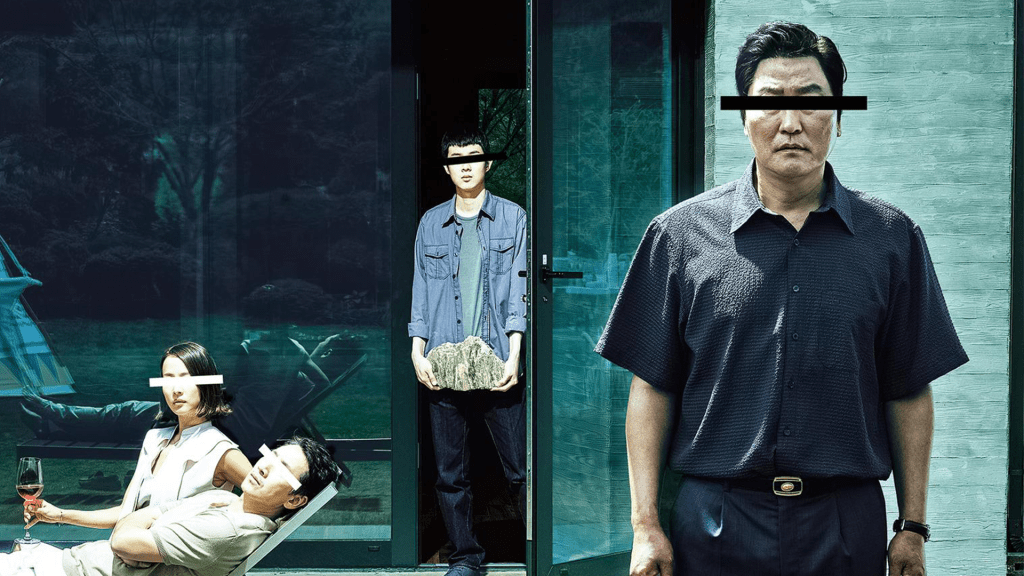
You should be passionate about the top movies. If the main reason why some films are above the others does not come from genuine feeling, I’m doing a disservice to anyone I’m sharing this list with.
That being said, there are a few rationalized criteria that I find important when making a ranking like this:
- The movie should be entertaining. Either from the plot, the acting, the lines, the special effects, or everything combined, the film should keep your attention, and maybe show you something new;
- It should have the power to evoke an emotional response. Fear, anger, joy, or tears;
- It should make you think. Either by showing a new perspective you had never seen before, or by presenting concepts that leave you questioning yourself or the world around you;
- It should be re-watchable. You want to see it again. You want to share that experience with someone else, so they can feel what you’ve just felt.
37. The Report
A movie so, rightly, preoccupied in giving us information, that it forgot how to do it in a way that moves, or inspires, people into changing their behavior in real life.
Adam Driver is really good in it, though.
36. Fighting with My Family
Above average writing and acting for a dramedy.
Stephen Merchant, as a novice filmmaker, is clearly in touch with what makes a movie enjoyable. He knows how to navigate between levity and tension, and how to use the right actor to be the vessel of those feelings.
Everyone here is well casted, with Florence Pugh being the star.
35. Hustlers
Mixed bag.
When I heard that Adam McKay helped getting this movie made due to its tackling of Wall Street greed, I had high expectations.
That subject matter is there, alongside other interesting ones. But, neither is explored to a substantial level. Maybe a bigger focus on a single issue could have enriched the screenplay.
Even so, the artistry of Jennifer Lopez has a life of its own and completely carries the movie experience.
34. Long Shot
Very nice comedy that has it all: intelligence without losing fun, action that does not mask why you come to a comedy, social and pop cultural commentary, and good actors feeding off the back and forth.
This movie proves two things: Seth Rogen is better when working with Jonathan Levine than with Judd Apatow. And Charlize Theron can do everything.
33. Booksmart
What if the 2007 style of movie making in Superbad merged with the 2017 sensibilities of Lady Bird?
That’s Booksmart. Better than Superbad, not quite as good as Lady Bird.
Props to Olivia Wilde, first-time director, who elevated everyone’s performances. Kaitlyn Dever and Beanie Feldstein are here to stay, but even the side characters got attention and care.
The sequence of “swimming pool scene” to “bathroom scene” is of a filmmaker that is in complete control of tonality, either through the technical department or the theater in the page and in the actors.
32. Triple Frontier
Don’t judge a book by its cover.
I’m not trying to say this isn’t a plot pumped with testosterone. It is.
But the acting is good, particularly Ben Affleck, some moral conflicts are raised, and even the Metallica-inspired aesthetic works on the service of, and not as a service in.
31. Aladdin
Look, I watched Aladdin, as a kid, more than any other movie in my entire life.
No way this non-animated remake could compete with those images in my brain.
Even so, the movie kinda works.
Mena Massoud and Naomi Scott not only are very talented, but also have chemistry between each other, which is essential for it to work. And Will Smith is really interesting as the Genie, since he’s not trying to replicate anything, but putting his own confident spin on the character.
Some big scenes are a bit lackluster, but the “Friend Like Me” sequence is worth the ticket price alone, and the new Jasmine song “Speechless” is memorable.
30. Star Wars: Episode IX – The Rise of Skywalker
This review is not based on my disappointment that, after 40 years, we are still following the same characters, bloodlines and planets of a created universe full of possibilities.
The decision to cast Hamill, Fisher and Ford for this new trilogy was already unimaginative, but forgivable. Writing a new space adventure with them as guiding stones was, however, problematic.
Still, after watching Episode VII, I came to terms that Star Wars had become a spectacle of nostalgia. Despite the wasted potential, there is nothing wrong in entertainment for the sake of entertaining.
And that’s my main issue with Episode IX – the movie is not that spectacular.
I could ask of the narrative to explore some of the countercyclical and equitable ideas proposed in Episode VIII. Or, I could be expecting something as big as Star Wars to confront the monomyth and other archetypes of the hero’s journey, and give us new surprising and epic inspirations.
No, my expectations were in check. I just wanted a state-of-the-art display of visual effects, orchestral music, choreographed fights and alien design.
And all of that was pretty uninspiring.
It’s as if Star Wars, after the backlash against the prequels, has lost confidence in itself and has become a slave to the brand and the fans.
Not only are the narrative threads more preoccupied in accommodating known lore, but the space opera is also being infected by this fear of venturing into the unknown.
The only reason this movie is not lower on the list is because Daisy Ridley is really good in it and, despite the uninteresting script, she is able to become a Rey that is as legendary as Luke, Leia or Han.
29. The Irishman
Fool me once, shame on me. Fool me twice…
Martin Scorsese was 71 when The Wolf of Wall Street took so many young people for a ride with its thrilling rhythm.
That movie is 3+ hours long and, not only got easily distracting consumers glued to the big screen, but also addicted to the high and to buy tickets for another ride on the rollercoaster.
Then came Silence. Many of those fans probably didn’t know the two movies were made by the same person and discarded it as boring. I knew it was a long-in-the-making study of Scorsese on faith, so I took their differences at face value, and respected that the artist has not to entertain but to express.
The Irishman, another long-in-the-making project of Scorsese, this time on ageing, pride and regret, is the entry in his filmography that proves that the artist is in a different phase of his postulates.
The craftsmanship is still there. The first hour, hour and a half, of The Irishman is as good as any of the two Godfather movies.
But, then comes the self-servicing dissertation that is not using images, music, editing or acting for heightening the artist’s comprehension on the themes; instead, the cast and crew are like vegetables in a savory, yet safe soup.
28. Us
After Get Out, the horror movie that exploited the genre’s tropes to say something about racism and other societal prisons, the sophomore director is not afraid to resort to the same trick.
In some ways, Us is better, in others it’s worse. And this divide probably has its roots in the same reason: Us is bigger.
When I say bigger, I say louder. Jordan Peele is trying to say something with a bigger scope, but with a poignancy that feels like gravel hitting the windshield.
This is where Us is better. The message is more complex, but it lands again through horror.
But, the leeway that Peele allows for the visuals and the acting to be on par with range of the themes feels more distracting than sharp.
27. Joker

The most compelling facet of the Joker is that we don’t know his origin story.
With that in mind, everything I say next is not predicated on any immovable notion that we don’t need to know his side. These filmmakers decided to tackle that weighty challenge, all I can do is show my respect.
I’ll start with the end of the movie, without spoiling it. Any worry one might have about the strength of the character residing in its cryptic backstory, the final scene guarantees that the canvas remains blank.
Notwithstanding, this brings about two arguments:
- Do the other themes raised during the plot still matter?
- Shouldn’t these filmmakers stick with their take on the Joker?
The first question is easy to answer: of course they still matter! The fact that those discussion topics are raised in such a wide-reaching product is one of the strongest aspects of this movie.
Answering the second is a bit tougher, as it is supported by the components of the movie that are flimsy.
I’m not quite sure if writer/director Todd Phillips was aware of the fragile points of this story. But, the fact that he converged to that ending, tells me that the cinematic messaging he tried to convey is much more on the side of virtue signaling than of getting your hands dirty.
This Joker, embodied by the most acting, not necessarily best, of Joaquin Phoenix is the personification of the difference between discharging and dredging. It’s not a great look when, as a writer/director, you have one of the best actors of his generation to play a titular role like the “Prince of Crime” and you can’t get him on screen deeply ruminating on his condition (mental and social) and then to deliver memorable, while distressing lines that hit close to home. Instead, all you directed is method for the sake of method.
All that being said, Joker is still a very accomplished movie in its technical merits. The cinematography is the right combination of grime and painterly, and the music by Hildur Guðnadóttir is the kind of unearthing I was expecting out of the acting and the writing.
26. Once Upon a Time… in Hollywood
Is Tarantino able to do Oscar bait?
Intentionally or not, he just delivered one.
This film has violence, an aspect of his past movies that many thought too juvenile to warrant him the statuettes of directing or picture. But, this time, it’s so momentary, compared to the lovefest for the 60’s Californian film industry that is this screenplay’s backdrop.
Once again, it’s hard to determine intentionality, but this is his most different film. Usually his shots have a rhythmic signature that one might identify as “Tarantino’s tempo”. Once Upon a Time is not as frenetic as his author. It takes its time to transition to the next scenario or story beat. As if Tarantino himself is savoring the final moments of his Hollywood’s Golden Age.
This change in style could be attributed to change in editing partner. But after the passing of Sally Menke, the long-time editor of Tarantino’s films, Fred Raskin has already worked on Django Unchained and The Hateful Eight, movies that very much had that tempo.
So, this decision came from the top. The man himself. And, even if I find fascinating the concept of an author, a creator that has given so much to his audiences, finally saying “this one, is totally for me”, I must say that that did not help the film a lot, with many moments feeling less introspective and more voyeuristic.
Leonardo DiCaprio and Brad Pitt are great in it, though. If you like them, it’s worth this bewitched version of Tarantino.
25. Midsommar

I think I’ve already shared this in other columns, but Midsommar is the best example to illustrate why I don’t gravitate towards horror movies.
Structurally, I don’t have anything against being scared. I watch a lot of films that are intentionally not pleasant. Art doesn’t have to be.
My main gripe against the horror genre, besides the jump scares, which I find a writing crutch to generate thrill, is the visual identity all those movies seem to embrace. A boring color pallet.
Then comes Midsommar and says: no excuses now.
The discomfort here comes precisely from the overly lit and saturated sequences. To a point that I found some of the visual flairs they added in post-production, to enhance even more the unpleasantness, were a bit gimmicky. But huge respect for the audacity!
The fact that everything is in plain sight creates even more tension. The pristine nature and perfectionism of the production design is disconcerting. With all that light, nothing can be hidden, there’s no margin for mistakes.
And still manages to give us the mystery and fear of the genre.
I felt like the horror culmination was bit forced in the overall scope of the movie, but on its own works and is shilling.
24. The Two Popes
From the beginning of this film, you are immediately reminded what a good director Fernando Meirelles is.
Even in a movie about Catholicism and the papacy, the first 20 minutes are full of adventurous shots, kaleidoscopic images, erratic movement and many sounds and voices.
It doesn’t work that well. Similar to another filmic voyage he decides to take us on by the end of the second act.
All these ideas are praiseworthy, they just don’t add or cohere to the main structure in a way that make it a better film.
The Two Popes is good when Anthony Hopkins (Pope Benedict) and Jonathan Pryce (Pope Francis) are sited talking with each other about philosophy, sociology and religion. This is when the pace of the film finds its stride, the resolution of Meirelles feels bold and strong, and the words of Anthony McCarten have a productive verbosity.
23. The Peanut Butter Falcon
What a sweet movie. This is more than charm. But, what a delightful picture.
First of all, it is shot beautifully, in particular with how the cinematographer used moments of sunlight or panoramic vistas to accompany mood swings in the characters and story.
Speaking of characters, Shia LaBeouf, once again, shows signs of brilliance. He’s not quite there, but there’s so much potential.
And Zack Gottsagen, despite his Down syndrome, is unquestionably charismatic and, most of all, talented. His theatre major in Dreyfoos School of the Arts shows. He knows his timings and how to generate his own narrative and arc through the use of dramatic and comedic tools.
22. Knives Out
If we commissioned a group of experts to define a formula for a “whodunit” story, I bet they would come up with something along the lines of this:
Engrossing narrative threads + Layered characters to support them + Bold editing to revolve the pace = Surprising twist.
Ironically, if a “whodunit” movie follows this proven template, the surprise should not be that surprising.
And that’s why I can’t put Knives Out higher on this list. The writing is pleasant without losing density. The characters are nuanced, while the actors are savvy at how and when to transition between their different sides (essential for the message the film is putting forward). The editing brings all these elements together into a very stable pond of ideas, while retaining the fog of mystery with smooth cuts. Still, you always have that nagging knowledge on the back of your head that says “this doesn’t mean as much as it could have, because the plot twist is coming”.
Don’t get me wrong, the twist is good. To give credit to writer/director Rian Johnson, he is very smart at how he spreads it throughout the narrative, as well as in the decision to give Ana de Armas (probably the least experienced actress of the main cast) the responsibility to bring together those scattered moments.
Again, it works wonders for the message of the film, but, with the risk of repeating myself, you know it’s coming.
21. Ford v Ferrari

The cinematography here, by Phedon Papamichael, is so above any competition this year, that, without this quality, I would probably rank this movie 10 spots lower.
The use of natural light, garish colors, and aggressive angles completely convey the delicate balance that happens between the muscular industry of a race car and the even stronger natural laws.
The music and sound, on the other hand, were disappointingly not able to keep up with the gravitas and rhythm of the visuals.
And the acting is good, but I’ve seen Bale and Damon do better.
20. John Wick: Chapter 3 – Parabellum

John Wick movies are still very good. And their cast and crew are getting even better at making them.
This third entry looks and sounds even better than its predecessors. The action sequences are even bigger and, more importantly, still feel as fresh and imaginative as in the first movie. And the writing continues to be successful in the dissonant delving into high-concept ideas like Greek mythology and classical poetry.
Notwithstanding, I don’t know for how much long they can keep delivering this awestruck inventiveness. Some cracks are already appearing. As a part of a whole story, for example, this entry had some moments that did not align that well with the previous ones.
As a matter of fact, the way the third act of this film is structured, like a videogame climb of sub-boss after sub-boss, and then an amazingly choreographed final battle, could have been an opportunity to end the John Wick story with a mesmerizing climax.
I have no reason to doubt this team of directors, writers and actors. But I hope that John Wick 4, that will be released on the same day as Matrix 4 (there are so many layers in that observation), does not become a willing recipient of franchise fatigue.
19. Uncut Gems
Academically more interesting than an engaging creation as a whole.
The aggressive angles of the visuals, the surreptitiously cadenced music, the intentionally repeated narrative threads, and the stretched out editing, all contribute to disseminate a fever dream that is in line with the main theme of the movie – gambling addiction.
However, some of these choices, while they are thematically coherent, do generate an experience that is repetitive and dragged out.
The Adam Sandler character, on its own, helps the movie. The acting is very good, riding that fine line between entertaining and hypnotic. His, and the directors’, love of basketball add the idiosyncrasies needed to ground the sports betting antics.
At the same time, the fact that he is introduced as already being part of the pawn shop circuit cheapens a bit his descent. I know it helped the writers/directors to start the movie already with that high cadence, but I think it would be more thought-provoking if it was the same character study on an individual with a more conventional profession.
Lastly, I don’t really know what to make of the confirmation that this movie is stylistically very similar to Benny and Josh Safdie’s previous work – Good Time. On one hand, it’s a bit discouraging that, so early in their careers, they are already settling for a signature (even more by being two artists). On the other hand, their aesthetic is pretty unique and brazen, so, north-american cinema should be thankful.
18. The King
I won’t pretend this movie isn’t what it seems.
Yes, it’s one of those. The only stories that are still able to sell books.
However, there are three ingredients that make this movie a very strong “one of those”: its visuals, specially how it deals with medieval darkness and lighting; its music (Nicholas Britell, the composer, is rapidly becoming of the best at doing crescendos in this industry); and the acting of Timothée Chalamet is astounding – he is physical in a way I never thought it would be possible for his physique, and his eyes, like many great actors before him, say so much without being overly expressive.
17. Ready or Not
What a nice surprise 🙂
The cinematography is of a very high level.
Samara Weaving is a lock for leading roles.
And the ending has two moments, back-to-back, that had me pointing at the screen and the filmmakers and saying “Oh, you bastards”.
16. Jojo Rabbit
The argument that there are no untouchable subjects for humor is trite.
A joke is strong not because it dared to venture into taboo territory, but due to its ability to trigger catharsis. The laughter is simply an expurgation of our own biases.
If people laugh at offensive material or are offended by relatively wholesome stuff, humor has made its job of lifting the veil of compromised amiability. From that honest reference point, we should use our brains and discourse to tackle those conflicting world views.
Jojo Rabbit is a comedy on nazism. Well, it’s more than that, but it’s a comedy on nazism.
This is a very traumatic subject. So, is the humor strong enough?
It is. It is for several reasons. Firstly, jokes and non-jokes are impeccably well written, with intelligence and heart. Secondly, the acting expressing those lines is impressive on many levels, it is witty, timely, physical and even circumspect when it needs to be. And finally, the attention to detail of everything on the screen is, not only sharp, but also informative to the story being told.
All in all, the film’s humor is skillful at saying something about indoctrination, cultural exclusionism, toxic masculinity, empathy and love.
15. Luce

On the surface, Luce looks like a straightforward thriller.
But, thrillers imply that, no matter how much convoluted the narrative becomes in order to sell tension, there will be answers.
The point of Luce is precisely not to give you any, and let you wrestle with your preconceived notions.
When it ended, I was so happy that the movie was not only trusting in its ideas, but also respecting my own processing of them.
Helping this meaningful ambiguity are two high-level performances: the experienced Octavia Spencer adding to her versatility, and the up-and-comer Kelvin Harrison Jr. who is frightening good at embodying a multi-faceted character, without ever looking like beats to hit from a script.
I was genuinely taken aback by what to think of their respective roles in the story, and what type of vessels they were to land a message. The screenplay and their acting were so subtle that I found myself in the middle of conflict. I love cinema that challenges me this way.
14. Ad Astra
This is not the first space movie to use the conceit of interstellar exploration to say something about humanity.
What’s special about this one, besides the excellent cinematography and the best performance of Brad Pitt’s career, is that it is saying we should NOT venture into the unknown.
Space operas usually exalt the human condition and remember us of what we are capable of conquering.
Ad Astra is unrelenting in going forward, to then arrest us and show how much we distanced from the riches of empathy and how much we lost in search of infinite gain in the void.
13. Ash Is Purest White
This was one of the hardest movies to rank.
I’m still a bit conflicted about what I was offered.
I was expecting one of those crime dramas. You know? The ones seasoned with elements from Chinese action cinema. This is none of that.
It’s something completely different. And it’s because of that I’m not sure if I’m ranking it too high or too low. Well, the argument for it being too high was my own uninformed expectations, and if I’m analyzing it critically, that’s the first facet I need to learn how to compartmentalize.
The case for it being too low is this: Ash Is Purest White did crime drama, this year, better than the master himself, Martin Scorsese.
This is a film about how naturally you can enter the criminal underworld, just by friends and love, and how hard it is to leave, how it molds your relativization skills, and what it robs from your life.
All of these, from a rare female perspective: Zhao Tao is as resilient and powerful as the male icons of gangster movies.
12. The Souvenir
A semi-biographic story at the top my list.
This is really surprising because I usually find them harder to separate from that background, and easier to make for the filmmaker (probably harder to externalize).
So, for this to be here, it had to be really good at making the background worthy of also analyzing, and the filmmaking adventurous.
The Souvenir is more than the story of a young film student in the early ’80s who becomes romantically involved with a complicated and untrustworthy man. Joanna Hogg, the writer/director, creates and proposes an aesthetic that is dream-like and documentary-like at the same time.
This audiovisual style works wonders at elevating both the biographic foundation of the story and the central conflict of the artistic message, without ever feeling biased or untouched.
The remembrance that exudes from the cinematography is both nostalgic and visceral, in one of the best translations to the movie screen of that knowledge we all have, but it’s so hard to embrace: longing and yearning of the past can be full of unpleasantness and bad memories.
Honor Swinton Byrne (the daughter of Tilda Swinton, who also is in the movie) is one of the best performances of the year, and an actress to bookmark.
11. Birds of Passage

Every year, if we know where to search, we can find a feature film that, despite the acting, feels like a true documentary.
It’s fitting then, that the country that gave us the master of magical realism – Gabriel García Márquez – is here, once again, to demonstrate how myth and folklore arise to protect us from the grim nature of reality.
Birds of Passage could have been filmed very cinematically, in the same sense of the word that defined sunsets as “magic hours”. Especially since the movie contains a lot of imagery and themes of aboriginal fantasies and superstitions.
However, the Colombian magical realism is so important for this movie’s message that the casting and directing had to focus on the most genuine people they could find, while accompanying these lives with fictional symbols.
This is a film that pulls off different things at the same time. First, you notice that a lot of characters are portrayed by people that are, in fact, not actors. However, the writing and directing is so humane that, by the middle of the movie, you know every one of them by name and their relative positions in the social and family strata of this story.
The ones that are actors behave so unceremoniously that they could also pass as non-performers. This is essential, not only for coherence among the social fabric of the interactions on screen, but, more importantly, to give grounds to the other expression these filmmakers want to convey: the effect money has on normalcy.
Helping sell this idea is the strong but subdued work of the costume/makeup departments. The changes in clothing throughout the film, or the characters that choose to maintain certain garments, but still adhere to jewelry says a lot of certain people, without them ever admitting to it.
It is almost frightening how marijuana trafficking was normalized for these indigenous people, and how the riches it brought rapidly destroyed the magnanimity of their beliefs and communal spirits.
To add audiovisual flair to these transitions, the filmmakers, alongside the music and sound departments, introduced moments of superstition imagery rapidly cut at an angle, accompanied by sharp sounds or natural silence, as well as traditional folklore music.
In the end, Birds of Passage is really good at showing the fragile nature of tradition when the transformative power of money enters into the fray, how those same old values never leave if you ever need them again, but what you’ve lost in the process.
10. Atlantics
Once you acknowledge that the plot twist is not the hidden force driving this movie’s message, it instantaneously becomes one of the most re-watchable experiences of the year.
In just 1h40 minutes, the first-time director Mati Diop managed to imbue this story with allegory on labor exploitation, migration despair, heavy conscience and grief of the ones that are left behind, and how to move forward.
The last paragraph reads like the typical rookie mistake of first-timers that have a lot to say, but are not sure if they’ll get another chance. Not here.
The care with which Diop unified all those ideas with a beautiful audiovisual aesthetic turns the film into a shareable fable instead of a student project.
9. The Farewell
Sometimes the small and personal stories are the ones that reach higher and touch deeper.
The Farewell, despite being a chinese-american account of emigration and cultural clash, by being rooted in inevitable experiences of life, like growing and education, rearing environment, family values and expectations, and death, it will still hit close to home.
This movie has two of the most poignant scenes that come to mind when I think about 2019 in cinema. And I’m still thinking about them.
Without spoilers, I can say that one happens around the middle of the movie when (and how) the idea “your life doesn’t belong to you, but to the people around you” is communicated; and the other is related with the editing choices for the final shot.
8. Marriage Story
I typically find “people in rooms talking” a too much self-serving approach to storytelling in movies. This is one of those, but the combination of detail and catharsis in each scene is more inviting than showcasing.
It’s very likely that this “chamber piece” is built on the relationship of its writer/director Noah Baumbach with actress and ex-wife Jennifer Jason Leigh. However, this degree of embeddedness did not compromise in the slightest the vision of the screenplay.
As a matter of fact, by having certainly marked memories of his own divorce, the scenarios and themes he gives the actors are so rich and varied that their portrayals feel the least scripted for such a personal directing. Baumbach trusts in the humanism of the structures, and the actors become more at ease to be less performative.
Even if the lines are in the paper, their delivery has the cinematic space to be explorative. You sense the scenarios changing with directorial care, and the actors, by having an audiovisual canvas that supports their characters’ storytelling, can reach inside or outside without ever deviating from time-points or facts.
This leverage is what makes a screenplay that would always be inclined to its author’s point-of-view to be impressively balanced and respectful of everyone’s spaces. Marriage Story is not the story in the film, but the narrative of its filmmaking.
7. Waves
This was my most anticipated movie coming into the season.
It did not disappoint, and even surprised me.
I was much attuned with the vibes of that trailer, so, I was not expecting for the whole story to wreck me the way it did.
The first half of the picture is very intense, with aggressive camera movements and barrages of dark saturated colors and soundtracks (only Trent Reznor and Atticus Ross to make music out of the sounds of a MRI machine).
For all that, some of the audiovisual maneuvers walked a thin line between experimental cinema and risqué music-video.
But, when the film transitions into its second half, it finds an aesthetic that allows for the previous ideas to gain weight, and for new ones to be introduced.
This juxtaposition is intentional without feeling manipulative and gives the audience the rare in-movie window to reflect on the matters of contention as the characters also do it.
Speaking of characters, all the main ones feel true and multifaceted, and they feel true because they are so multifaceted.
6. Avengers: Endgame

Many years will have to build up again to what we’ve reached in 2019: Game of Thrones, that dominated watercooler moments during the decade, ended; movies near-and-dear to people’s hearts like Aladdin or The Lion King were remade; the first Stars Wars trilogy sequel since the eighties had its third and final chapter; and a 22-movie story that started in 2008 had to wrap up.
It’s really impressive that the one with most baggage was the one to land better.
After Avengers: Infinity War, I was really skeptical that they could have an ending, not only with impact, but graceful as well. I thought that, to surprise in the penultimate moment, they lost margin for stakes in the last salvo. I forgot that resurrection can be more than a fantasy trope, if there is a cost to gain that second chance.
And this takes me to Martin Scorsese’s opinion on these movies: “it isn’t the cinema of human beings trying to convey emotional psychological experiences to another human being”.
Clearly, I don’t agree.
The “5 years later” moment of Avengers Endgame is cinema at its best conveying that experience. The two moments of joy in Chris Hemsworth’s face are the genuine bursts of a character that needs them to beat depression. And the strength showcased by Chris Evans’ acting in the three acts of this film is the kind of inspirational leadership that only cinema is capable of.
These humanistic moments were felt in the entire world. The legacy of Avengers Endgame is not the highest-grossing record, but the fact that audiences kept going back to movie theaters (something rare these days) to empathically cry during those moments with Thor or Captain America.
Even if you were not a follower of these characters’ legacy in the graphic novels, like me, the “emotional experiences” you lived in these movies culminated in such an affecting way in Endgame that the psychological connection was locked.
It was locked so profoundly, that when that Avengers Suite (by Alan Silvestri) hits, you feel the same cinema Scorsese loves so much.
5. 1917

The best first 30 minutes of the year.
The no-cut approach works. Masterful choice.
Visceral, you are there with the two soldiers, particularly in the moments when the camera has to go low to accommodate the terrain and the no-cutting, you feel the boots on the mud.
I love how this film challenges its audience to keep up. It works wonderfully to convey the day-to-day pace of a battlefield. But, as a reward, the adrenaline makes the viewer more attentive to all the little details in the production design.
In the first half an hour, you may feel pushed, but you probably noticed every decaying corpse with more care than in any other war movie. The battlefield is filled with death, but each individual, man or animal, is more impactful because you are there with the two soldiers. You see what they see.
But, then comes a halt. And I’m not really sure what to make of it. I acknowledge that it would be extremely difficult to keep that frenetic rhythm for 2 hours, and probably the moments of humanistic calm before the next sequences of tension serve a better viewing experience for a broader audience. Still, the film is at its best when you are alone with the two soldiers and in movement.
It will always be in the back of my mind what this film could have been, with just 1h20-1h30, as an uncompromised march against the clock, with no real time for theatrical moments of the heart. A beating drum that has no swings and gradually transmits the unpleasantness of war.
All that being said, the directing of Sam Mendes is near-perfect, the cinematography of Roger Deakins is like an academic treaty, the music of Thomas Newman is one of the best of his career, and the acting is really good at transitioning between visceral and humane.
4. An Elephant Sitting Still
The only reason this movie is not the first in the ranking is because there are moments during its 3h 50 min that is perceptible a certain hubris of a 29 year-old first time director, who is pledged to his visual approach.
This rationale only makes me feel worse, since Hu Bo, the writer/director, took his own life shortly after finishing this immaculate film.
It was the movie that touched me more in 2019. I might even go as far as to say that its portrayal of mistake, and its cinematographic translation of the similitude between the cascade of contextual choices and the escape of said context, generated a cocktail of emotions and thoughts in me I might had never tasted before.
The visual approach to convey such ideas was a bit proud of itself. Nonetheless, it was an inspired choice. Hu Bo, in collaboration with his cinematographer Fan Chao, and a colorist named Zhou Mo, crafted a perspective for these images that seminally expresses the weighted stride of the hopelessness and isolationism that come from contextual mistakes.
Many of the shots are captured behind the back of the character (with a slightly downward angle). Hu Bo lets the scenes transition from each other through walks and not edited cuts, and when a person has to interact with another, only one is in focus. These choices, coupled with the sober discolorisation of the world and the soothing electric notes of the score, make this film also a very intriguing technical work.
It’s tragic that Hu Bo died so young, but you only need one hallmark to become immortal.
3. Pain and Glory
“Passion and aging” is the subliminal title of this new work by Spanish cinema legend Pedro Almodóvar.
Yes, it is biographical in nature, but the openness that Almodóvar gives to the visuals and the acting is the strength here. He could have been sacred about the material and the scenarios, but his energy went where it mattered: the reason why he wanted to share this vision of himself.
The way he juxtaposes the passion for art and the passion for people, and how those two energies can be in conflict or in need of each other, while introducing the transformative effect of time in this relationship, and vice versa, is astonishing.
He lets each scene find itself, but never monotonously. The coming to grips with old and new passions, even if in moments of pain and solitude are always accompanied by beautiful set designs. The colors, in particular, give the audience the evidences that the main character seems incapable of welcoming.
And Antonio Banderas is scrupulous in this search. Even in the most lethargic scenes, he is looking everywhere: in his character legacy; in his family, friends and muses; in his motivation to say something; or in a love so deep that is capable of sickening and curing.
2. Little Women

Greta Gerwig is one of the best directors we have.
At her third movie, she’s already giving us a film with meticulous artistry and wide-reaching openness. An instant classic.
She is a master at every discipline of cinema. She lets performers perform, with overacting in check. She uses writing to get your attention with memorable lines, without feeling displaced. She uses editing to induce mood swings without words. She uses the camera to entertain and challenge us. And she embraces cinematography, music and production design to enchant and inspire us.
This film has all the above. I had never read the original novel, but by the hour mark I already felt like I’ve known these characters for years. The way she adapted the novel gave a voice to Louisa May Alcott (1832–1888) that resonated with me in 2020.
The acting, of course, is a big responsible for that familiarity. Saoirse Ronan and Florence Pugh are bona fide superstars. They are completely at ease with these personas. They land complex lines with a believable honesty, and they move around the set like they really live in that world.
Raising all these theatrical elements to an immersive tale are the set-pieces arranged by Gerwig. The visual art and the music set the tone, the camera moves smoothly but with purpose, like in the grand movies, and the editing dances in space and time to tell a story of them, but also of us there, and how we can take those lessons to the now.
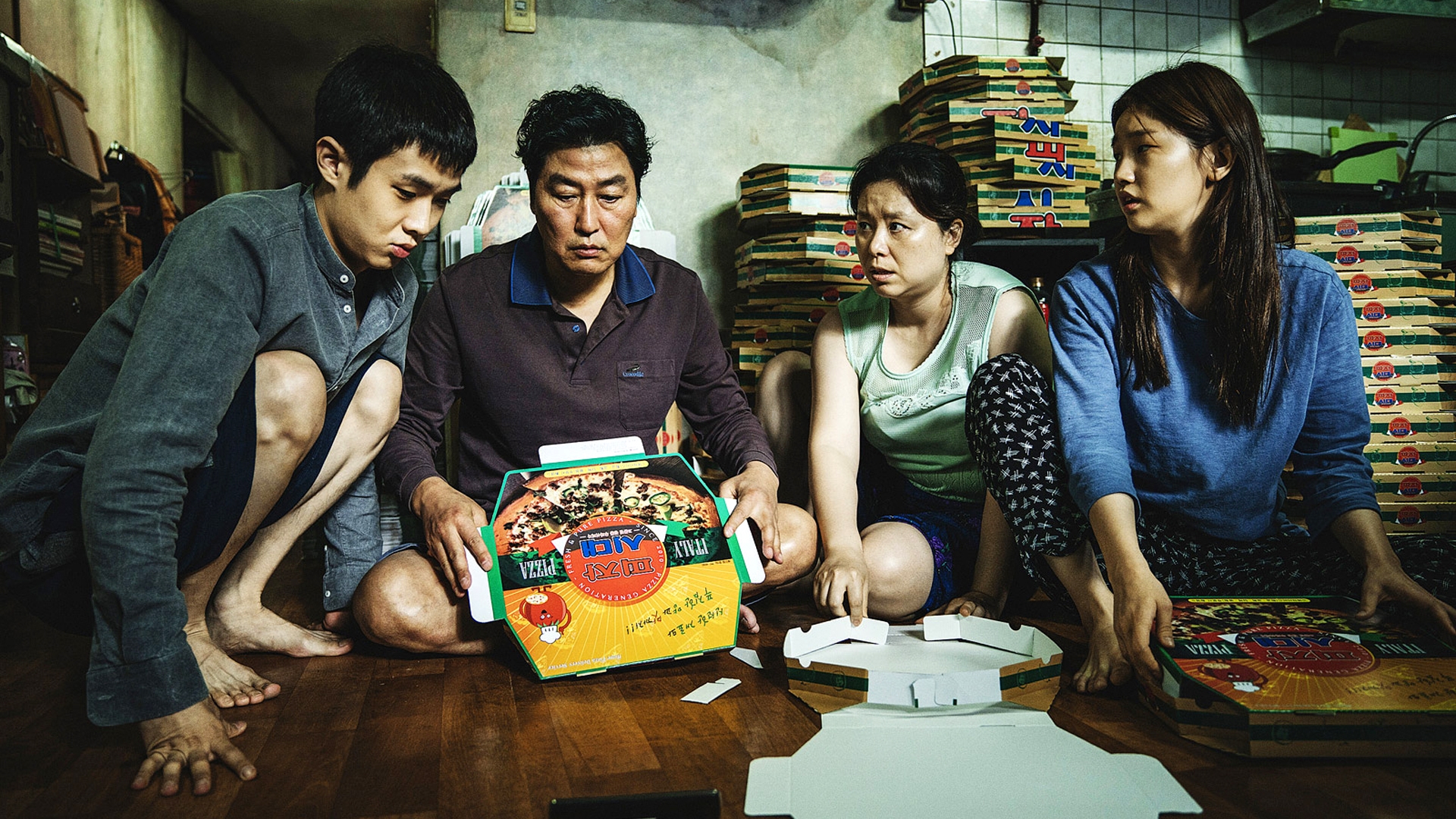
1. Parasite

Korean cinema is not for the faint of heart.
Oldboy, probably the most known film of the country, is a proof of that. Even the widespread ones have their barrier to entry. Another example of that is Snowpiercer, Bong Joon-ho’s work with western names like Chris Evans and Tilda Swinton. This is also a dense movie with sharp edges and an introspective rhythm, even if it takes place inside a high speed train.
It is with surprise though, that I come to you to say that the latest work from director Bong is as accessible as the typical Hollywood blockbuster, without losing any of edginess that makes Korean filmmaking so hypnotic.
As a matter of fact, Parasite was its own kind of blockbuster. The Palme d’Or winner hit the North American theaters with a bang, holding the year’s best opening weekend per-theater average, even beating Avengers Endgame initial fortnight. It’s the best per-screen haul since La La Land, as well as the biggest per-screen haul of any international film in a country that is traditionally difficult for subtitled content.
What’s the reason for this?
Well, I think Parasite is one of those rare recipes that makeup a near-perfect film. It has something for everyone: comedy; drama; violence; sweetness; characters to root for, characters to be against; time for you to think about serious subjects; moments of complete disarray that replace the rational with the visceral; and twists.
And amidst all these ingredients, it never feels like a sum of parts. The direction and editing are so comfortable in wielding the through-line of the movie that they can venture into different subgenres and rhythms without losing any logic, characters or even viewers.
Bong and his editor Jinmo Yang, by not being heavy-handed with the beats they planned to hit, give the film a quasi-impromptu form that, not only allow the actors to react to the pace and juggled themes, but also create an inviting naturalism for the audience into this current-day fable.
The way this film makes you feel about the laughs you exteriorize is Korean cinema at its best. It acclimatizes you to mood swings through friendly character arcs and thrilling conquests and discoveries, and then makes you arrive at your own internal confrontation with weapons and defenses given to you by the film itself. It enriches you intellectually, through challenge, but without cheap tricks.
This fairness and balance create something very difficult: growth in total enjoyment.
- Costume/Makeup – Birds of Passage
- Stunt/VisualFX – John Wick
- Production – Midsommar
- Sound – 1917
- Music – Joker
- Acting – Little Women
- Screenplay – Luce
- Editing – Avengers
- Cinematography – Ford v Ferrari
- Direction – Parasite
- Parasite
- Little Women
- Pain and Glory
- An Elephant Sitting Still
- 1917
- Avengers: Endgame
- Waves
- Marriage Story
- The Farewell
- Atlantics
- Birds of Passage
- The Souvenir
- Ash Is Purest White
- Ad Astra
- Luce
- Jojo Rabbit
- Ready or Not
- The King
- Uncut Gems
- John Wick: Chapter 3 – Parabellum
- Ford v Ferrari
- Knives Out
- The Peanut Butter Falcon
- The Two Popes
- Midsommar
- Once Upon a Time… in Hollywood
- Joker
- Us
- The Irishman
- Star Wars: Episode IX – The Rise of Skywalker
- Aladdin
- Triple Frontier
- Booksmart
- Long Shot
- Hustlers
- Fighting with My Family
- The Report
 Opinion Seed