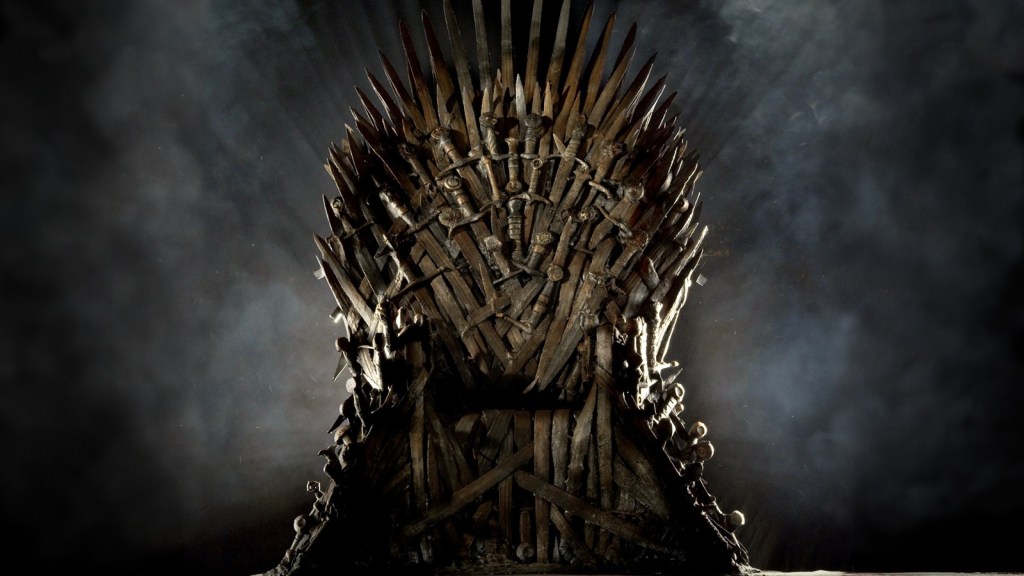
After 8 years, 73 episodes, 47 Emmy Awards, a 9.4 overall on IMDb and an audience of more than 30 million each season worldwide, the discourse seems to have decided on “disappointment”.
I almost feel like the devil’s advocate, defending a series I felt, by the third season, was too enamored with its verbose storytelling.
The discourse is positing “too short”, “bad writers” and other mechanisms that compose story making. That’s great. A show with ice zombies and fire-breathing dragons is making people come together to discuss the ins and outs of narrative building. But let me suggest this: maybe it was “too long”.
Obviously, its length wasn’t hurting a bit its ability to grow in viewership year-over-year. Even when fantasy elements gained prominence, the show surpassed The Sopranos for the all-time record.
However, knowing what we know today about these characters’ arcs, and the overall message of the story, I would argue that the writing traps were not laid in the last seasons but in 3, 4 and 5.
I should emphasize: writing Traps. Not problems or “incompetency”, like many people are eagerly passing as judgement.
For me, Game of Thrones is not a case of 5/8 good writing and 3/8 bad writing. But more like a good landing with a plane that couldn’t be changed mid-air.
Let’s contextualize the metaphor from the take-off.
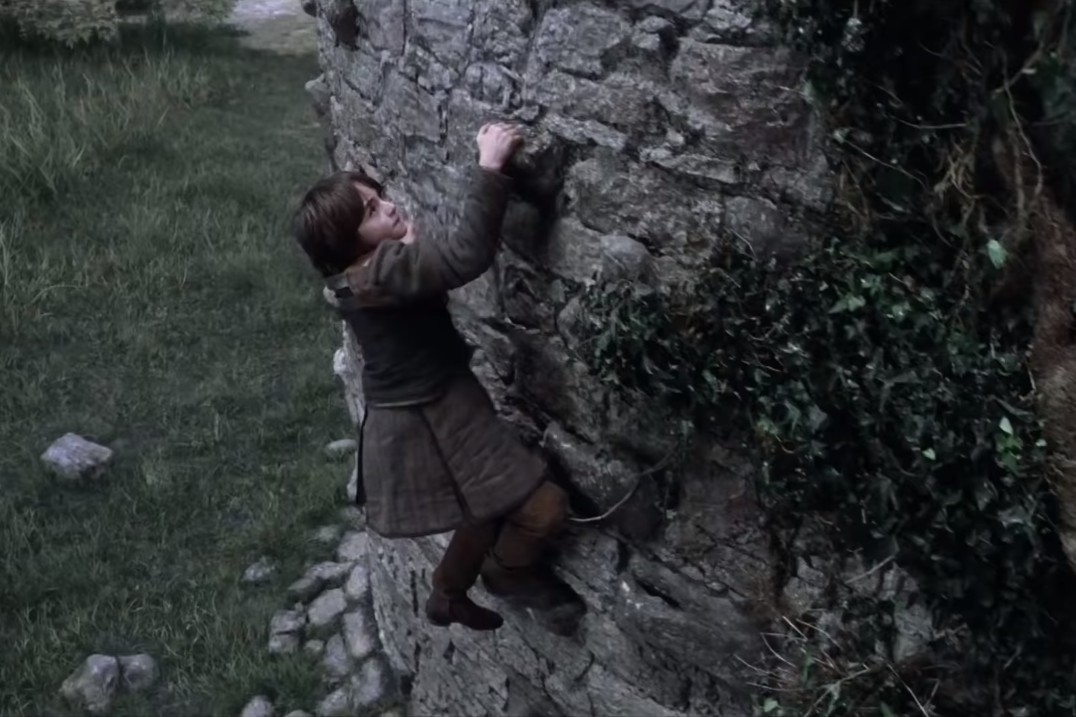
In January 2006, David Benioff (one of the two showrunners) had a phone conversation with George R. R. Martin‘s literary agent about the books he represented and became interested in A Song of Ice and Fire.
By this time, A Feast for Crows (the fourth book in the series) had already been released with an author’s note stating that the missing viewpoints would come next year in A Dance with Dragons, because the already written material was too much to physically bind together in a single book. Feast released in 2005, but Dance didn’t actually come out the following year, but in 2011 (!!).
As I was saying, Benioff shared his enthusiasm with D. B. Weiss (the other showrunner) and suggested that they adapt Martin’s novels into a television series. They pitched the series to HBO after a five-hour meeting with Martin (himself a veteran screenwriter), and, according to the novelist, the two of them were the first screenwriters in 10 years to ably articulate where this story was going.
The series began development in January 2007. HBO acquired the TV rights to the novels, with Benioff and Weiss as its executive producers, and Martin as a co-executive producer.
George R. R. Martin wrote one episode in each of the first four seasons. And, although he was not in the writers’ room in the later seasons, because he wanted to focus on completing the forthcoming (since 2011) sixth novel, he always read the script outlines and made comments.
Benioff and Weiss sometimes assigned characters to particular writers. For example, Bryan Cogman was assigned to Arya Stark for the fourth season. The writers spent several weeks writing a character outline, including what material from the novels to use and the overarching themes, and after these individual outlines were completed, they spent another two to three weeks discussing each character’s individual arc and arranging them episode by episode.
With each of the writers working on a portion to create a script for each episode, an outline was able to be defined. Cogman, who wrote two episodes for the fifth season, took a month and a half to complete both scripts, which were then read by Benioff and Weiss, and, with notes, rewritten. All episodes were written before principal photography began since they were filmed out of order by two units in different countries.
The pilot reportedly cost HBO 5–10 million to produce, while the first season’s budget was estimated at 50–60 million total. In the second season, the series received a 15% budget increase due to the battle of “Blackwater” (which had an 8 million budget on its own). Between 2012 and 2015, the average budget per episode increased from 6 million to at least 8 million, and, in 2016, the sixth-season was over 10 million per episode, for a series record of over 100 million in a single season.
But, as Deborah Riley (Production Designer for more than 40 episodes) said in 2018, during the rare gap year (particularly in a show with so much demand and money put into it) to have some breathing room to land this beast of a plane:
“We’re so, so tight now, in terms of time.
It is a harder season than others by a long way. The schedule is impossible.
And the season has room. More than any other show on TV history. It’s written very big.
It’s just all this business of trying to do, you know, film finishes on a TV schedule and on a TV deadline.
And I think this season we’ve certainly found the limit of what’s able to be achieved.
Insofar as I think now everybody realizes that Game of Thrones has to finish because it just cannot get any bigger.”
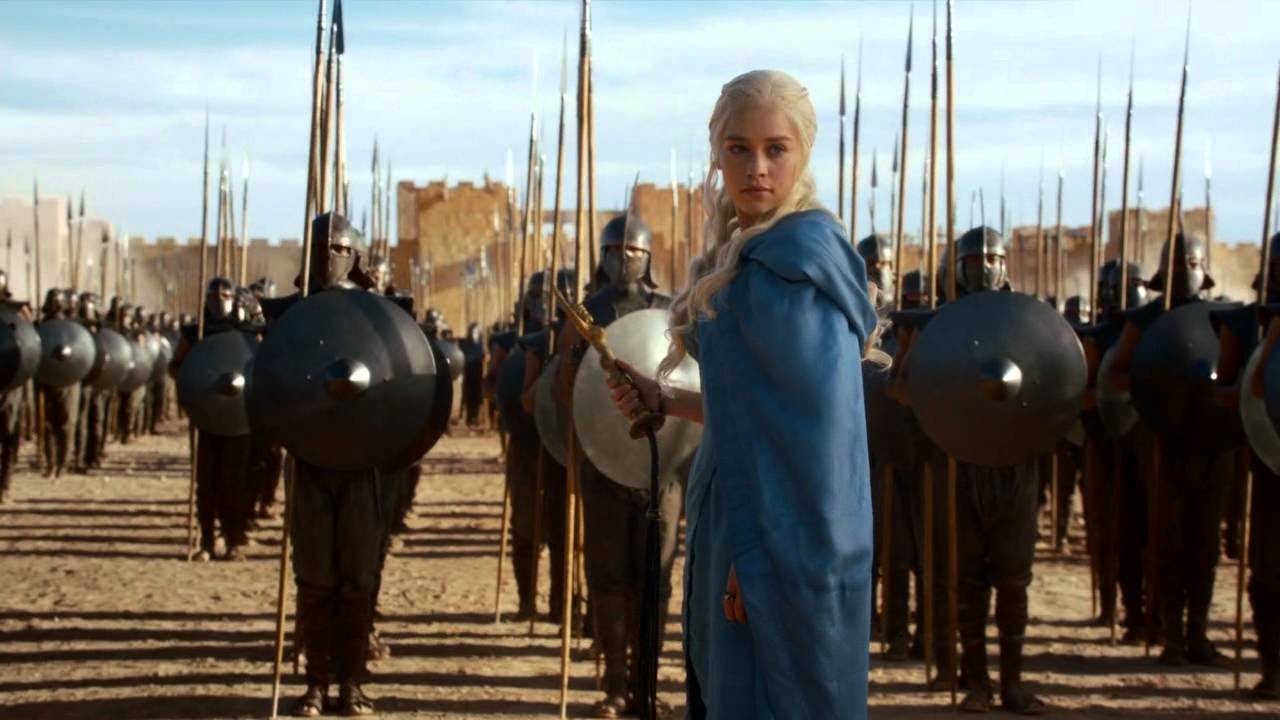
With this contextualization of the novels’ and TV series’ timelines, I now return to my initial premise that the series wasn’t too short or fast, but that it was too long, and that there were writing traps during 3, 4 and 5 that ended up hurting the perception about the final seasons.
Let’s first address the elephant in the room: if it’s that easy to write a proper ending to a sprawling story that already has 4197 pages of characters’ semi-arcs, why is it taking 8 years (and counting) for the original idealizer to write the equivalent of Season 6?
Because it’s a creative nightmare to aim mid-course and stick the landing of those arcs.
And the series had to do that in 4 years for 3 seasons, while Martin is needing double the time for just 1 book.
The solution was far from a simple “write better”. As a matter of fact, during those years when the series began outpacing the novels, the showrunners gave people two of the highest rated seasons of TV on Rotten Tomatoes and IMDb, with episodes like “The Winds of Winter”, “The Spoils of War”, “The Door”, “The Queen’s Justice”, “Home”, “The Dragon and the Wolf”, “Stormborn” and “Battle of the Bastards” being acclaimed by critics and audiences alike.
The change in storytelling style was chosen then, not in Season 8. From a verbose “tell, don’t show”, to a more visual storytelling of “show, don’t tell”.
That’s what people suddenly noticed. Something that was there three seasons ago, but was only felt when there was no time to luxuriate on point-of-view plot because all the arcs were intersecting and culminating.
However, the explanation isn’t “bad storytelling”. It is noticeably different styles. And, I would argue that their take on visual writing is some of the best in TV history.
I know a lot of people preferred the verbosity, the luxuriating. But let me propose a counterpoint.
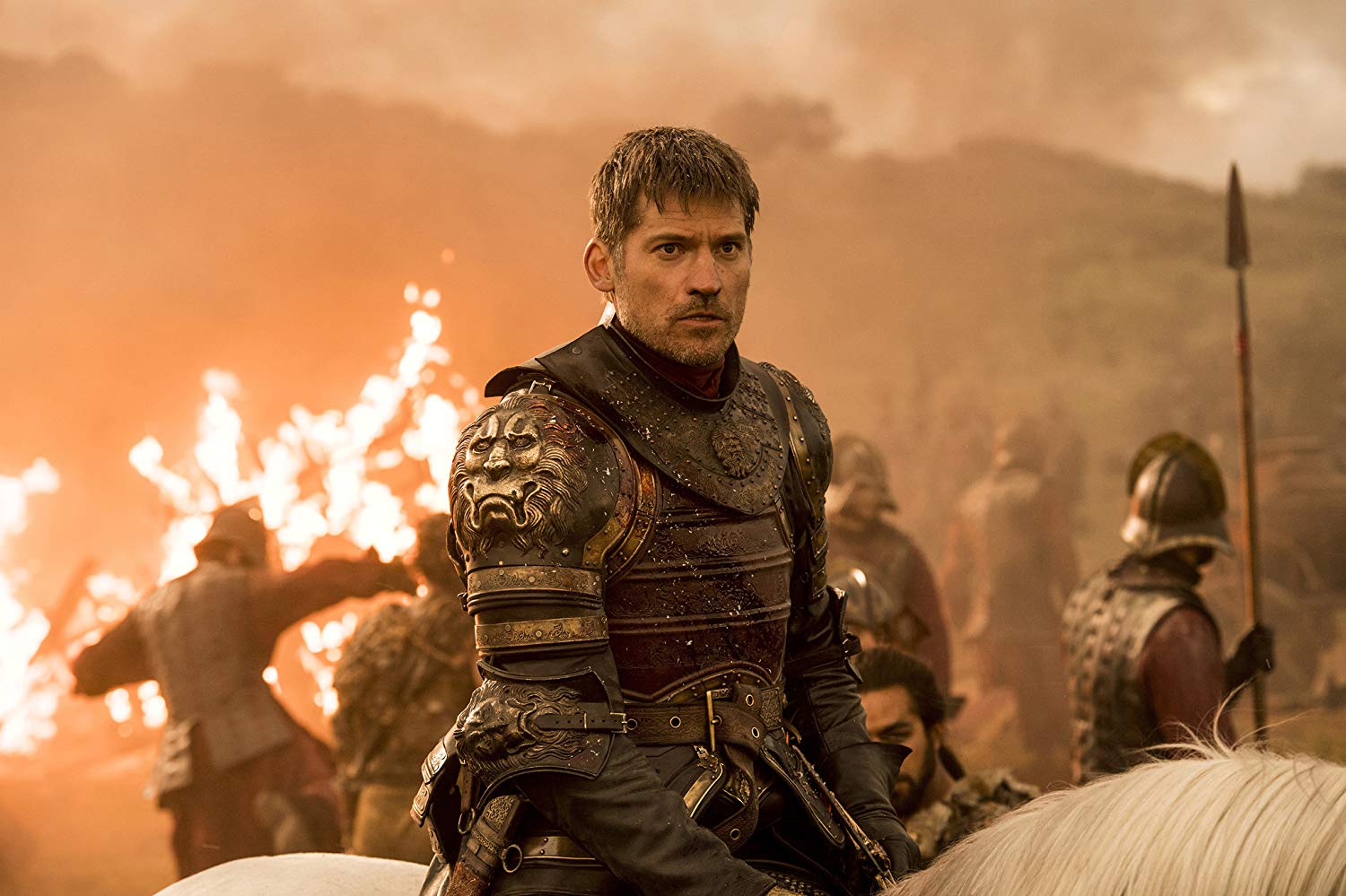
“Kissed by Fire”, the fifth episode in season 3, is one of the hallmark episodes of that first stylistic period in the series, precisely because it features 25 characters. It seems impressive, right? You know what reminds me of? An expertly written soap opera.
The storytelling mechanics are uncannily similar. The captivating traps. The difference? Intelligent writing that makes you feel smart by proxy. And it wasn’t Martin writing that episode. But what happens when the characters you naturally yet harmfully feel a sense of ownership stop talking so much? “Disappointment”.
Martin’s writing style and structure are unequivocally captivating. At the same time, they also worked against the show, and are obviously working against him.
There are several other traps. The luxury of giving Mance Rayder, not a main character, more than one season between saying he was lighting a fire and actually doing it. Or the trick of making you believe a certain character is important, and then kill it in a visceral way to trigger a worry about your favorites, disguising who the story is about.
These types of ingenious offerings to a reader are unsustainable on franchise TV. You can’t be a gardener with free time to tend to the seeds, and wait and see what grows. You have to be a landscape architect with a plan.
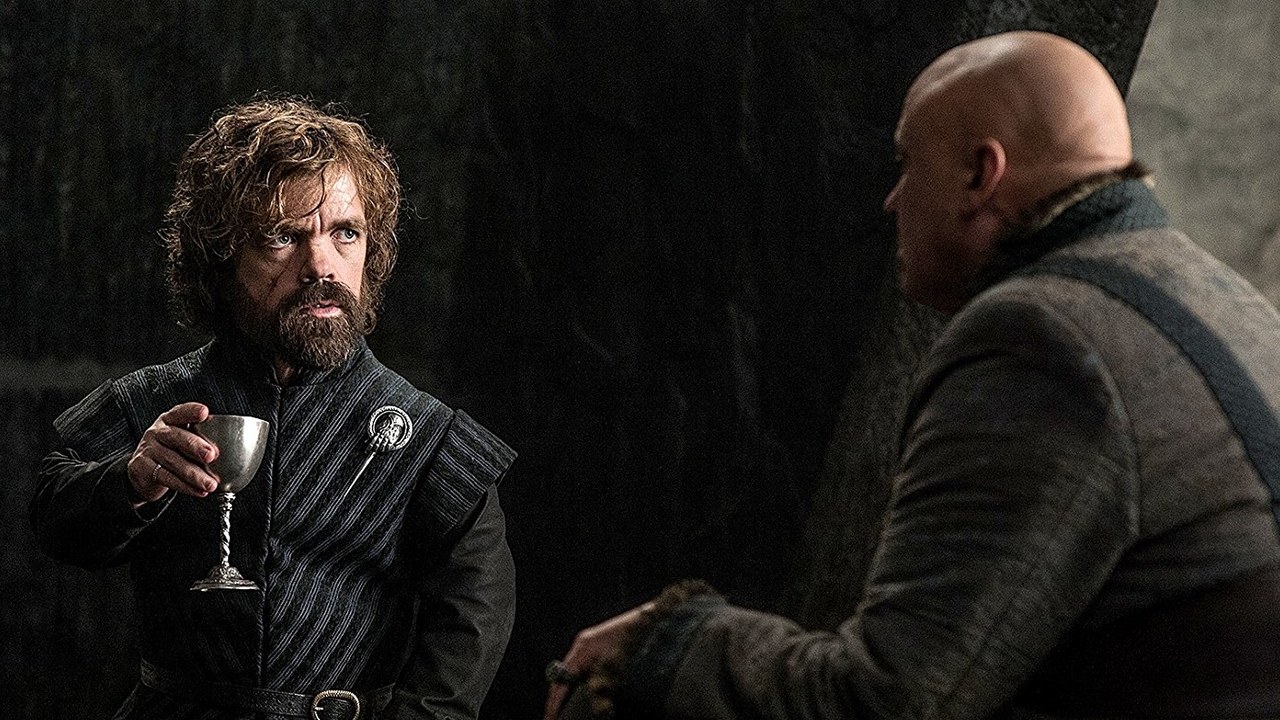
One could argue that, with this grasp on the monoculture, they could have gone for 11-13 seasons to maintain the verbosity and the expositional explaining of everything. And looking at where Jon Snow’s arc is by the end of Season 5 (and book 5), that multiplier would clearly be needed, assuming Martin continues on a pace of 839 pages per book and doesn’t decide he needs more than two to be able to stick the landing.
However, the TV series already got to go against the norm:
- They did 1 extra season, since there are only two books planned;
- They took a gap year to properly prepare the ending;
- They convinced HBO to have longer episodes.
In an era of constant distractions, franchise fatigue and quality competition for our time, those three choices are riskier than they seem.
Look at paradigm-shifting series like The X-Files (9 seasons), The Sopranos (6 seasons), The Wire (5 seasons), Lost (6 seasons) or Dexter (8 seasons). All culminated their stories with a post-credits discourse of “disappointment”. And neither had to face the adaption and production challenges of Game of Thrones.
As such, I am convinced that, even in the near impossibility of extension to 11-13 seasons for stylistic coherence, audiences would rationalize different reasons to feel the same way. It’s a natural response to ownership, which is particularly prevalent in expansive TV dramas.
Game of Thrones, like other monumental successes of their time, is a cautionary tale of TV’s capacity to conclude these stories.
The simple fact that you are bound to, each week, deliver self-contained arcs in just one hour is, despite its positives for character development through the seasons, detrimental to the pathos in endings.
That’s what cinema does so well, even when adapting huge mythologies.
Just look at the critical and commercial success of the Marvel Cinematic Universe or The Lord of the Rings trilogy. All seemingly unadaptable material, and yet, people left the theaters crying with fulfillment.
It’s not by chance that the great hallmarks of cinema get that effect much more frequently than the emblematic shows of TV.
When you write a story intended for a continuous viewing experience of 3 hours, the catharsis incubates much more effectively than even in binge watching. Addictive is different than empathetic.
And Game of Thrones understood that.
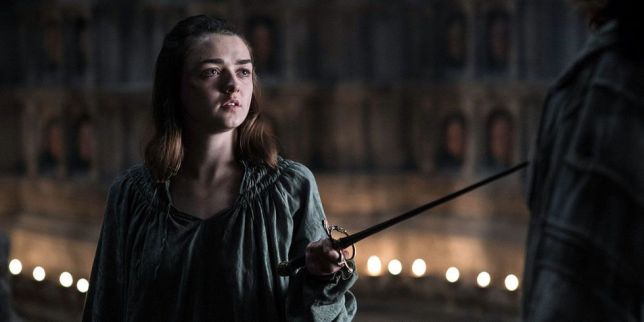
4/6 episodes of the ending had almost an average of 50% more running time than the typical TV episode.
That’s a lot. A paradigm-shift. And yet, looking at the impeccable visual storytelling of those episodes I left feeling that this season would have been better served with fewer episodes that lasted for 3 hours.
More, I would argue that the whole series would be better with fewer seasons and longer episodes in each.
Looking at the difficulty of adapting the 1191 pages of The Lord of the Rings into 9 hours, and how that film crew nailed the storytelling, its pathos, and the message of the books, I am suspicious that Game of Thrones would be a much better audiovisual adaption of 5875 pages (assuming the pace of 839 per book) with just 5 seasons, with 3 episodes each, with each episode with an air time of 3 hours.
A lot of the writing traps of seasons 3, 4 and 5 would have been avoided, because, with 3 hours per episode, you can’t hide behind smart dialogue all the time.
And the message still reaches the audience.
With just 1h20 minutes in each episode of Season 8, I heard the meanings of the (all along) important characters in this story, very clearly, in a season that finally chose to show and don’t tell, resulting in a much better audiovisual storytelling.
Imagine a series with less filler, proportionally well divided, and with a more cinematic quality to its writing.
That’s the feeling I was left with after Season 8. Not disappointed, but left wondering about the potential of prior seasons if they had this aesthetic for their exposition.
 Opinion Seed