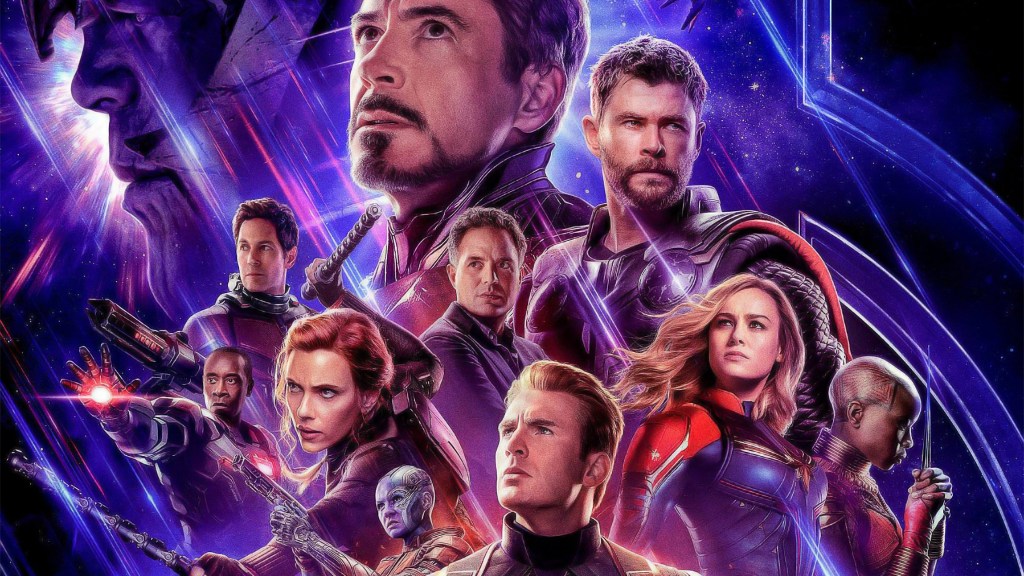
After an historical run of 22 movies, the Infinity Saga has ended, and the Marvel Cinematic Universe is likely to expand even more by going intergalactic.
That’s the type of mindset that make these movies so successful. Creators and audiences aligned in the desire to see these stories and characters go forward.
Avengers: Endgame doesn’t have a post-credits scene.
It’s a choice that summarizes a lot of what this film accomplishes, since Marvel Studios pretty much celebrated the concept. Which is not to say you shouldn’t watch the credits roll to the end. This team of artists deserves that amount of respect.
It is a closing of a chapter in the lives of all these people, and even if they are going to space, because audiences will want more of the sensations and feelings just delivered by Endgame, this Saga could never have landed its crescendo in people’s hearts and minds if it didn’t start on Earth.
From the period of 2008 to 2012, we all thought that superhero films had just reached a new storytelling and aesthetic paradigm. The Dark Knight, by Christopher Nolan, made people take the genre seriously. Even the Academy of Motion Picture Arts and Sciences decided to double the slots for Best Picture, after the backlash to the snubbing of that film.
Phase One of the Marvel Cinematic Universe arrived during those years. Curiously, The Dark Knight, based on a character appearing in comic books published by DC Comics of a wealthy and intelligent American playboy, owner of a big company, and Iron Man, based on a similar character appearing in comic books published by Marvel Comics, premiered just 3 months apart in 2008. I bet not even Marvel would have guessed that, 11 years later, its distance to DC in cinema culture would be so pronounced.
On April 11, 2012, Marvel’s The Avengers premiers at Hollywood’s El Capitan Theatre, and the paradigm starts to shift.
Before that, we had had Edward Norton (not Mark Ruffalo) play The Incredible Hulk (2008); a cementing of one of the captivating traits given to Iron Man by Robert Downey Jr., in Iron Man 2 (2010); a necessary base for Chris Hemsworth to evolve from, in Thor (2011); and a somewhat naïve origin story to why Chris Evans’ acting is so essential to the MCU, in Captain America: The First Avenger (2011).
All these movies, including The Avengers, are not great. Subjective of course, but, I can safely say that they didn’t have the grandness or the weighted stakes that the Infinity Saga ended up having and becoming.
And of course they didn’t. Even if the threat of Thanos and the importance of Infinity stones are hinted at in The Avengers (unnamed in the film), the legacy of Phase One was to tell us the beginnings of these characters. Even Thor (2011) spends a lot of screen-time on Earth. If you know where people are coming from, their motivations, when a threat bigger than themselves makes them converge, you connect to a story because you know not only the rules of the world but also the rules of those characters.
These, coupled with the magical realism chosen for the visuals of these movies, are the reasons why the Marvel offer was starting to click with people. That’s why The Avengers (2012) is remembered much more fondly than Batman v Superman: Dawn of Justice (2016). Even at that time, it felt earned.
And then, there was an opening to not only leave a mark on its field, but also become an historical tale in the monoculture of humankind.
Phase Two (2013-2015), with the same quantity of movies as Ph1, did not start, or end, strong. Iron Man 3 and Thor: The Dark World are, probably, the weakest entries in the MCU, and Avengers: Age of Ultron still contained a lot of the infantile tropes that Joss Whedon (the director of the first Avengers) has made a career of.
However, between these movies something special happened. Change. Intentional or not, the reason why Disney/Marvel are able to call people to the theaters, year after year, in an era when franchise fatigue is at its highest and consumers have so many distractions, is change.
This concept seems inevitable, but you just have to look around and witness how difficult it is for successful endeavors to introduce change in their timeline. And the fact that two giant corporations like Disney and Marvel greenlit two projects like Captain America: The Winter Soldier (2014) and Guardians of the Galaxy (2014), which would introduce two major concepts that conflict with what made the first Avengers so successful, is undeniably rare.
If The Avengers (2012) was about generating empathy in an audience that were starting to know Tony Stark, Thor and Steve Rogers, and now were seeing them collaborate to solve a threat to Earth. Winter Soldier and Guardians showed us that even the peak of human idealism has to face his principles, leading to fragility and darkness, and that the problems occurring on Earth are also happening on other planets.
This deconstruction of characters we thought we knew and the opening of the scope to the possibilities of space is current MCU’s signature. However, Winter Soldier and Guardians, despite being the most influential films to that confluence of styles, would never have worked without the foundations built, with simplicity, during Phase 1.
So, when Phase 3, that culminates with Avengers: Endgame, starts with Captain America: Civil War (2016) and Guardians of the Galaxy Vol. 2 (2017) we all know we are in a different ballgame now. There’s a reason why Anthony Russo and Joe Russo (the co-directors of Winter Soldier and Civil War) were given the responsibility to conclude this Infinity Saga. They introduced and cemented Drama with great care and respect for the characters and viewers alike. And there’s a reason why there is a smart lightheartedness to movies like Ant-Man and finally to Thor: Ragnarok and Spider-Man: Homecoming. Because James Gunn (director of both Guardians movies) freed Marvel to explore that side of comics without being afraid of alienating adults.
These three directors changed the definition of blockbuster and had a great influence on why nerd/geek culture is now a norm and not a niche.
Avengers: Infinity War and Avengers: Endgame are the result of this long hard work.
They are both a story of character arcs having to deal with all the weight carried from previous movies and a gigantic canvas to paint the Michelangelo-like reach of places and times where the Infinity stones exerted their influence.
Infinity War is a film of suddenness. From the start we understand why Thanos should be feared. There’s no preparation when he arrives on Earth. And the ending leaves us perplexed about what he just did to OUR characters.
Endgame, on the other end, is about time. The passage of time. What we learned during our good and bad experiences of the past, and how we can harness that knowledge to build a better present and future.
It ends up conveying a tonality of culmination not because it’s the end of the Saga, but due to the A-game brought by everyone that worked on this production. The cast gives us performances filled with craft and heart, and the crew is pin-point perfect at how scenes and lines were shot, always lending proper spaces for intimacy and spectacle, with the transitions between these two states being completely coherent with the pace of the narrative.
The film is 3 hours long and it doesn’t feel like it. No shot is wasted. Even fan-service has a purpose. And that’s the guideline that helped land this craft carrying so much stakes and expectations. Plot devices and character exposition worked due to the purpose of the film, and the other way around.
Audiences become in a flow state for a duration that we scarcely experience in theaters nowadays, because we are witnessing a 22-movie Voltron showcase its final dance with elegant transitions between somberness, rage, technical, bombastic, sadness and tenderness.
Avengers: Endgame is a rare beast due to the risk associated with investing so much money in a proposition that aims to choreograph so many different expressions, without any feeling misaligned with the arcs of previous films and unsubstantiated by the present drama.
What makes it work is the undeniable fact that much more than money was put into this production. It shows that all these artists left part of themselves in this.
Stunt teams came up with impactful and visually stimulating sequences. Costumes, Makeup and VisualFX artists did their magic by designing portraits that capture the imagination due to a precise relatability in the fantastical. Sound and Music were fine-tuned to be different and familiar at the exact moments they should be (the Avengers suite has “John Williams” status by the end of this film). The writing and the editing are some of the best I have ever witnessed, because it must’ve been a nightmare to draw a clean line of action when you must give the right time and thing to say to so many characters, while following them around a complex sci-fi universe.
And finally, the Performers.
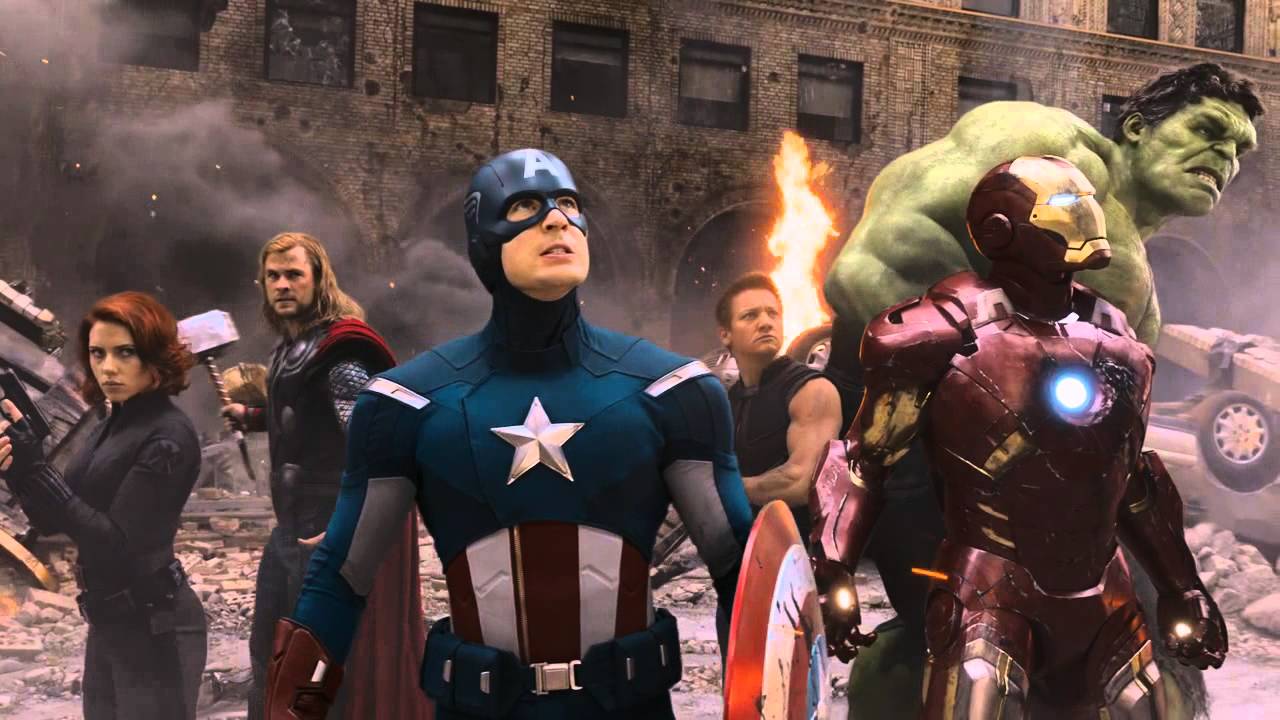
If you already cared about this version of these characters, you already had stock on these performers’ rendition of them.
But, if you weren’t yet totally convinced, this film must have done the trick. They are completely morphed into these personas.
Jeremy Renner and Scarlett Johansson, who, by the nature of their own characters, have always felt less grand than their fellow Avengers, are showing us here a place where Hawkeye and Black Widow had never went to. The pit from where their sadness and despair comes from is so profound and naturally carved into theirs and our humanity, that the moments given to them in this movie are crucial linchpins for us to truly understand the state of the world.
Mark Ruffalo, sometimes at odds of what was asked of him in these movies, is finally channeling the portion of his diverse talents that is best suited for the presence of Hulk.
Chris Hemsworth goes on a journey of emotions during this film. He had been showing, throughout different movies, that he could deliver much more than just an archetype of a regal/godly figure. Consequently, Thor, of the core Avengers, is the one who changes the most across the franchise. And Endgame is the total encapsulation of Thor’s seriousness, humor to mask insecurity about his duty as Odinson, and coolness in the face of evil.
Chris Evans, the performance that, since day one, has been the bedrock of what the Avengers stand for, is once again pitch perfect. Not a type of sterile perfection, but the right angle of goodness that gives him the strength to carry his internal burdens as lessons to him, and those he inspires.
And Robert Downey Jr. Who started as a beacon of charisma, and arrives at Endgame as a father figure. There is no Marvel Cinematic Universe without this Iron Man. What he gave to the Saga as a person is why these films reached Millions. His coolness and tenderness made children and adults connect with the Avengers’ journey.
Marvel’s Endgame will go down in history as one of the most important landmarks of our expression as a species. Not because it absorbed a lot of money and attention of the monoculture throughout a decade. But because of what Marvel Studios did with that time and power over people. They used their art to transmit a lot of good principles.
 Opinion Seed