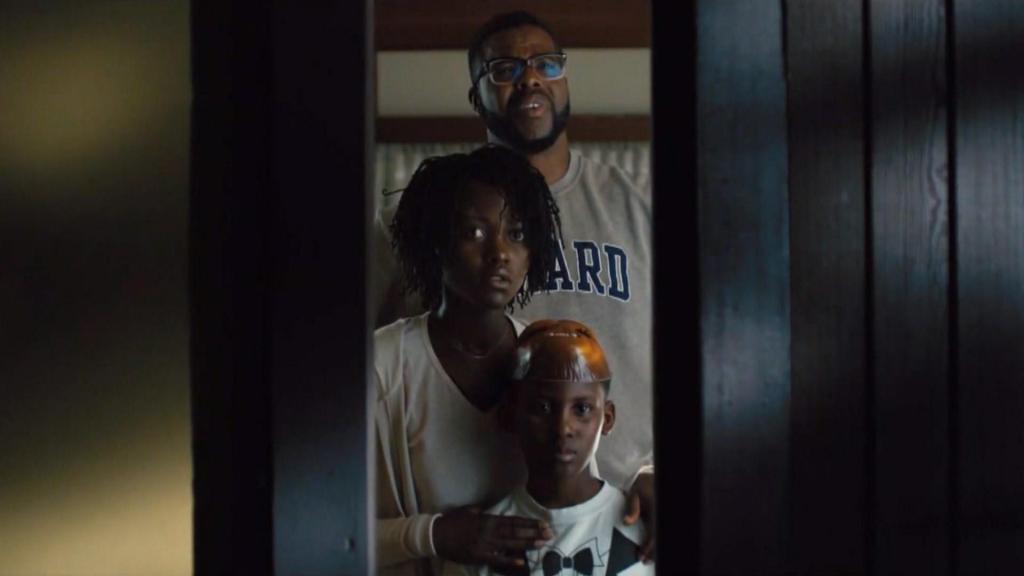
Horror is my least favorite genre.
More often than not, I find its focus on mechanics detrimental to the messaging of the final product. For example, action movies, which are also mechanics-heavy, tend to use those structures to message unconscious sensations. Whilst, horror, by feeling the need to deliver a play on unconscious sensations AND telling an intricate story, finds itself with many incoherent narratives.
So, in 2017, I was pleasantly surprised that the reason why I wasn’t connecting with Get Out wasn’t at all related with these grievances about messaging consistency.
I wasn’t enthralled by Get Out because I found that the first layer of the plot was campy without audiovisual support. But the second layer of the narrative was very strong and tremendously innovative. I have much respect for that movie.
Especially if you realize that it was comedian Jordan Peele’s directorial debut.
Us follows the same signature. Improving on some aspects, but worsening some that Get Out had already nailed.
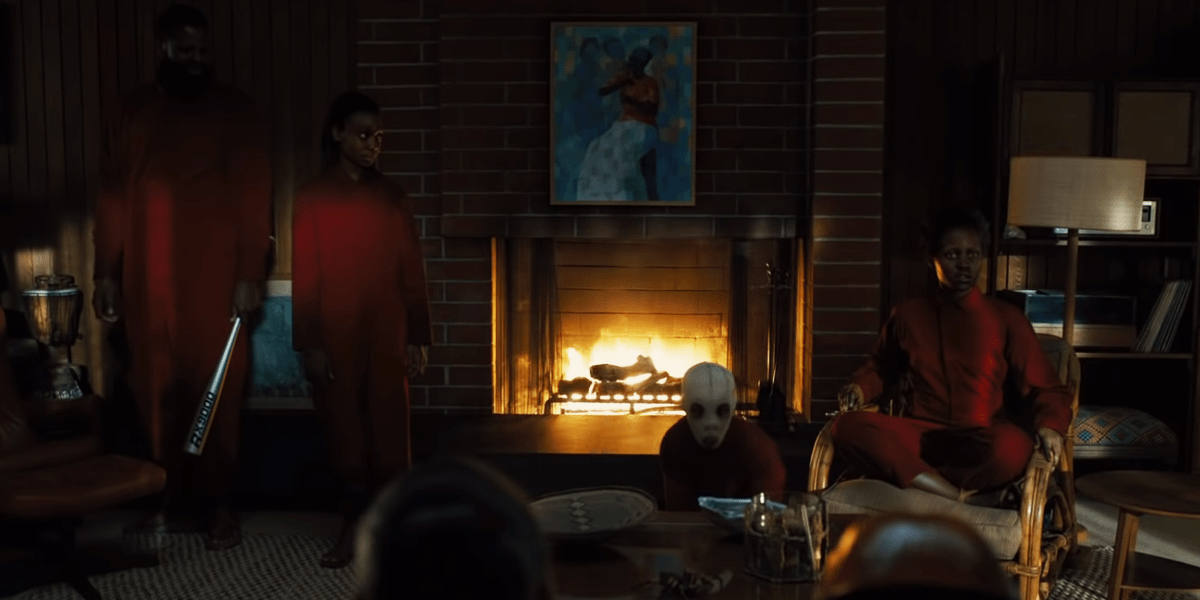
The most apparent improvement comes from how production values were used to aesthetically support the campiness of the story. The costumes tell a story about the world, makeup about the characters, and the visual effects have more punch than in Get Out.
Additionally, sound and music don’t shy away from the moment and elevate the visuals and the stakes with much more care than in Peele’s previous film.
The improvements stop here. Not because Us doesn’t have more praiseworthy contributions. Lupita Nyong’o is incredibly nuanced, and the metaphor about social segregation in the United states is expertly written. However, Get Out was also very strong in its acting and screenplay.
Where Us falls short is in its overall construct, delivering a final cut with pace issues that only manages to avoid the usual problems of Horror because the narrative threads are consistent throughout the unnecessary sections, and because Peele isn’t enamored with the machinations of scare.
Still, it could have been 30 min shorter and the message would have landed, precisely because it is there from the start. Even more, a shorter film would have to rely more on its cinematography, and there are moments in this movie where the portrayal of warm colors and the exploitation of glass windows’ visual properties give us glimpses of a different film, with less exposition and more visual storytelling.
All in all, I liked Us.
It cements Jordan Peele as a Horror director that is here to break the crutches of the genre. Overacting is no longer excused because the writing needs to express a nuanced message, and jump scares aren’t there to be release valves to the frightening issue.
I would have preferred a shorter and more visually impactful experience, but I still recommend it.

 Opinion Seed