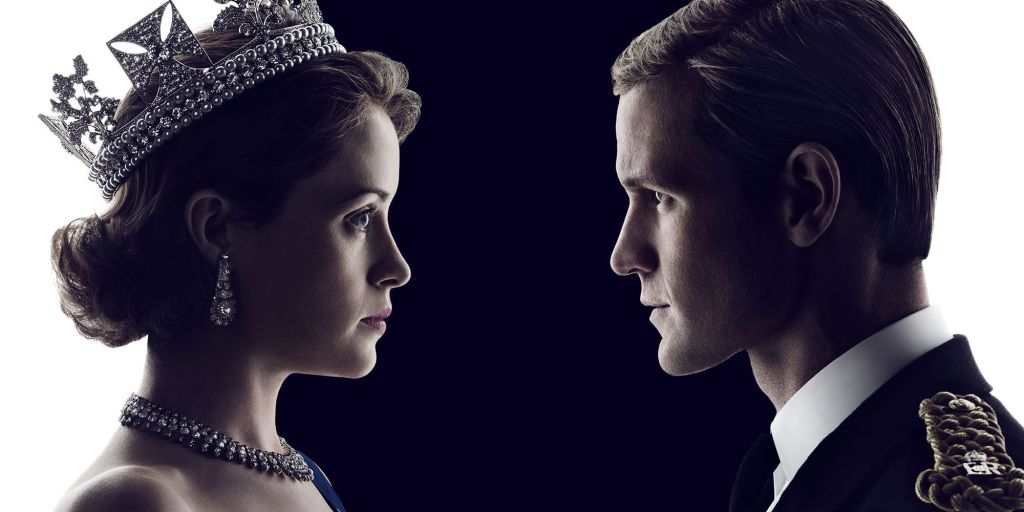
Let me premise this review with a somewhat important caveat. I am of the opinion that monarchies are an insult to human evolution.
Not only do I find them nonsensical in light of what science has discovered about our origins, but also I don’t need the most intelligent people on the planet to tell me how much of a waste of energy, time and intellect it is to raise these non-meritocratic constructs to serve as sociocultural beacons of hope and guidance.
It is misguided to think that gifting a select group of people rights and accommodations, that are inaccessible to everybody else because the great-great-great-great-great-great-great-great-great-great-grandfather of the latter wasn’t as good at wielding a sword as the first’s, will endow a population of a sudden desire to be virtuous.
Human inspiration and achievement doesn’t sprout in the mind of a young Marie Curie, Albert Einstein, Valentina Tereshkova, Galileu Galilei or Emmeline Pankhurst by looking at queens and kings’ examples and wanting to shape the world into a beautiful castle surrounded by an even more beautiful lake where the starts project already-known happy endings.
No, the true banners of righteousness and greatness come from people who aren’t satisfied with a curated reality; the explorers who constantly seek to make things better, to elevate human condition, for all, even if it means sacrificing their own riches.
That being said, the first 2 seasons of The Crown still managed to grab my attention. Is it enough, if I started this experience with all those ideas in mind? Were these 20 episodes able to put a dent on my perspective? Should my political views influence how I judge this work?
I usually don’t like to review a TV series before the Finale. However, and ironically, this case warrants a special treatment. First and foremost because the series is divided by design. The 1st season covers the period from Queen Elizabeth II marriage to Philip, Duke of Edinburgh in 1947, to the disintegration of her sister’s, Princess Margaret, engagement to Peter Townsend in 1955. The 2nd season covers the period from the Suez Crisis in 1956 through the retirement of the Queen’s third Prime Minister, Harold Macmillan, in 1963, to the birth of Prince Edward in 1964. The 3rd season will continue from 1964, covering Harold Wilson’s two periods as the Prime Minister until 1976, while the 4th will see Margaret Thatcher’s premiership and a focus on Diana, Princess of Wales.
These are not spoilers, since the crux of the show is not a feed of historical facts, but how those characters dealt with those. Speaking of characters, that’s the second reason for my earlier review. I think it is important to capture this instance of The Crown because the main actresses and actors will be replaced by older performers and, this, undoubtedly will lend itself to a work with somewhat different artistic sensibilities.
The strength of TV is precisely the real-estate for character development, so, I find it fitting to evaluate how Claire Foy, Matt Smith and Vanessa Kirby connected with me, before they are replaced by Olivia Colman, Tobias Menzies and Helena Bonham Carter, respectively.
But first, I must describe one or two components of the show that are responsible for me not giving up on it (if a series is only character-driven plot, it is not that different from a soap opera).
From the onset, it is clear that The Crown is setting new standards for Production and Editing on TV. If by now, you hadn’t been convinced that Netflix is making a serious effort to demystify streaming as a non-prestige form of delivering art, well; The Crown is an audiovisual tour de force.
It weren’t the costumes or the makeup that wowed me (don’t get me wrong, they were all masterfully crafted to be tone-coherent with the different scenes). But the overall ambience being transmitted from the set design, the room to breathe for each shot, the transitions between story boards, accompanied by non-self-centered and yet beautiful music…
By now, you must be thinking: “They got him”. “The glitter of royalty got him”. Nope, and that’s precisely one of the statements that surprised me the most about this series. The care that was given to scenes in the slums was the same as the ones inside Buckingham Palace.
Sony Pictures’ money was put to good use everywhere and every time. Seldom did the bar lowered.
Finding this signature must have been tough because you don’t want to be humbly bragging about monarchs and end up transmitting hypocrisy, at the same time, you also want viewers to feel the pathos of these characters, and you are only able to pull that off if your settings and sceneries have some kind of familial fabric to them.
Like I said, I was pleasantly surprised.
But I shouldn’t. By the end of the first title sequence you already know you’re in the company of giants. Peter Morgan (The Queen, The Last King of Scotland, Frost/Nixon and Rush) is the creator/writer of the entire project (40 episodes, 2016-2019) and has produced every episode until this point. Stephen Daldry (Billy Elliot, The Hours, The Reader and Extremely Loud & Incredibly Close) also produced the current 20 episodes and directed some important ones. Rupert Gregson-Williams is responsible for the musical identity of all episodes and had the collaboration of Lorne Balfe in the 2nd season. Even Hans Zimmer lends his talents by composing the main theme.
Speaking of the music and sound contributions to the series, there’s a lot to like, even though there was a concerted effort to make those tracks as inconspicuous as possible. This choice makes perfect sense during the flow of each episode, since the imagery is also primarily elevated through intelligent camera work and sober set designs, and not showy statements.
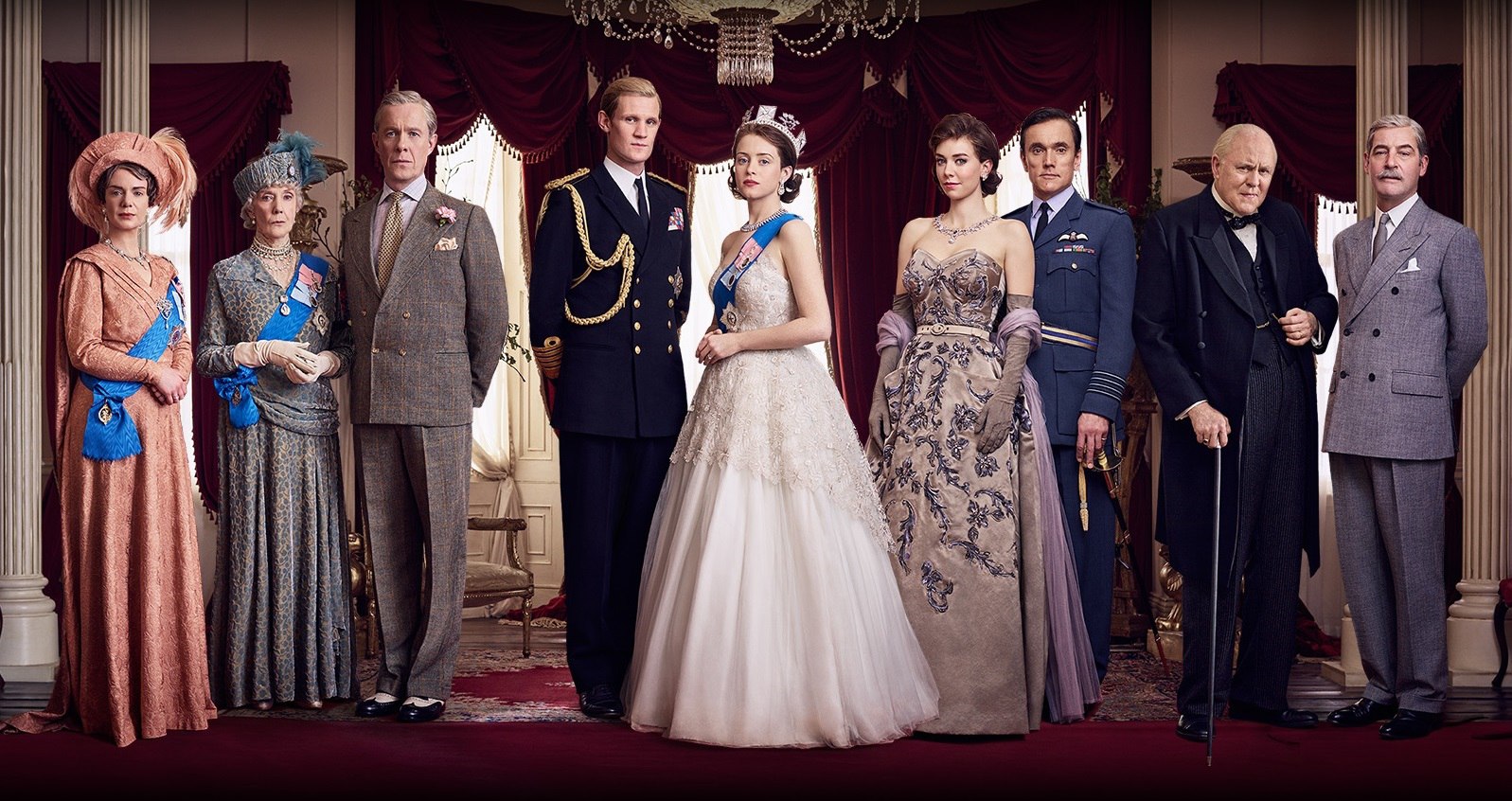
Subdued were not the performances. Something that shouldn’t also be surprising. British shows do love their portrayals and characterizations. With good reason. It’s the country of Shakespeare. Human drama theaterized is something they are even better at than football.
Both Claire Foy (Elizabeth) and Matt Smith (Philip) are at very high levels and the Hollywood castings have started to knock on the door: Star Wars Episode IX for Smith and Claire will probably get an Academy nomination already this year with First Man.
Those two, and their relationship, are the steady wheels supporting and moving the story forward. However, and I think intentionally, the igniting fuel end up being the secondary characters. I say intentionally because I’m convinced the point of the series is to depict Elizabeth and Philip learning how to transform into bastions of political correctness, in order to fend off the individual sparks generated by everyone in their familial and social circle.
Their stalwart presences on camera are indeed worthy of praise. Still, as soon you notice that the showrunners, every other episode, deliver a fresh storyline, now focused on a person that doesn’t have to constantly be a rampart of perfection, you will find yourself craving for the turn of that other character.
John Lithgow, despite not being British, is really good as Churchill. Victoria Hamilton gave me one of my favorite episodes, when the series focused on the Queen Mother’s internal struggle of transitioning from the wife of a king to a mother of a queen. And Vanessa Kirby… The crown jewel of the show. Portraying the younger sister, Princess Margaret, who was certainly an archetypical difficult sibling, Kirby does not simply play the part. The actress is clearly exhaling her own flavor to the final form shown to us. The way that character gasps for her signature in that world always seemed to come more from the acting than from the script.
And despite the fact that Kirby also got the Hollywood calls (Mission Impossible Fallout and Hobbs and Shaw), she has, in part, to thank Claire Foy for her standout. It is precisely the juxtaposition of these two actresses’ takes on the dry swallowing of the void of identity that makes this story resonate, despite the inaccessible condition of these people.
In the end it was a smart decision to sprinkle these 2 seasons with the occasional episode almost entirely dedicated to the supporting cast. Not only shows us relatable flaws, but also highlights how grueling it must have been for Elizabeth, Philip and their marriage to put forward the most natural image of flawlessness.
From this, a thought; one I had to wrestle with during these episodes – am I supposed to feel pity about these privileged people’s hardships?
Then, occurred to me: throughout history there have been countless people (actors, musicians, athletes, entrepreneurs) who seemingly had everything, money, notoriety, the job of their dreams, and still found themselves depressed and committed suicide.
The human condition, despite my opinion of monarchies, is as idiosyncratic and overwhelming as it is stimulating and grandiose. So, if a TV show, through its cinematographic proposal, narrative design and performers working together to establish a human connection, is responsible for making me think about a subject I assumed closed, I say that’s what art is for.

 Opinion Seed