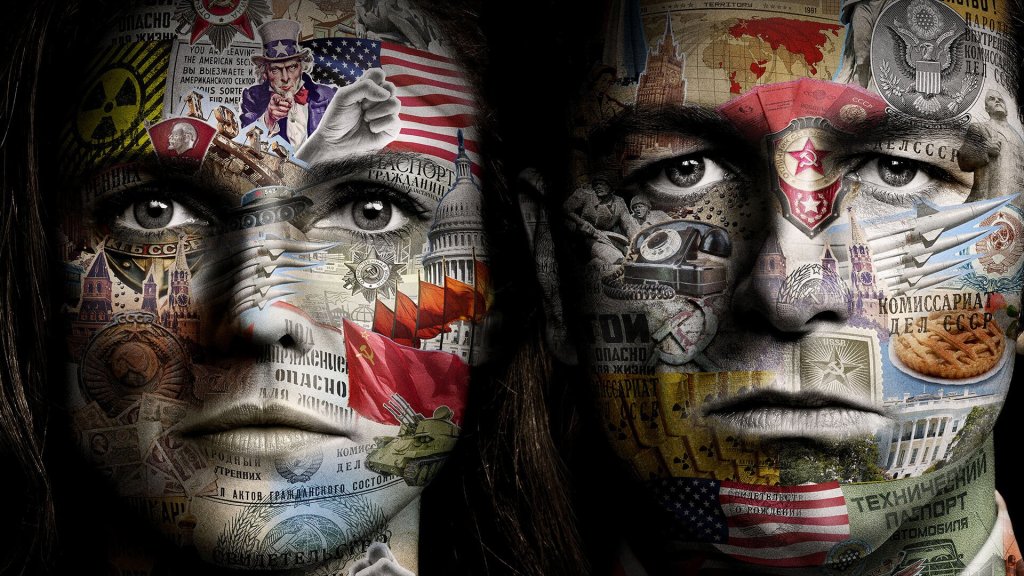
It is very rare to have, in a television series, 6 episodes in a row with consistency in tone.
Imagine 6 seasons then.
Six seasons in recreating the socio-political complexity of a period like the Cold War, the personal and professional lives of two Russian deep-cover agents posing as your average American couple from the Washington D.C. area, and add to that the psychological weight of having American-born children, conceived to deepen the cover, but grown to love.
The Americans has several moments that will shock you. However, that element of surprise was not written to give the audience something. On the contrary, those moments reach quietly and coldly to take a piece out of you.
And that counterintuitive design to dramatization in the episodic format works in The Americans precisely because of the consistency in tone. It never, I repeat, NEVER touches the melodramatic or, from the other side of the spectrum, the gratuitous use of violence. Every shocking scene feels earned.
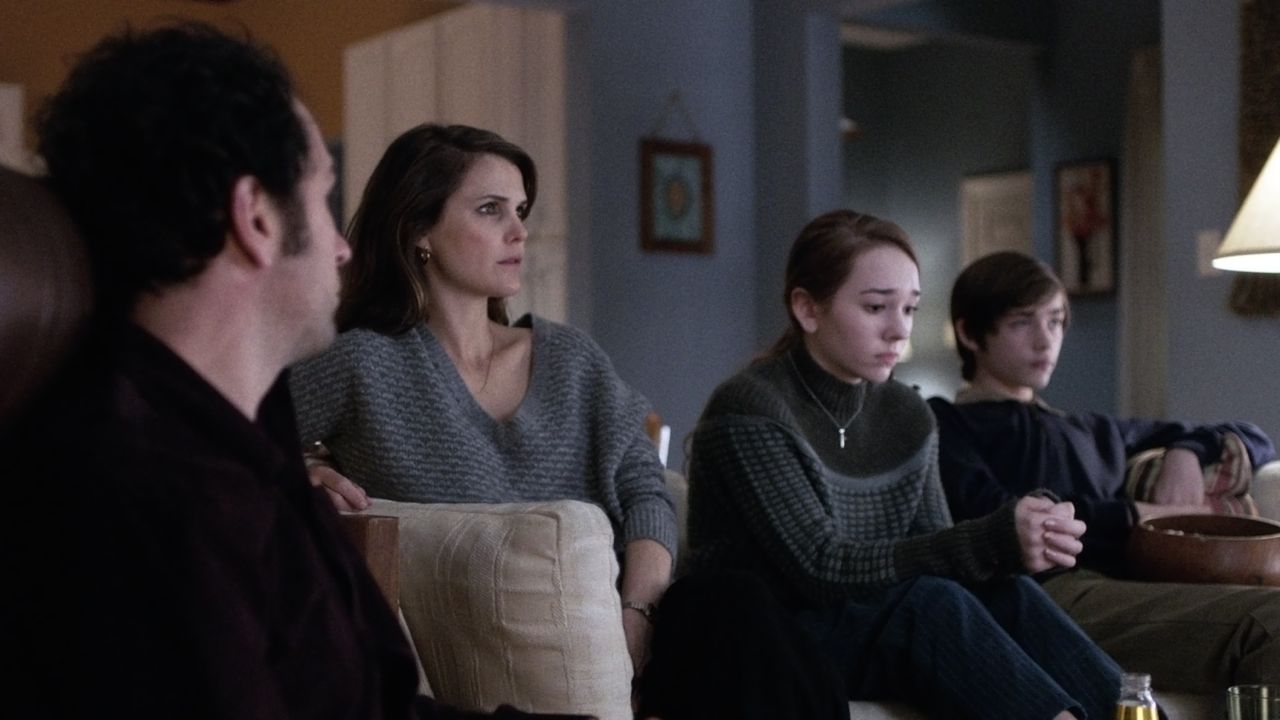
Despite the intentional absence of carrots at the end of the episodes, or even the presence of moments that are there to carve a wound in the viewer, you keep coming back because the showrunners and the actors do a magnificent work in conveying that this pain is not an emotional shortcut towards establishing a connection with these characters.
The link you build with these people comes during the calm before the storm. And, no matter how much you feel morally compromised or hurt, you will come back after the storm because the impact of the actions or violence is masterfully distributed to everyone: the character that’s committing them, the people close to them and, refreshingly, you, the audience.
When it comes to character development, more often than not, it is expected of the consumers of stories certain leaps of narrative logic, in order to accommodate somewhat formulaic implementations of pathos mechanics. Yet, I am of the opinion that this mold for storytelling is not respecting the audience on a very fundamental level: if empathy depends heavily on moments of crisis that show us how unsuspecting the characters are about their scripted futures, you are cheating your audience by making them come back because they feel a sense of ownership and entitlement over these stories.
In The Americans, the writing treats you as a human being and not a god, and from that grounding of the narrative construction grows a very organic resonance between viewers and characters. We are all given the same emotional toolbox, so, when a crisis or pathos happen, it won’t be the first-aid kit that will sow us together. We already had a common home to go back to, built previously with that toolbox.
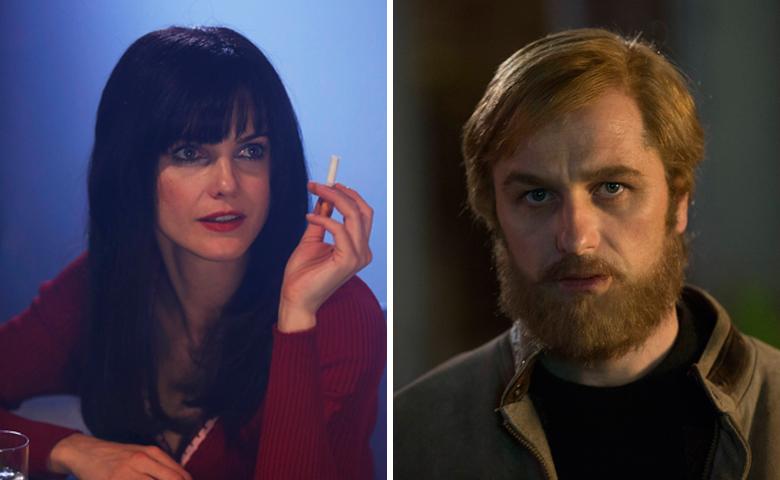
You really feel like you are in this world, sharing the same choices and consequences of them, most in part because of the high degree of polish this production always maintained.
The series might not have the biggest of budgets, but it’s clear the priority was to avoid ambiguities, i.e. audiovisual consistency instead of elaborated aesthetics.
Great examples of that are the spy disguises. It is quite impressive that the Costume and Makeup teams were able design so many different garbs, sometimes more than one for an episode, and still maintain a sense of style, epoch and practicality without losing any sobriety. More often than not, you couldn’t help but feel this was the coolest couple ever, and it was clear that the showrunners were not even trying to convey that.
Another contribution to the aforementioned subtle coolness comes from the choreography of the action sequences.
This is a violent show with many assassinations. However, every brutal act found a surprising balance between dance and surgery that captures coldness and heat at the same time, combining to produce an aura around this couple that redirects the shock and awe towards what really matters – their seemingly unwavering psyche.
All in all, the production teams were very up to the task of realizing this period piece. From the set designs, wardrobe and characterization, the attention to detail was always immaculate without forcing a presence. They knew you knew the timeline, so a simple nudge with carefully placed references and you are in that era.
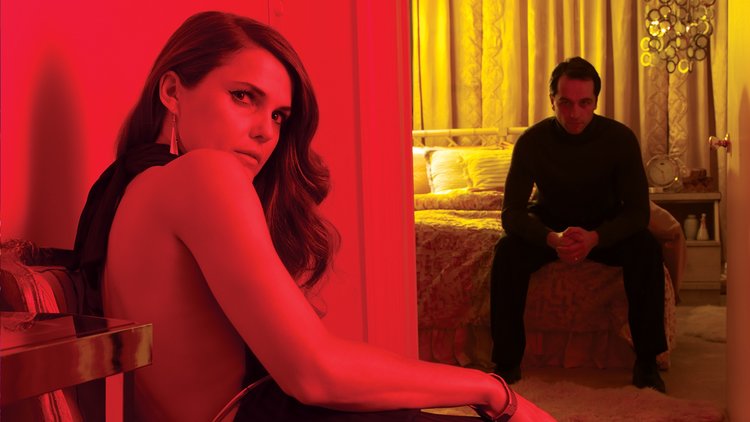
In a series ruled by smoothness and gradual developments, there were two departments that clearly had green light to be exuberant. And those were the sound and score engineers and artists.
Period pieces like this are a trap.
On one hand you have factual beats as helping guidelines, but on the other hand you have the audience’s pre-conceived ideas of what that time should look and sound like. It’s a thin line between being predictably boring or too on-the-nose to avoid that boredom.
The audio and music teams of The Americans were a show in itself.
They managed to pull-off a very bold signature of transitions and track selections that added a lot of unspoken narrative, giving volume to intentionally silent scenes without ever crashing into the crown jewel of a room and breaking it.
I have to say it again. The score composition and music choices were so masterfully imbued into the imagery that you may find this overall work underrated.
What shall never be overrated are the performances by Keri Russell and Matthew Rhys.
There were, of course, other great acts, from lesser-known artists like Holly Taylor, Costa Ronin, Annet Mahendru and Alison Wright, or road warriors like Noah Emmerich, Frank Langella and Margo Martindale.
Even so, Russell and Rhys deliver such timeless, nuanced and deep characterizations that the “Acting” section of this review will be entirely dedicated to them. It’s that historic.
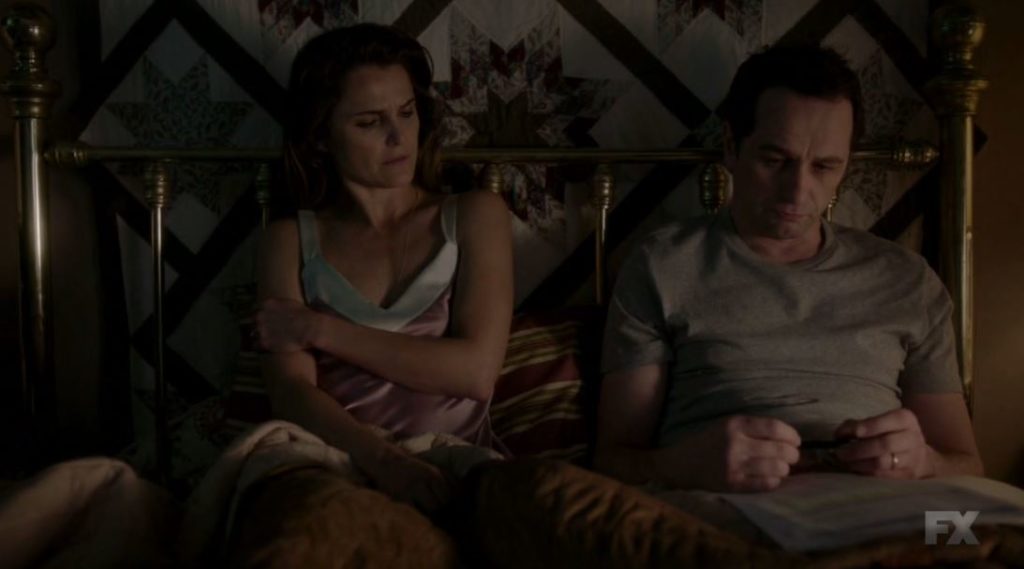
I will never forget the Jennings. And despite the terrific premise and storylines about deep-cover Russian agents posing as a family in the American capital during the Reagan administration, the most memorable moments of Elizabeth and Philip were the intimate ones.
Both have different ways of politicizing their actions, while being completely in tune in their orchestrations; yet, it’s in the gaps when they get to be a family where we will witness how trailblazing is their acting.
What should be a safe haven of suburban American dream with their own kids raised in that culture of freedom and exceptionalism ends up morphing into a dark void generated by the way Russell and Rhys look at each other. It’s when genuine love finds its way through their self-imposed barriers and a touch filled with killer callousness brings them closer that we, not only get to know the true nature of Elizabeth and Philip, but also the range Russell and Rhys are capable of delivering.
It would be a disservice to say their performances are great “for TV”. No.
In The Americans we have the privilege of witnessing two works of art.
The way they portray burden, fear, doubt and depression is so nonchalantly organic to the plot and narrative timings that is almost impossible to not establish any kind of human connection with these fictitious and superhuman creations.
Keri Russell and Matthew Rhys made me fear Elizabeth and Philip Jennings, fear with them and fear for them. They are villainous and heroic without ever losing consistency in tone.
I will never forget the journey their expressions took me on. From resolute focus to total emptiness.
The Americans is much more than one of the best series ever. It is a masterpiece in how cinematography, style and directorial choices can enhance storytelling and, reciprocally, how courageous writing coupled with actors at the top of their games can glue historic framings forever in our memories.
It really is impressive how these teams managed to put forward so much diversity in images, music, emotional, political, moral contrasts and still maintain a narrative and aesthetic cohesion.
Despite having a structure that is not constantly feeding you with candy crumbs, this is a must-watch recommendation from me. It is one of the few shows that has those cinematic shots that will stay with you, the script is so intelligent with how it trusts the performers by giving them silence to use their eyes, Keri Russell and Matthew Rhys are setting forth a new reference for acting, and the camera boldness to get dirty and idiosyncratic about the socio-political and human challenges of this crucial period of the 20th century is a pay-off on its own.
I will miss Elizabeth and Philip.

 Opinion Seed