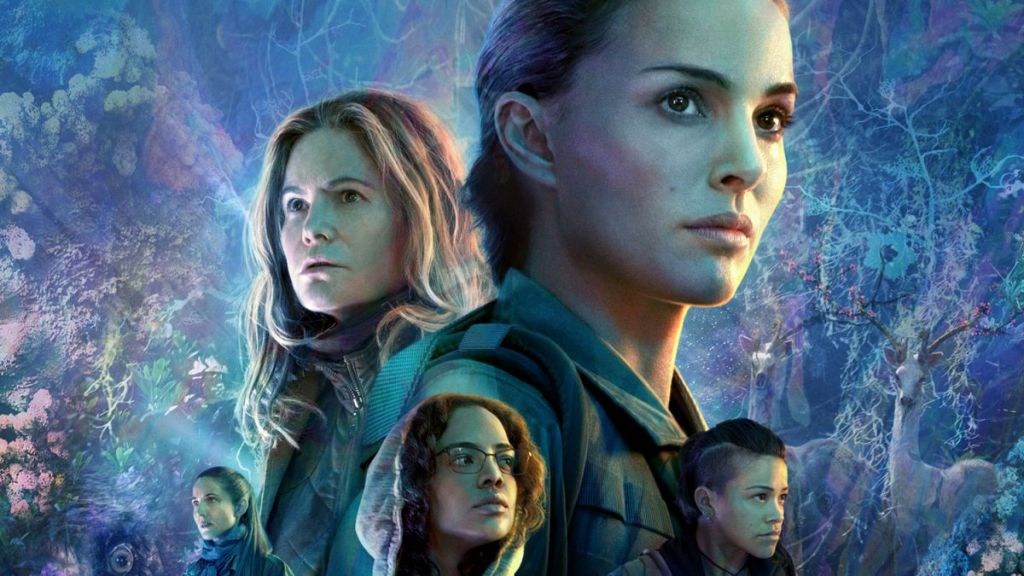
More often than not, the second movie of a director’s career turns out to be a statement against the first. Not necessarily because said director didn’t like his/her debut, but because they can’t escape it. That’s how artists are wired; we all try to put their styles and visions into labeled boxes, and that’s the #1 thing they fight against. Two things, actually: getting stuck in a stylistic rut and having to define what their art is “about”.
So, it comes as a refreshing surprise that Annihilation, despite being so different thematically and aesthetically, has a lot of common denominators with Ex Machina, the directorial debut of Alex Garland. It is indeed surprising since Ex Machina got him a nomination for ‘Best Original Screenplay’ by the Academy, and artists try even harder to distance themselves from critical recognition.
That being said, is Annihilation safe commercial art, or is it more than that?
I would argue that it is the right type of safe.
The majority of people will experience this movie through Netflix; however, don’t fall to a hole where you are out-of-touch with how artistic content is produced and distributed nowadays. No, Annihilation is not a “direct-to-TV movie”, even if that still means anything nowadays.
It was produced by DNA Films (British film production company) and Skydance Media (based at Paramount Studios), and got promoted by Scott Rudin Productions, the company of the infamous Hollywood producer who isn’t afraid to market mid-range budget movies. Traditional film studios don’t know how to promote $50 million movies. $10 million they know, it’s ‘indie’, and $100 million market themselves with the VisualFX.
A film like Annihilation, from a British auteur and with minimalistic bells-and-whistles, is a tough proposition to market to ‘popcorn movie-goers’. That’s where the Scott Rudin”s” and the Netflix”s” of this world come into the fray, because ‘a sci-fi movie with a minimalistic art style and the sensibility of an auteur’ is a production that has its own big audience.
This movie looks and sounds bigger than its budget. That is, in part, the result of a production crew completely in line with the vision Garland was trying to convey. They knew how to use their resources smartly and efficiently, and the by-product is an orchestra of different disciplines, like Costume, Makeup, Stunt or Set design all playing to the same tune.
It must have been rewarding for the Director and the Director of Photography (Rob Hardy) to work in these conditions, since the Production team did such a great job in giving character to the people and the environments of this story. From the indoor sets, intelligently decorated to transmit a sense of familiarity, but futuristic when needed; to the outdoor scenarios conceptualized and crafted to bring about themes like biology, ecology and the decadent beauty of the triumph of nature over mankind; the canvas and pallet lent to Garland and Hardy had a coherently constrained variety that contributed to an innovative mixture of natural and fiction. The costume design and the makeup art followed this same conceptualization, which resulted in characterizations that felt grounded without losing a fanciful fabric.


Another department that spoke the same language of coherent variety was the Audio team.
The composers, Ben Salisbury & Geoff Barrow, wrote a list of music that is an early contender for original soundtrack of the year. First and foremost, the acoustic guitar tracks and the synthesizer ones were masterfully combined to form the other half of the audiovisual experience these filmmakers wanted to create. It is a must-listen!
At the same time, the score has some tracks led by unconventional instruments that, instead of sounding simply experimental, are introduced very unceremoniously and then meander throughout the main motifs occasionally sprouting some interesting flavors to the ambience.
Additionally, the mixing and the editing envelop this myriad of sounds and sentences in a very harmonious contribution. The guitar is given center stage when appropriate, the synthetic sounds and bass make their point effortlessly, the exotic sounds have their time to shine and the dialogue (sparse by design) is memorable because of the acoustic space given to it.


Speaking of dialogue and acting, this is a minimalistic work in all of its parts.
Starting with the screenplay, it is clear why writing was the vehicle that skyrocketed Alex Garland’s career. His first novel, The Beach, was developed into a film starring Leonardo DiCaprio; he, then, got to write the screenplay for Danny Boyle’s 28 Days Later, which won him ‘Best Screenplay’ honors at the 2004 Fangoria Chainsaw Awards; another novel followed, The Tesseract, that also got adapted to the big screen; and, eventually, he got to adapt another author’s novel into a script – Never Let Me Go, by the Nobel laureate Kazuo Ishiguro. Garland also has in his portfolio the screenplay adaptation of the Judge Dredd comic book series, and story supervision of two critically acclaimed Video games – Enslaved: Odyssey to the West, and DmC: Devil May Cry.
I don’t know if Annihilation will get the recognition that Ex Machina got; but, after a few weeks of thought, I am confident in affirming that this film is just as good as his directorial debut, if not better.
This time, the screenplay isn’t completely original, since it’s an adaptation of “his experience reading” Jeff VanderMeer’s science fiction novel of the same name. Still, it doesn’t conform to the typical methodology of book-referenced screenwriting. And what ended up happening as a result of this memory-adaptation is that the film has a dream-like tone that plays out great during the narrative juxtapositions between what is natural and what is alien.
These narrative threads are always present, but instead of pestering the movie like vines of memetics, they accommodate the messages of the screenplay and focus them towards a clean journey of delivery. That’s why the film manages to be minimalistic without ever feeling empty. Like in Ex Machina, what is important for Garland is building a first and second act that support, rather than superimpose, a third act that lands in a way that is clear but also open.
And landing movies of this genre is tough. A recent and similar example is Lucy, from the experienced and acclaimed filmmaker Luc Besson, which has a great premise, a good buildup and a lackluster third act.
Annihilation does it. With a combination of great writing, great acting and well-timed editing, there are a few lines of dialogue/monologue by the end of this film that, not only stun you, but also leave you thinking ontologically: the history and journey of life, our created utopias, our real foot-prints, relativity, nihilism and evolution.
Triggering these themes could’ve generated an unbalanced ending where you either deliver a lot of exposition to caption all the subjects or you crumble from the weight of such proposal and end up leaving a smear of nothingness that dilutes expectations. Not in this film. Its final cut was built in a way that has room for every meaningful step of these characters’ journeys, and their acting not only is given proper breathing time, but the performers all capture, beat by beat, those subject matters. All the actresses are really good, but I feel we, as the collective pop-culture, take for granted how great Natalie Portman is.
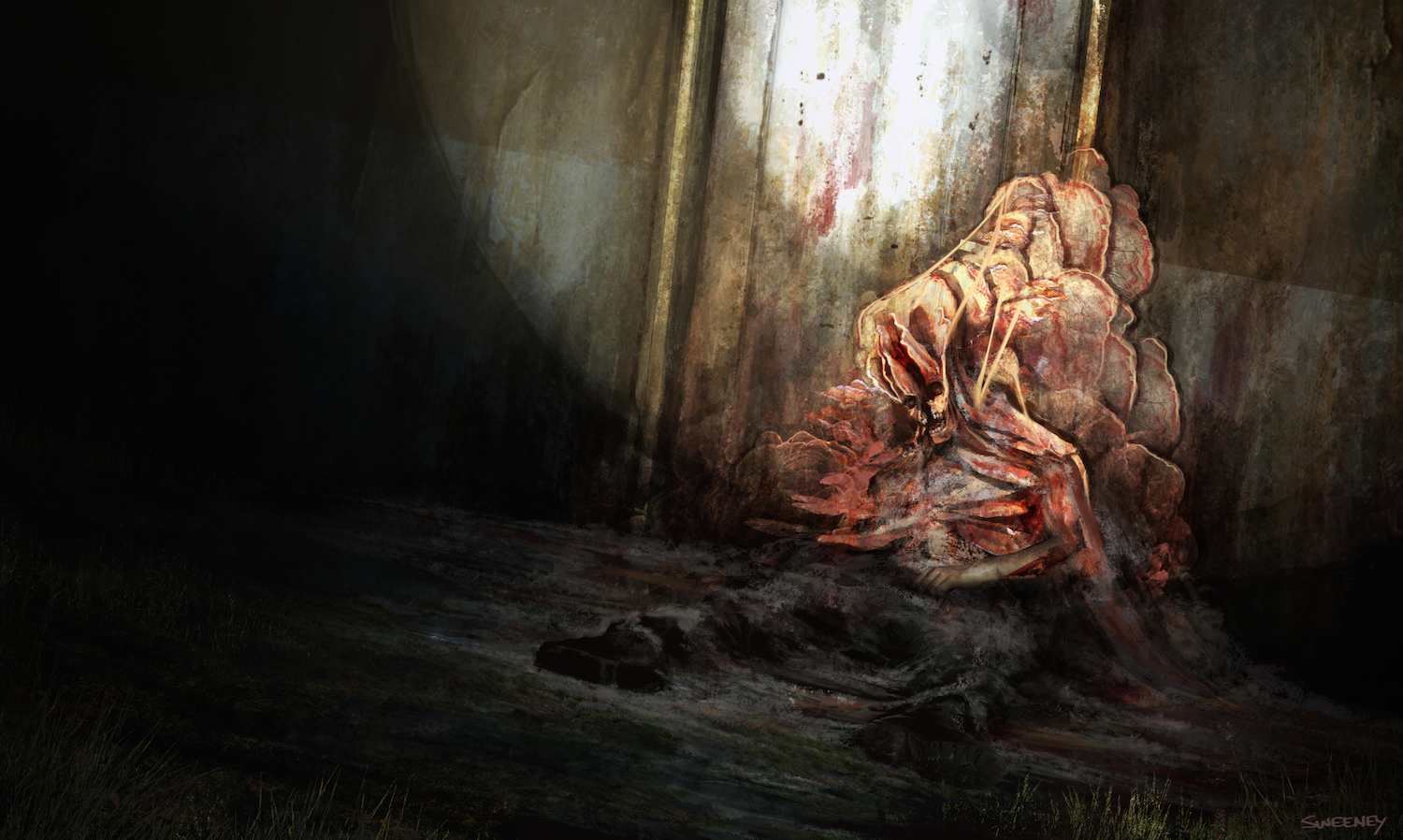
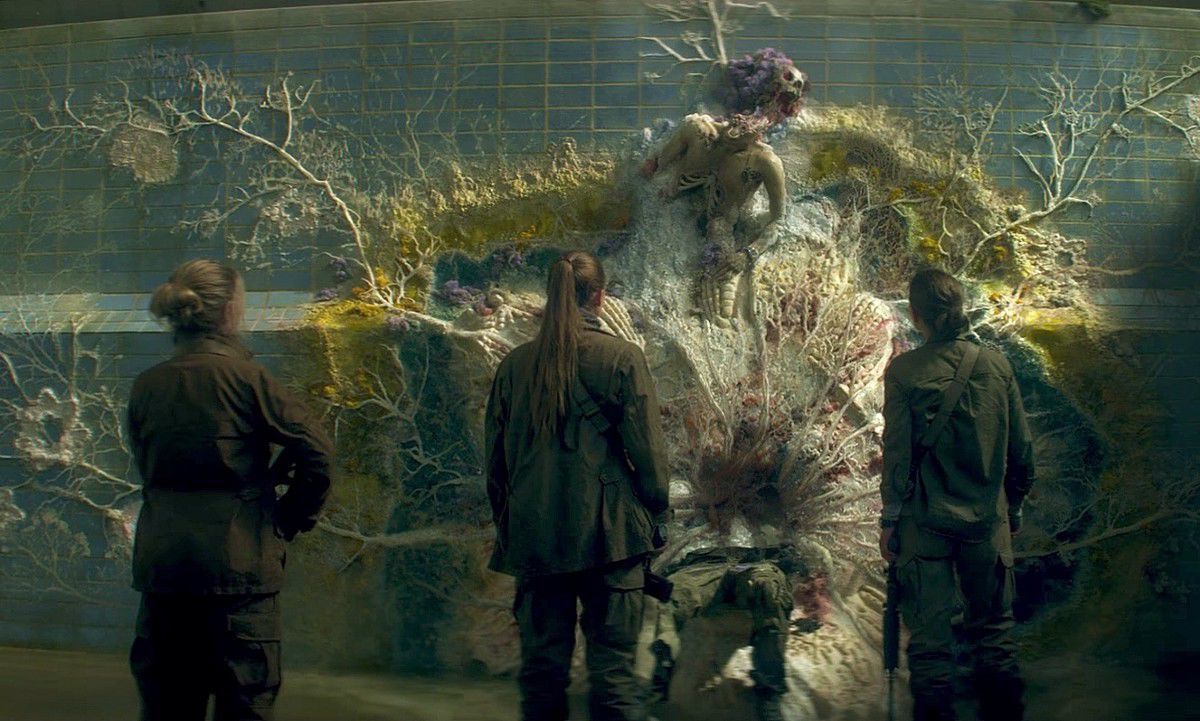
Lastly, but definitely not least, a word of appreciation for the aesthetic of this film.
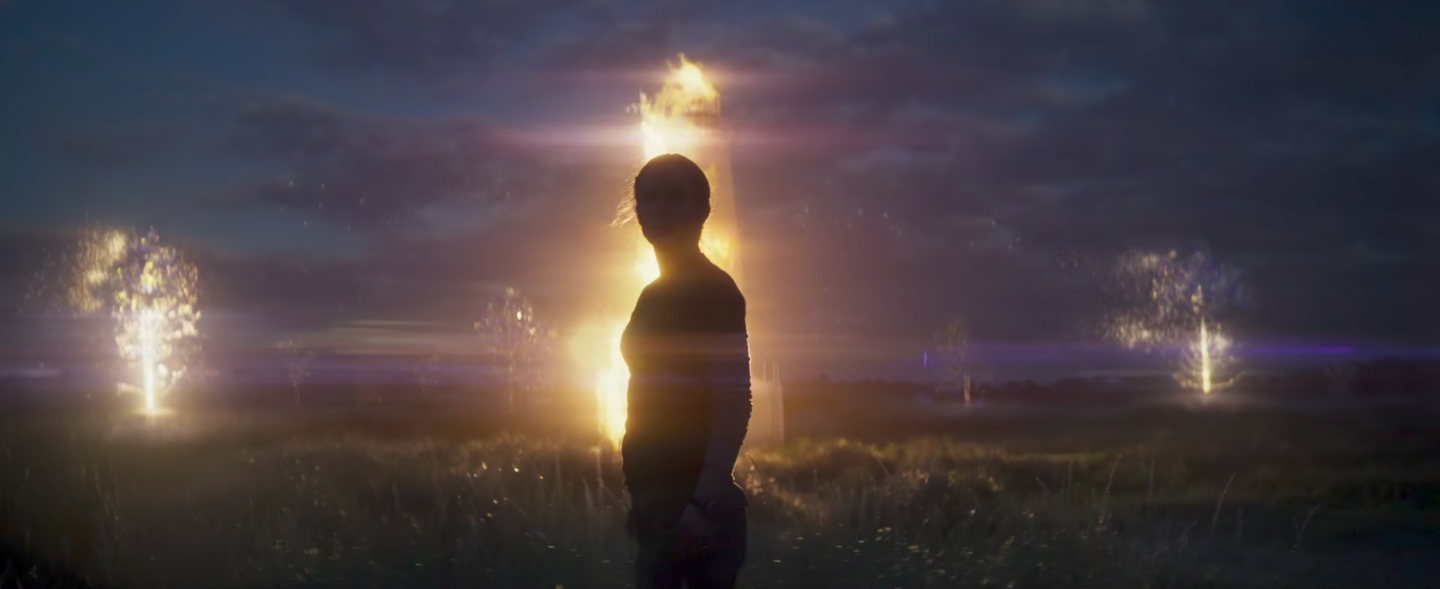
It is sci-fi, alright; still, it has a very distinctive visual signature. This art style is grounded in the beauty that exudes from nature destroying man-made creations and, from that point of reference, the Director and the DP added two layers of fabric: the psychologically unexpected of genetic mutations and the thrilling mysteries of extraterrestrial signs.
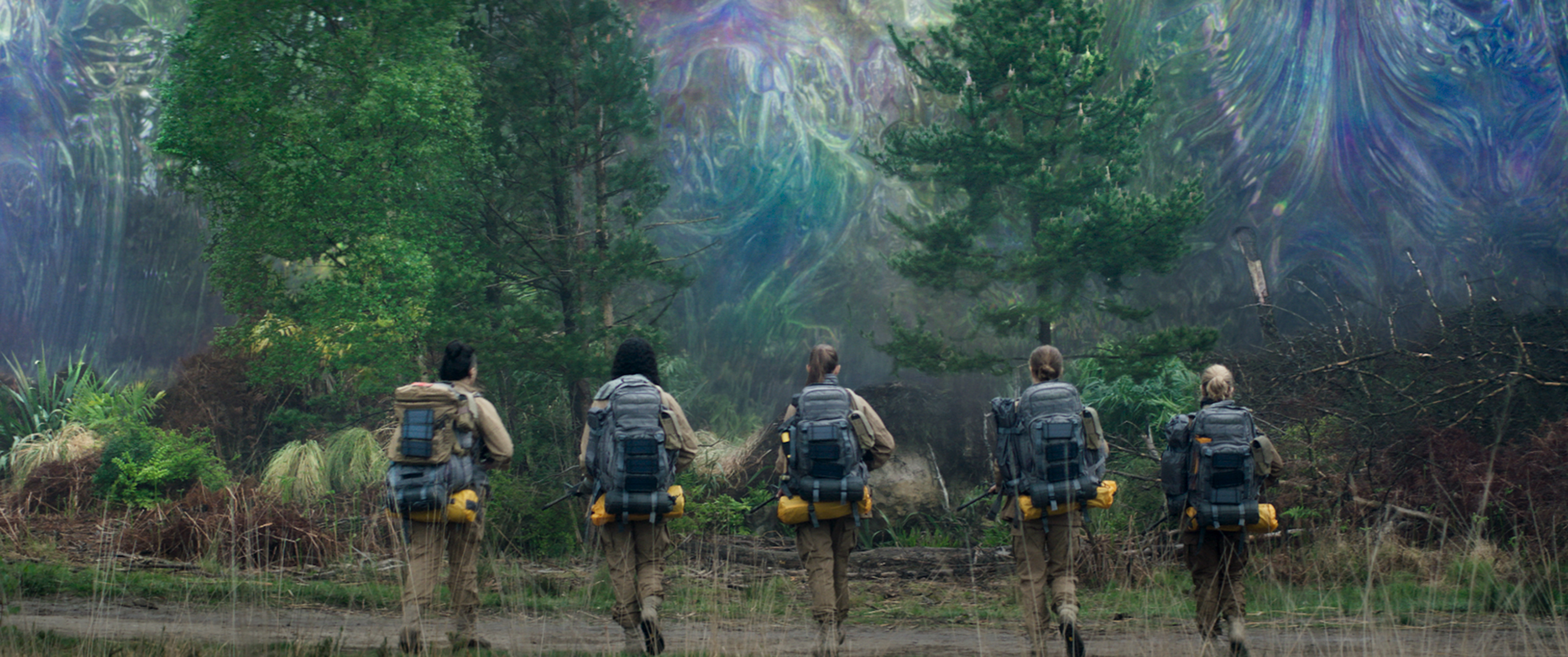
To do this, the filmmakers painted a base of natural green and focused their cameras in a way that lends the picture a very faint opacity. Then, composed their frames with an organic balance of saturated primary and secondary colors and chose natural light vs artificial light vs lens-flare in ways that made sense narratively.
It is amazing how powerful and diverse the final imagery is, having in mind the mid-range budget of this movie. From intimate indoor shots, mutating landscapes, to the different uses of light during day and night, they all show us detailed environments that work wonders in telling a smooth but mesmerizing story.
All in all, this is a very easy-to-recommend movie.
You get to experience Alex Garland’s storytelling prowess, encapsulated in a more action-driven narrative structure, which is more in line with his own interests.
And also have the opportunity to consume an artistic product that has some abstract concepts to communicate, without ever succumbing to the staleness of semiology.

 Opinion Seed